The fight over who controls AI-generated music is heating up, and the stakes couldn’t be higher.

The Showdown Nobody Saw Coming
Picture this. You open an app, type a few words, and boom, a fully produced song pops out in seconds. No studio No band. No years of music school. Just you, a text prompt, and an AI that apparently listened to everything ever recorded.
That’s Suno. And right now, it’s in the middle of one of the messiest, most consequential fights in the music industry.
The AI music platform is reportedly locked in a standoff with two of the biggest names in recorded music, Universal Music Group and Sony Music Entertainment. The core issue? Whether users should be allowed to download and share the AI-generated songs they create. Sounds simple, right? It’s not. Not even close.
This isn’t just a corporate spat. It’s a battle over the future of music itself, who owns it, who profits from it, and whether AI-generated tracks deserve a seat at the table alongside human-made art.
What’s Actually Going On?
Let’s break it down. Suno lets its roughly 2 million subscribers create songs from text prompts. You type something like “upbeat 80s synth-pop about a dog who loves Mondays,” and Suno delivers. Users can then download those tracks and share them wherever they want, social media, podcasts, personal projects, you name it.
Universal hates this. According to a report from the Financial Times, Universal wants AI-generated tracks to stay locked inside apps like Suno. No downloading. No spreading across the internet. Think of it like a creative sandbox, you can play in it, but you can’t take the toys home.
Suno, on the other hand, wants the opposite. Its chief music officer Paul Sinclair has publicly argued for “open studios, not walled gardens,” framing AI tools as part of a broader creator ecosystem. In other words, Suno believes users should have real creative rights over what they make, not just a temporary license to listen.
Sony Music’s position? Still murky. And that ambiguity matters enormously, because wherever Sony lands could tip the entire industry one way or the other.
The Money Behind the Madness
Here’s where things get really interesting. This isn’t just about artistic philosophy. There’s serious money on the line.
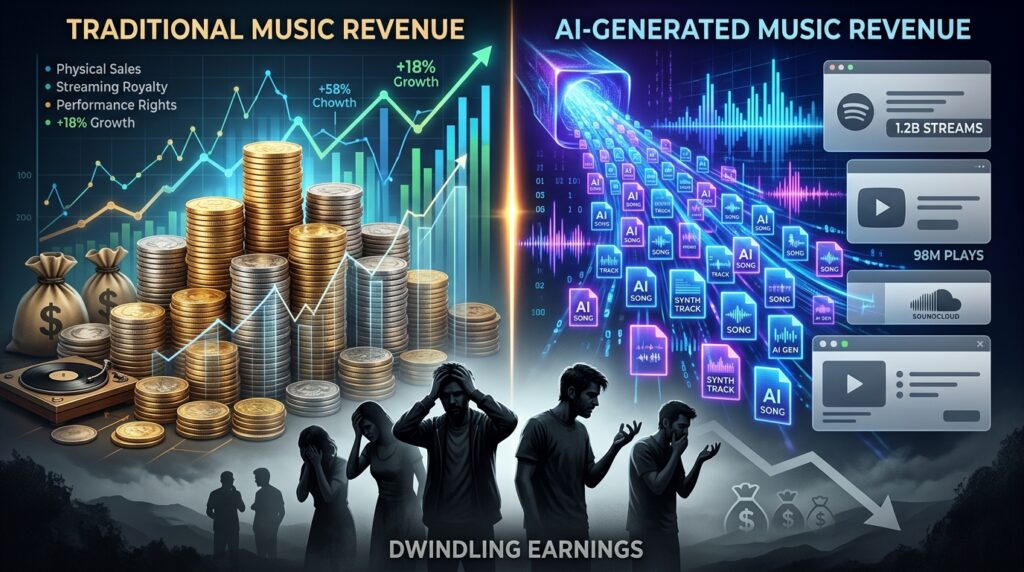
Music streaming services pay royalties based on a share-of-streams model. Every time a song gets played, a tiny fraction of the streaming platform’s revenue goes to the rights holders. It sounds fair — until you realize that AI tools like Suno can generate tracks at massive scale. We’re talking potentially millions of songs flooding platforms like Spotify and Apple Music.
More AI-generated tracks mean more competition for streams. More competition for streams means the per-stream payout to human artists gets smaller. For labels that derive a huge chunk of revenue from legacy catalog music, think classic albums that keep generating royalties decades later, freely distributed AI tracks are a direct economic threat.
Universal’s preferred model is already on display through its deal with Suno’s rival, Udio. That agreement explicitly bars users from downloading AI-generated creations. You can experiment. You can generate. But you can’t export. It’s a “walled garden” approach, and Universal’s chief digital officer Michael Nash has reportedly framed it as a way to protect artists from direct cannibalisation.
Suno isn’t buying it. And honestly? Neither are its users.
From Courtrooms to Conference Rooms
To understand how we got here, you have to rewind to 2024. That’s when Universal, Sony, and Warner Records filed a massive copyright lawsuit against Suno. The allegation? That Suno had ingested enormous amounts of copyrighted recordings to train its AI, without permission, without compensation.
It was a landmark case. A flashpoint in the broader debate over whether AI companies can legally use copyrighted material as training data. The music industry drew a line in the sand.
But then something shifted. Labels started doing the math. Protracted court battles are expensive and uncertain. Licensing deals, on the other hand, could generate steady revenue. So in 2025, the industry began pivoting from litigation to negotiation.
Warner Music Group moved first. In November 2025, Warner reached a landmark settlement with Suno, dropping the lawsuit in exchange for a licensing agreement. The deal was notably permissive — it allowed Suno users to use the voices, names, likenesses, and compositions of artists who opt in, and it didn’t restrict downloads. Suno, for its part, dropped its fair use defense, signaling a willingness to work within a licensing framework.
Warner’s deal set a precedent. But Universal and Sony didn’t follow. Instead, they dug in.
The “Say No to Suno” Campaign
While the suits negotiate in boardrooms, artists are making noise in the streets, or at least, on the internet.
Earlier in 2026, a coalition of artist representatives published an open letter with a blunt title: “Say No to Suno.” The letter, backed by groups including the Music Artists Coalition and the European Composer and Songwriter Alliance, accused Suno of being a “brazen ‘smash and grab’ platform” that “appropriates and plunders creative work.”
The language is sharp. And the economic argument is sharper. The letter charges that AI-generated content “dilutes the royalty pools of legitimate artists”, the very artists whose music trained Suno’s models in the first place. It’s a pointed accusation: Suno built its business on the backs of human creators, and now it’s competing against them.
The campaign has amplified pressure on labels to take a harder line. It also puts Suno in a tough spot. The company isn’t just fighting labels in licensing negotiations, it’s also fighting a perception problem with the very creative community it depends on.
To address this, Suno recently hired former Spotify executive Sam Berger as Senior Director of Artist Partnerships. It’s a clear signal that the company knows licensing deals alone won’t fix the trust deficit with musicians and songwriters.
Two Visions, One Industry
At its heart, this whole saga is a clash between two fundamentally different visions for what AI music should be.
Universal’s vision: AI music is a novelty feature. A fun toy inside a closed app. Users can play with it, but the music stays contained. It doesn’t compete with real artists on streaming platforms, It doesn’t dilute royalty pools. It doesn’t spread freely across the internet.
Suno’s vision: AI music is a legitimate creative output. Users who generate songs are creators, not just consumers. They deserve rights over what they make. Open distribution isn’t a threat, it’s the whole point.
These two visions are genuinely incompatible. And the industry is watching closely, because whichever model wins will likely become the template for every AI music platform that follows.
Udio already accepted Universal’s terms. No downloads. Walled garden. Done. Suno is the holdout — and its refusal to budge has turned these negotiations into something much bigger than a single licensing deal.
What Happens Next?
Here’s the honest answer: nobody knows. And that uncertainty is exactly what makes this moment so fascinating.
Sony’s unresolved position is the wild card. If Sony sides with Universal and demands the same no-download restrictions, Suno faces a choice: accept the terms and fundamentally change its product, or keep fighting and risk remaining in legal limbo. If Sony takes a more permissive stance, closer to Warner’s approach, it could validate Suno’s open distribution model and force Universal to reconsider.
The stakes extend far beyond Suno. AI-generated tracks are already appearing on major streaming platforms. Tools like Suno allow anyone to produce and distribute content at enormous scale. The current licensing framework simply wasn’t built for this reality.
Whatever deal, or lack of deal, emerges from these negotiations will shape how artists, labels, fans, and AI platforms interact with music for years to come. It will determine whether AI music becomes a genuine creative medium or a permanently restricted novelty. It will influence how billions of dollars in royalties get allocated in a world where machines can make music as fast as humans can listen to it.
The download question sounds small. It isn’t. It’s the whole ballgame.
The Bottom Line
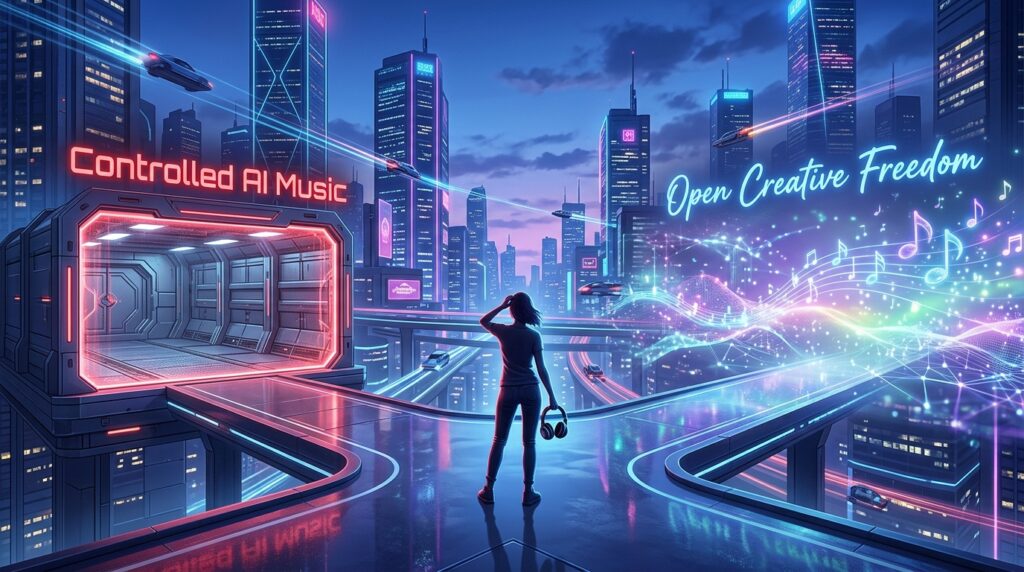
Suno is caught between two worlds. On one side, major labels want control. On the other, millions of users want freedom. In the middle, artists want respect, and compensation.
There’s no easy answer here. But one thing is clear: the music industry is at an inflection point, and the decisions made in these negotiations will echo for a very long time.
So the next time you hear an AI-generated song on your feed, remember, somewhere in a boardroom, lawyers are arguing about whether that song should even exist outside an app. The future of music is being written right now. And it sounds nothing like anything we’ve heard before.