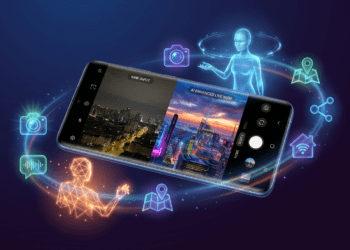
Pokémon Go isn’t just a game; it’s a bridge between the real and digital worlds. When you catch a Pikachu or spin a PokéStop, you’re not only playing—you’re helping train artificial intelligence in spatial understanding. Millions of players worldwide contribute to a massive data set that’s teaching AI how to perceive and navigate our 3D world.
The Intersection of Gaming and AI
Niantic, the company behind Pokémon Go, is on a mission to create a Large Geospatial Model (LGM). This model aims to give AI systems spatial intelligence. They will gain the ability to understand the physical world. They will also be able to predict it from different angles and perspectives.
Traditional AI struggles with this. For example, if an AI sees the front of a building, it can’t easily imagine what the back looks like. Humans do this naturally because we’ve seen many buildings and can fill in the gaps. Niantic wants AI to do the same.

Through games like Pokémon Go, Niantic collects real-world images from players. Every time you scan a PokéStop or submit a location, you’re adding to this vast pool of data. According to Niantic’s official blog, they have over 10 million scanned locations and receive about 1 million new scans each week. Each scan includes hundreds of images tied to precise GPS coordinates.
These images feed into Niantic’s Visual Positioning System (VPS). VPS uses images to determine a device’s exact position and orientation in the world. It’s like GPS but far more accurate—down to the centimeter. This allows for precise placement of virtual objects in the real world, enhancing augmented reality (AR) experiences.
Building the Large Geospatial Model
The data collected is used to train neural networks—over 50 million of them, totaling 150 trillion parameters. These networks learn from the images, creating a shared understanding of places around the globe. For instance, the AI analyzes thousands of churches from different angles. It can predict what a new church might look like from any viewpoint.
Niantic explains that their LGM “distills common information in a global large-scale model that enables communication and data sharing across local models.” This means the AI doesn’t just memorize images; it understands concepts like buildings, statues, and public squares.
You can read more about this on Niantic’s official blog post.
Human-Like Understanding
This approach mimics how humans perceive the world. If you see the front of a car, you can imagine the back, even if you’ve never seen that exact car before. The AI uses patterns and similarities from vast amounts of data to fill in missing pieces.
Niantic’s research papers, like ACE (2023) and MicKey (2024), showcase advancements in this area. These models can position two camera views relative to each other, even with drastic viewpoint changes.
From Local Models to Global Understanding
Initially, the AI models were local, focusing on specific areas with rich data. But local models have limitations—they can’t extrapolate beyond what they’ve seen. By moving to a global model, the AI can make intelligent guesses about new places based on what it has learned elsewhere.
For example, if the AI has only seen the front of a church but knows about thousands of other churches, it can predict what the back might look like. This global understanding enhances the AI’s ability to navigate and comprehend new environments.

Potential Applications and Concerns
The possibilities for LGMs are vast. In the consumer space, they can revolutionize AR experiences. Imagine AR glasses that not only overlay digital information but understand and interact with the physical world in real-time.
Beyond gaming, LGMs can impact:
- Robotics: Helping robots navigate complex environments.
- Autonomous Vehicles: Improving navigation and obstacle detection.
- Content Creation: Simplifying the generation of 3D models for virtual environments.
- Urban Planning: Providing detailed spatial data for architects and planners.
- Logistics: Enhancing route optimization and delivery systems.
Ethical Considerations
However, with great power comes great responsibility. Some experts express concerns about the potential misuse of this technology. Elise Thomas, an analyst at the Institute for Strategic Dialogue, tweeted:
“It’s so incredibly 2020s coded that Pokémon Go is being used to build an AI system which will almost inevitably end up being used by automated weapons systems to kill people.”
The military applications of AI are not theoretical. The U.S. National Geospatial-Intelligence Agency calls AI a “revolution in warfare and intelligence creation” on their official website. They acknowledge using AI to gain a competitive edge.
Countries like Ukraine are building AI-powered drone fleets, as reported by Forbes. China has also developed AI tools for its military, though they’ve agreed with the U.S. that humans should control nuclear weapons.
Pokémon Go and Military Concerns
Even before these AI advancements, Pokémon Go raised eyebrows in military circles. In 2016, U.S. military bases had to warn personnel against playing the game in restricted areas, as noted by Military Times.
More recently, a Belarusian military official claimed that Pokémon Go is a tool for Western intelligence, as reported by PCMag.
The Future of Spatial Computing
Niantic envisions a future where LGMs work alongside Large Language Models (LLMs). While LLMs understand and generate text, LGMs enable AI to perceive and navigate the physical world. Together, they can create assistants that guide you through cities, answer questions about your surroundings, and enhance real-world interactions.
As wearable devices like AR glasses become more prevalent, the blending of physical and digital realities will become seamless. Machines won’t just process data; they’ll understand context, space, and even cultural nuances.
Niantic states:
“As we move from phones to wearable technology linked to the real world, spatial intelligence will become the world’s future operating system.”
This vision positions LGMs as a foundational element of future technology ecosystems.
Balancing Innovation and Ethics
It’s essential to balance these technological advancements with ethical considerations. Ensuring privacy, security, and responsible use will be crucial as we integrate AI deeper into our daily lives.
Niantic’s focus remains on delivering “novel, fun, enriching experiences” to users. However, the broader implications of their work extend beyond gaming.
Conclusion
Your gameplay in Pokémon Go is contributing to something much bigger—a global effort to teach AI about the world we live in. By capturing creatures and exploring your neighborhood, you’re helping build models that could revolutionize technology across industries.
While there are concerns about potential misuse, the positive applications are vast. From enhancing AR experiences to improving robotics and urban planning, spatial intelligence in AI holds great promise.
As we stand on the brink of this new era, it’s an exciting time to be both a gamer and a participant in shaping the future of AI.