The AI search startup is walking away from advertising revenue, and the ripple effects could reshape how every major AI company makes money.
The Big Pivot Nobody Saw Coming
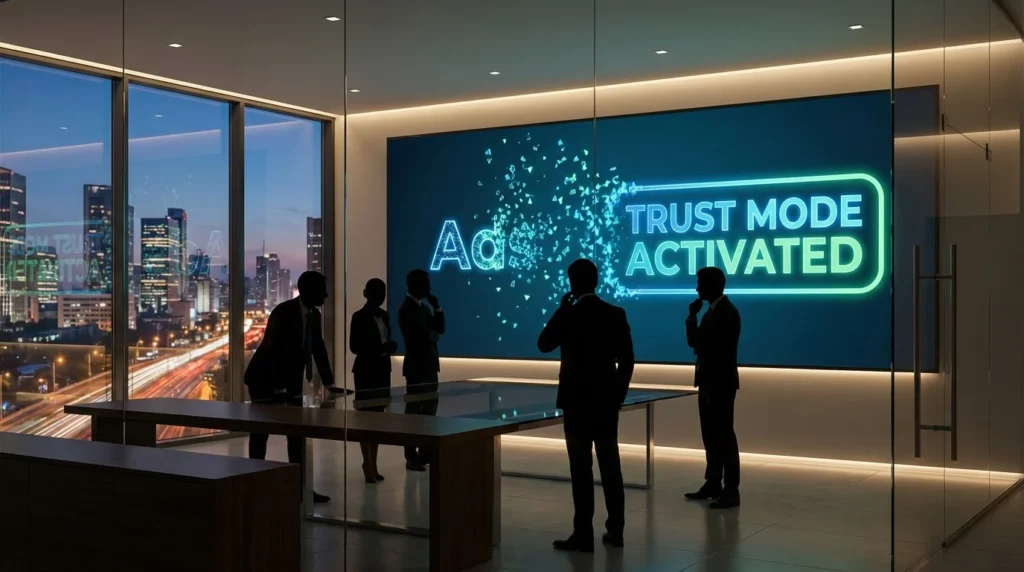
Perplexity just made a bold move. The AI search startup is phasing out ads and it’s not looking back.
Executives confirmed the shift at a roundtable event in February 2026. The company began winding down its advertising program late last year. Right now, it isn’t exploring any new ad deals. That’s a striking reversal for a startup that was actually one of the first generative AI companies to test ads on its platform back in 2024.
So what changed? Trust. Or rather, the fear of losing it.
“The challenge with ads is that a user would just start doubting everything,” an unnamed Perplexity executive told the Financial Times. That single sentence says a lot. It captures exactly why this decision matters not just for Perplexity, but for the entire AI industry.
When you ask an AI a question, you want the truth. You want accuracy. You don’t want a sponsored answer dressed up as an objective one. Perplexity’s leadership clearly believes that the moment ads enter the picture, users start second-guessing every response. And in the AI search business, doubt is poison.
“We Are in the Accuracy Business”
Perplexity isn’t just stepping away from ads. It’s making a statement about what kind of company it wants to be.
Another executive put it plainly: “We are in the accuracy business, and the business is giving the truth, the right answers.” That’s a powerful framing. It positions Perplexity not as a tech platform chasing clicks, but as a trusted information source more like a brilliant advisor than a billboard.
The company’s new focus? Subscriptions. Specifically, it’s targeting high-value professional users. Think finance professionals, lawyers, doctors, and CEOs. These are people who need reliable, expert-level answers fast. They’re willing to pay for that. And crucially, they’re the kind of users who would immediately notice and abandon a platform that starts pushing sponsored content.
This is a smart play. Premium users bring in stable, recurring revenue. They don’t require the same volume as ad-supported models. And they align perfectly with a brand built on accuracy and trust.
One executive did leave the door slightly ajar, noting that a return to advertising isn’t completely off the table in the future. But the message was clear: right now, ads are “misaligned with what the users want” and the company doesn’t need them to thrive. According to The Verge, the company is producing something consumers are “willing to pay for.”
The AI Industry’s Defining Divide
Here’s where things get really interesting. Perplexity’s move doesn’t exist in a vacuum. It’s part of a much bigger battle playing out across the AI industry right now.
On one side, you have companies like Perplexity and Anthropic. They’re betting on subscriptions. They’re betting on trust. Anthropic has made a firm public commitment to keep its AI assistant Claude completely ad-free. No exceptions.
On the other side, you have OpenAI. The company behind ChatGPT is going all-in on advertising. Last week, OpenAI started testing ads for free ChatGPT users. That’s a significant move for a company burning through roughly $5 billion annually. Ads make financial sense when your costs are that staggering.
But the two camps aren’t just disagreeing about business models. They’re disagreeing about values. And that disagreement has spilled into the public arena in a very visible way.
At the Super Bowl, Anthropic ran attack ads that clearly targeted ChatGPT’s ad-supported approach. The message was unmistakable. OpenAI CEO Sam Altman fired back, calling the ads “dishonest.” The gloves are off. This isn’t just a revenue debate anymore it’s a full-blown culture war inside the AI industry.
As HyperAI reports, the choice between ads and subscriptions is quickly becoming a defining issue one that could shape how users perceive and interact with AI for years to come.
Why This Matters Beyond Silicon Valley
You might think this is just a tech industry squabble. It isn’t. The outcome of this battle will affect how millions of people get information every single day.
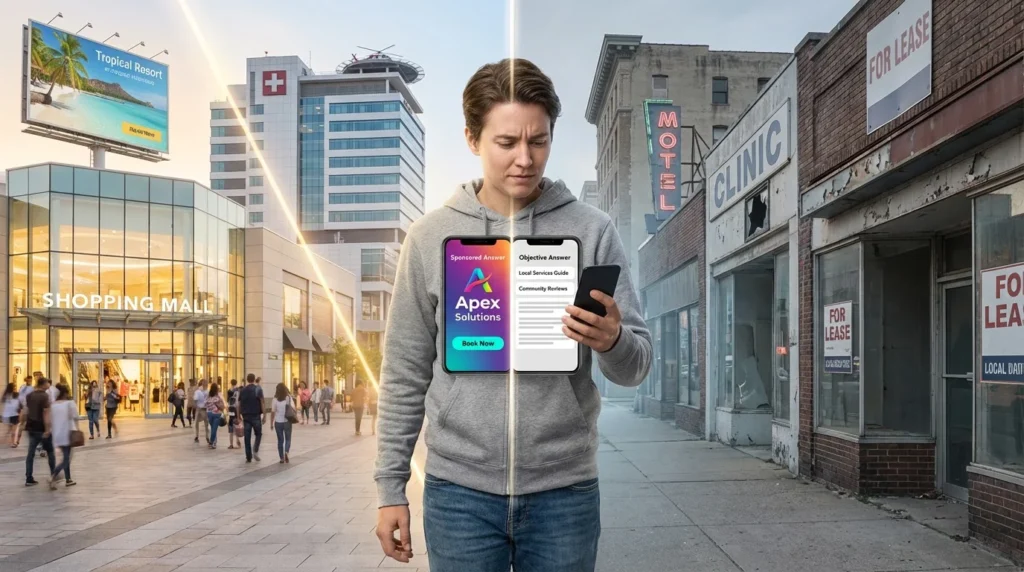
Think about how Google changed after 2010. Organic search results slowly gave way to paid placements. Today, the top of a Google results page is often dominated by ads. Many users can’t even tell the difference between a paid result and an organic one. That shift fundamentally changed how businesses compete for visibility online.
AI search is heading toward the same crossroads right now. If ad-supported AI models become dominant, the same dynamic plays out again. The companies that pay get the top answers. The companies that don’t get buried. Users asking “what’s the best option for X?” may get a sponsored recommendation instead of an honest one.
That’s the scenario Perplexity is explicitly rejecting. And it’s the scenario that has a lot of people — not just in tech paying close attention.
As Kore Komfort Solutions points out, this AI advertising war isn’t just Silicon Valley drama. It has real downstream consequences for businesses, consumers, and anyone who relies on AI-generated answers to make decisions.
The Trust Economy Is Real
There’s a deeper principle at work here. Trust is a currency. In the AI space, it might be the most valuable currency of all.
Users are already skeptical. They’ve seen AI hallucinate facts. They’ve seen chatbots confidently give wrong answers. Every time an AI makes a mistake, it chips away at user confidence. Now imagine layering ads on top of that. Imagine users wondering: Is this answer accurate, or is someone paying for it?
That’s a trust deficit that’s very hard to recover from. Perplexity’s leadership clearly understands this. They’re not just making a business decision they’re making a bet on the long game.
The subscription model is harder to scale quickly. It requires convincing users to open their wallets. It demands consistent, demonstrable quality. But it builds something ads never can: a loyal user base that genuinely believes the platform is on their side.
Anthropic is making the same bet with Claude. And now Perplexity is doubling down on it. Together, they’re signaling that a segment of the AI market is willing to compete on integrity rather than inventory.
OpenAI’s Gamble and the Road Ahead
OpenAI’s decision to embrace ads isn’t irrational. It’s pragmatic. The company faces enormous financial pressure. Building and running frontier AI models costs billions. Advertising provides a revenue stream that doesn’t require users to pay anything upfront. It lowers the barrier to entry. It keeps ChatGPT accessible to the masses.
But it comes with a cost. Every ad that appears in a ChatGPT response is a small erosion of the “neutral advisor” image that makes AI search valuable in the first place. Users notice. They talk. And in a market where trust is everything, perception matters enormously.
The question isn’t whether OpenAI can make money from ads. It clearly can. The question is whether it can do so without fundamentally changing how users feel about the product.
That’s the gamble. And right now, nobody knows how it plays out.
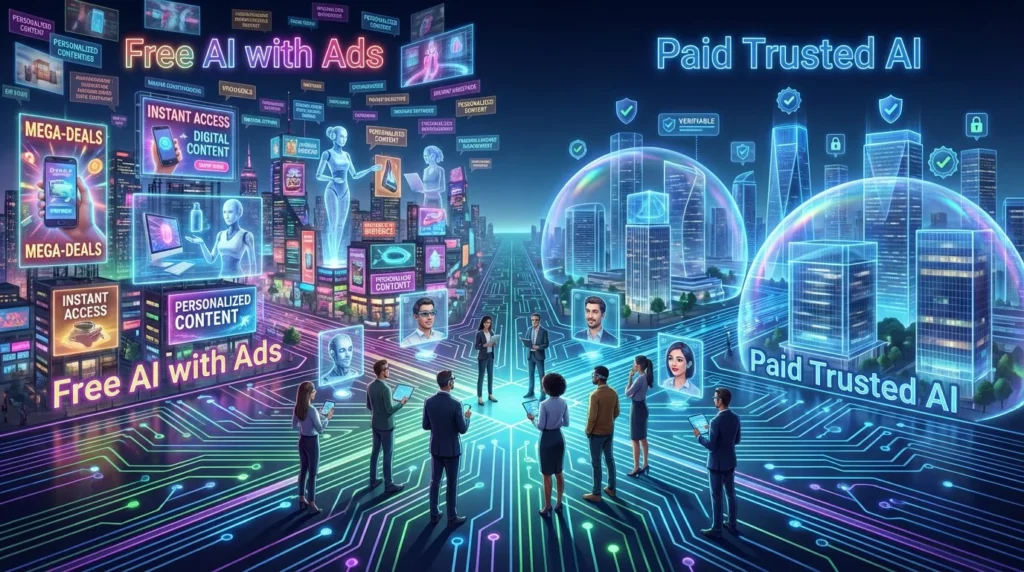
What we do know is that the AI industry has officially split into two camps. The ad-free camp is betting that users will pay for honesty. The ad-supported camp is betting that free access beats everything else. Both bets are rational. Both carry real risks.
What Comes Next
Perplexity’s pivot is a signal, not just a strategy. It tells the market that there’s a viable path to profitability that doesn’t involve selling user attention to advertisers. It tells users that some AI companies are willing to put accuracy above revenue at least for now.
The coming months will be telling. Will Perplexity’s subscription model generate enough revenue to sustain growth? And will OpenAI’s ad experiment alienate users or attract them? Lastly willAnthropic’s ad-free commitment hold as financial pressures mount?
These aren’t abstract questions. They’re the questions that will determine what AI search looks like in 2027 and beyond.
One thing is clear: the era of AI companies avoiding the monetization question is over. Every major player is now forced to pick a side. And the side they pick says a lot about what they actually value.
Perplexity has picked its side. Loudly.