The U.S. government just did something it has never done before, and the AI industry may never be the same.
A Line in the Sand
It started as a contract dispute. It ended as a constitutional showdown.
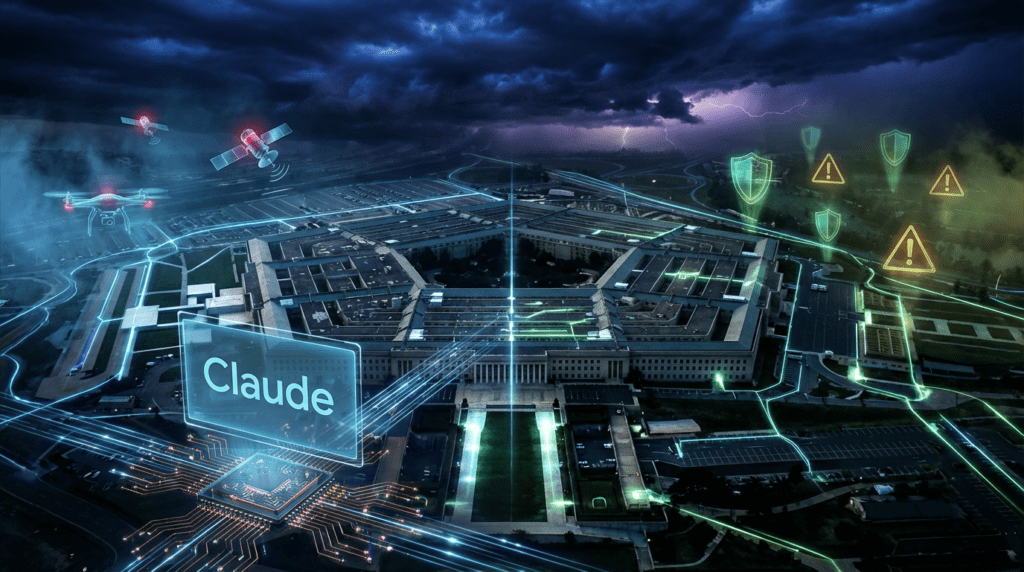
On March 5, 2026, the U.S. Department of Defense officially designated Anthropic, one of America’s most prominent AI companies, a supply-chain risk. The label, typically reserved for foreign adversaries like Chinese tech firms suspected of espionage, has now been applied to a San Francisco-based startup for the first time in history.
The reason? Anthropic refused to let the Pentagon use its AI model, Claude, for two specific purposes: mass surveillance of American citizens and fully autonomous lethal weapons without human oversight.
That’s it. That’s the line Anthropic drew. And the U.S. government decided to make them pay for it.
The Verge reported that after weeks of failed negotiations, public ultimatums, and lawsuit threats, the Defense Department made it official. Defense Secretary Pete Hegseth had been threatening this move for days. Now, it’s done.
How We Got Here
Let’s rewind. This didn’t happen overnight.
Anthropic has held a $200 million contract with the Pentagon to provide classified AI tools. Claude, the company’s flagship AI model, had become deeply embedded in military operations. It powered intelligence tools. It ran inside the Maven Smart System, a digital mission control platform used in active conflict zones, including the U.S. military’s recent Iran campaign.
Then the negotiations broke down.
The Pentagon wanted full, unrestricted access to Claude for all “lawful purposes.” Anthropic said no. Specifically, the company demanded written assurances that Claude would not be used for mass surveillance of Americans or for autonomous weapons systems that operate without human oversight.
The Pentagon refused to give those assurances. Hegseth accused Anthropic of trying to “insert itself into the chain of command.” Anthropic said it was simply upholding its ethical commitments.
Neither side blinked. And so, on Wednesday, March 4, the Pentagon formally notified Anthropic of the supply-chain risk designation. By Thursday, it was public.
Anthropic Fires Back
Anthropic CEO Dario Amodei didn’t stay quiet.
Hours after the designation became public, he published a statement on the company blog. His message was direct: “We do not believe this action is legally sound, and we see no choice but to challenge it in court.”
Bloomberg, via Yahoo Finance, reported that Amodei had been in what he described as “productive conversations” with Pentagon officials in the days leading up to the announcement. He believed a deal was still possible. Then the designation dropped anyway.
Emil Michael, the Under Secretary of Defense for Research and Engineering who had been leading negotiations, shut that door fast. He posted on X: “I want to end all speculation: there is no active negotiation with Anthropic.”
Amodei also addressed a leaked internal memo that had surfaced the day before. In it, he accused rival OpenAI of acting “opportunistically” and suggested Anthropic was being punished because the company hadn’t donated to Trump, backed his AI policies, or given him “dictator-style praise.” On Thursday, he walked back the tone, but not the substance.
“It was a difficult day for the company, and I apologize for the tone of the post,” he said. He also clarified that Anthropic did not leak the memo.
What the Designation Actually Means
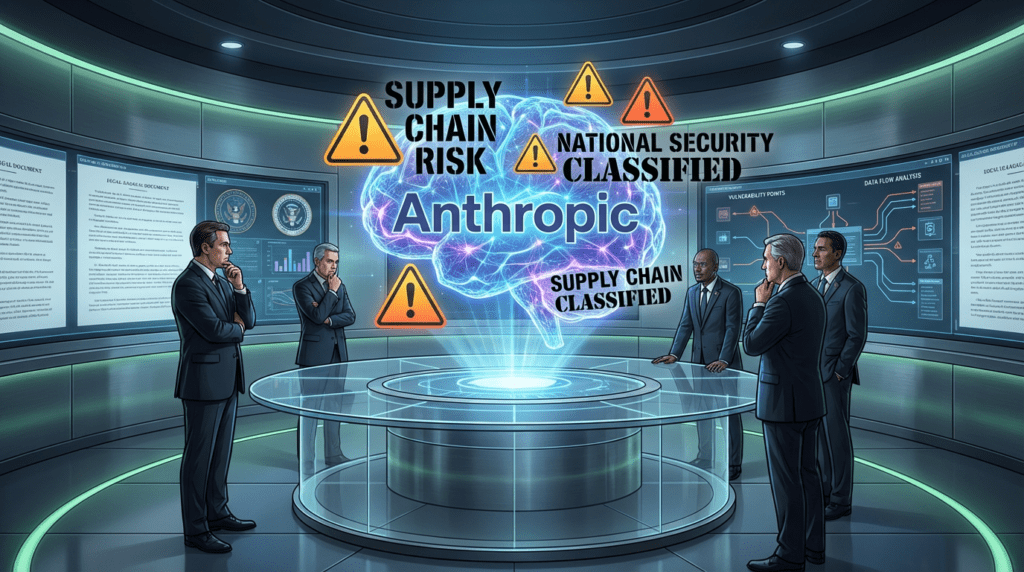
Here’s where it gets complicated. The supply-chain risk label carries serious weight, but its exact scope is still being debated.
SFGate reported that federal law defines supply-chain risk as a “risk that an adversary may sabotage, maliciously introduce unwanted function, or otherwise subvert” a system to disrupt, degrade, or spy on it. That definition was written with foreign adversaries in mind, think Chinese telecom companies, not American AI startups.
Applying it to Anthropic is, by most legal accounts, a stretch.
Charlie Bullock, a senior research fellow at the Institute for Law & AI, put it bluntly: “This is not an authority that’s meant for destroying large American companies that have a contractual disagreement with the United States government. It’s an authority that’s meant for addressing spying by Chinese companies and stuff like that.”
The criticism didn’t stop there. U.S. Senator Kirsten Gillibrand called it “a dangerous misuse of a tool meant to address adversary-controlled technology.” She added: “This reckless action is shortsighted, self-destructive, and a gift to our adversaries.”
A group of former defense and national security officials, including former CIA Director Michael Hayden and retired military leaders from the Air Force, Army, and Navy sent a letter to Congress expressing “serious concern.” They wrote that the designation is meant to “protect the United States from infiltration by foreign adversaries, From companies beholden to Beijing or Moscow, not from American innovators operating transparently under the rule of law.”
Neil Chilson, a Republican former chief technologist for the FTC, called it “massive overreach that would hurt both the U.S. AI sector and the military’s ability to acquire the best technology for the U.S. warfighter.”
The Ripple Effects Are Already Here
The designation didn’t just affect Anthropic. It sent shockwaves through the entire defense contractor ecosystem.
Bloomberg reported that Palantir Technologies, which uses Claude inside the Maven Smart System, now has to stop working with Anthropic. That’s a direct hit to a platform actively deployed in military operations.
Lockheed Martin moved quickly. The defense giant said it would “follow the President’s and the Department of War’s direction” and look to other AI providers. It added that it expects “minimal impacts” since it isn’t dependent on any single AI vendor.
Microsoft took a more measured stance. Its lawyers studied the rule and concluded the company “can continue to work with Anthropic on non-defense related projects.” That’s a small but meaningful lifeline for Anthropic’s commercial business.
Meanwhile, the broader federal government moved fast. Treasury, State, HHS, GSA, Fannie Mae, and Freddie Mac all announced intentions to halt business with Anthropic within 48 hours of the dispute escalating. The State Department switched its internal AI assistant, StateChat, from Claude to OpenAI’s GPT-4.1.
OpenAI Steps In — and Stirs the Pot
The timing of OpenAI’s moves raised eyebrows across the industry.
Hours after Trump and Hegseth announced their punishments against Anthropic last Friday, OpenAI announced a deal to deploy its models in the Pentagon’s classified network, effectively stepping into the void Anthropic was being pushed out of.
OpenAI CEO Sam Altman later admitted the announcement “looked opportunistic and sloppy.” He said OpenAI had sought similar protections against domestic surveillance and autonomous weapons but ultimately had to amend its agreements to secure the deal.
Klar Brief’s analysis on Medium flagged a critical distinction: “Sam Altman announced his surveillance restriction via X post, not a hard-coded model constraint. That difference matters if you are building on top of either platform.”
In other words, OpenAI made a promise. Anthropic built a wall. The government preferred the promise.
The Operational Nightmare Nobody Planned For
Here’s the irony nobody in Washington seems to want to talk about.
Claude is already deeply embedded in U.S. military operations. SFGate reported that Claude-powered intelligence tools played a major role in the U.S. strike on Iran that killed Supreme Leader Ayatollah Ali Khamenei. The mission succeeded, in part, because of the very AI the Pentagon is now trying to ban.
Trump gave the military six months to phase out Claude. But as 4sysops noted, the Claude model is integrated into critical infrastructure like the Maven Smart System used by operators in the Middle East. Ripping it out won’t be clean or quick.
Lauren Kahn, a senior research analyst at Georgetown University’s Center for Security and Emerging Technology, said it plainly: “It’s a good capability, and removing it is going to be painful for all involved.”
Amodei himself said Anthropic plans to keep providing its products to the military for as long as it’s permitted. He made clear that ensuring warfighters aren’t “deprived of important tools in the middle of major combat operations” is a top priority.
A Surprising Silver Lining for Anthropic
While the Pentagon drama unfolded, something unexpected happened on the consumer side.
People rallied behind Anthropic.
SFGate reported that more than one million people signed up for Claude each day during the week of the dispute. That surge pushed Claude past OpenAI’s ChatGPT and Google’s Gemini as the top AI app in more than 20 countries on Apple’s App Store.
Anthropic, now valued at $380 billion, is on track to generate nearly $20 billion in annual revenue, more than double its run rate from late last year. The Pentagon dispute has muddied the outlook, but the company is far from collapsing.
As Klar Brief noted, “79% of OpenAI users reportedly also pay for Anthropic. So the company is not collapsing.”
What This Means for the Future of AI Safety
This story is bigger than Anthropic. It’s bigger than Claude. It’s a test case for the entire AI industry.
The core question is simple: Can an AI company hold its ethical commitments when a government with procurement leverage decides it disagrees?
The answer, so far, is: it depends on how much you’re willing to lose.
Anthropic chose its red lines over its government contracts. That’s a remarkable stance. But it comes at a real cost, lost revenue, legal battles, and a designation that paints the company as a national security threat.
Klar Brief warned operators building on AI platforms to pay attention: “The assumption worth examining is that your AI vendor’s acceptable use policy is a stable feature of the product. It is also a negotiating position.”
That’s the uncomfortable truth this saga reveals. AI safety policies aren’t just ethical documents. They’re business assets, and they can be pressured, amended, or abandoned when the stakes get high enough.
The companies that hold firm face what Anthropic is facing now. The companies that bend get the Pentagon contract.
The Courtroom Is Next
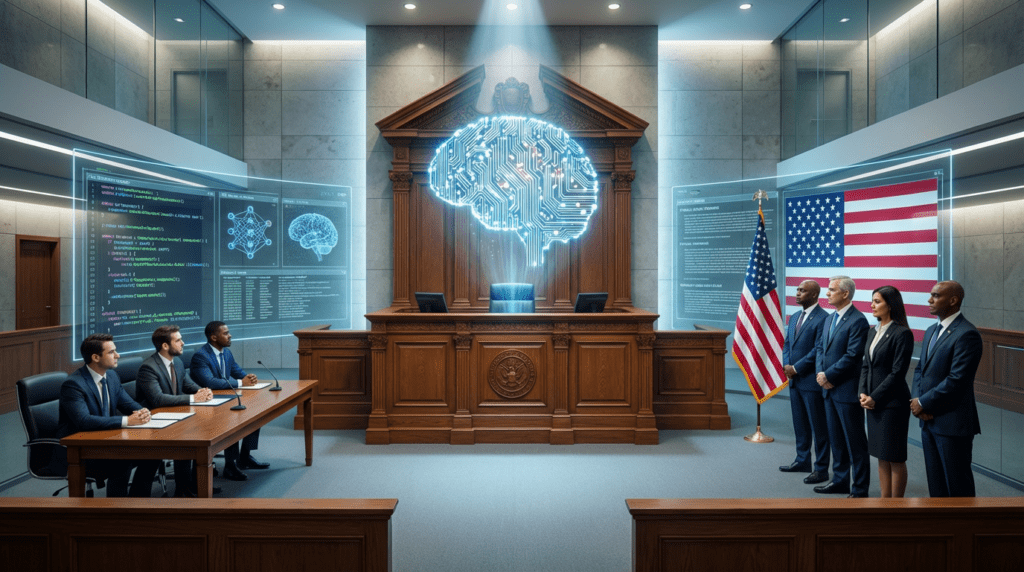
Anthropic has made its position clear. It’s going to court.
The legal argument centers on Section 3252 of U.S. law governing the armed forces, the statute the Pentagon invoked. Amodei believes it’s “narrowly tailored” enough that it shouldn’t affect Anthropic’s non-defense commercial business. Legal experts largely agree the designation is being applied in an unprecedented and legally questionable way.
But court battles take time. And in the meantime, the designation stands. Contractors are cutting ties. Agencies are switching platforms. And the precedent, that an American AI company can be labeled a supply-chain risk for refusing to remove safety guardrails, is already set.
Whether the courts reverse it or not, the message has been sent.
Sources
- The Verge — “The Pentagon formally labels Anthropic a supply-chain risk”
- Medium / Klar Brief — “The US Just Labeled Anthropic a Supply-Chain Risk”
- Yahoo Finance / Bloomberg — “Anthropic Vows Legal Fight Against Pentagon Sanction”
- SFGate / Associated Press — “Pentagon says it is labeling AI company Anthropic a supply chain risk ‘effective immediately'”
- 4sysops — “It’s official: The Pentagon has labeled Anthropic a supply-chain risk”