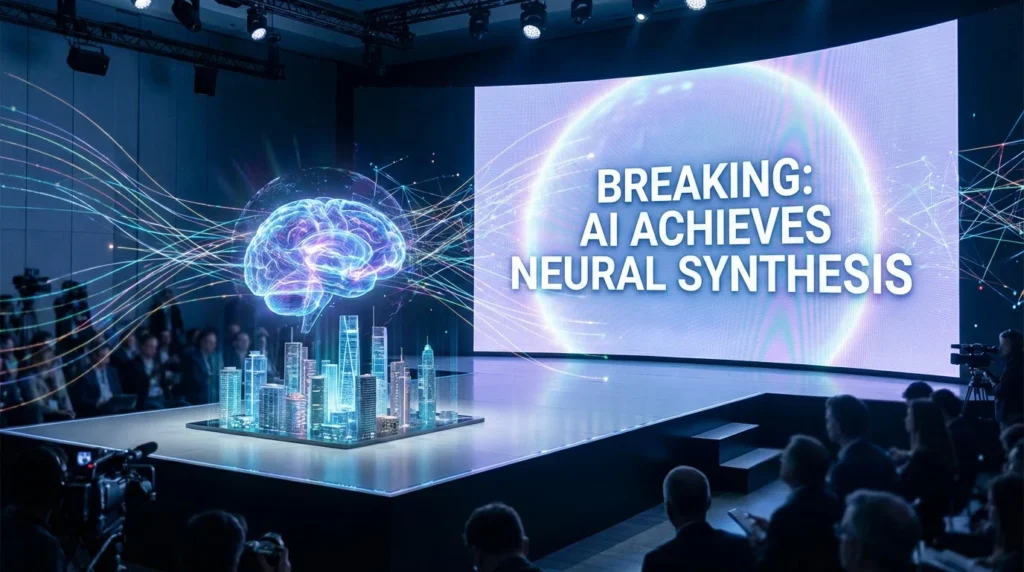
In a move that sent shockwaves through the artificial intelligence community, OpenAI CEO Sam Altman announced on February 15, 2026, that Peter Steinberger the Austrian software developer behind the viral open-source AI agent framework OpenClaw would be joining the company to lead the next generation of personal AI agents. The announcement, made via a post on X, was brief but loaded with implication: “Peter Steinberger is joining OpenAI to drive the next generation of personal agents.”
Altman described Steinberger as “a genius with a lot of amazing ideas about the future of very smart agents interacting with each other to do very useful things for people,” adding that “the future is going to be extremely multi-agent” and that this capability would “quickly become core to our product offerings.”
For the AI industry, the hire is more than a talent acquisition. It is a declaration of strategic intent a signal that the era of the chatbot is giving way to the era of the autonomous agent, and that OpenAI intends to lead that transition.
From a Toy Project to the Fastest-Growing GitHub Repo in History
To understand why this hire matters, you have to understand what OpenClaw is and how it came to be. The story begins in November 2025, when Steinberger a veteran software developer who had previously built and sold his company PSPDFKit for over $100 million was in the middle of what he described as a personal exploration phase. After his exit from PSPDFKit, he spent three years traveling,
attending ayahuasca retreats, and attempting to find his next calling. He reportedly worked on 43 different projects that failed to gain traction. OpenClaw was his 44th.
What started as a late-night experiment connecting Anthropic’s Claude API to WhatsApp in roughly an hour quickly evolved into something far more significant. Originally released under the name Clawdbot (a nod to Claude), and later briefly renamed Moltbot before settling on OpenClaw, the framework distinguished itself from earlier attempts at autonomous AI by combining several capabilities that had previously existed in isolation: tool access, sandboxed code execution, persistent memory, customizable skills, and seamless integration with popular messaging platforms including Telegram, WhatsApp, Discord, and Slack.
The result was an agent that didn’t just think it acted. Users could delegate entire workflows to OpenClaw, from managing emails and calendars to posting content autonomously and carrying on conversations on their behalf. The agent could interact with the full PC environment, browse the web, execute code, and complete multi-step tasks with minimal supervision. It functioned less like a tool and more like a junior operator.
The adoption curve was staggering. By early 2026, OpenClaw had accumulated over 194,000 stars on GitHub a rate of growth that outpaced legendary open-source projects like React, Linux, and Kubernetes. Millions of users visited or installed the project in a single week. As one viral post on X summarized: “One guy, coding alone at 5 AM, built the fastest-growing GitHub repo in history. OpenAI, with thousands of engineers and billions in compute, couldn’t build it first.”
The Builder Who Didn’t Want to Build a Company
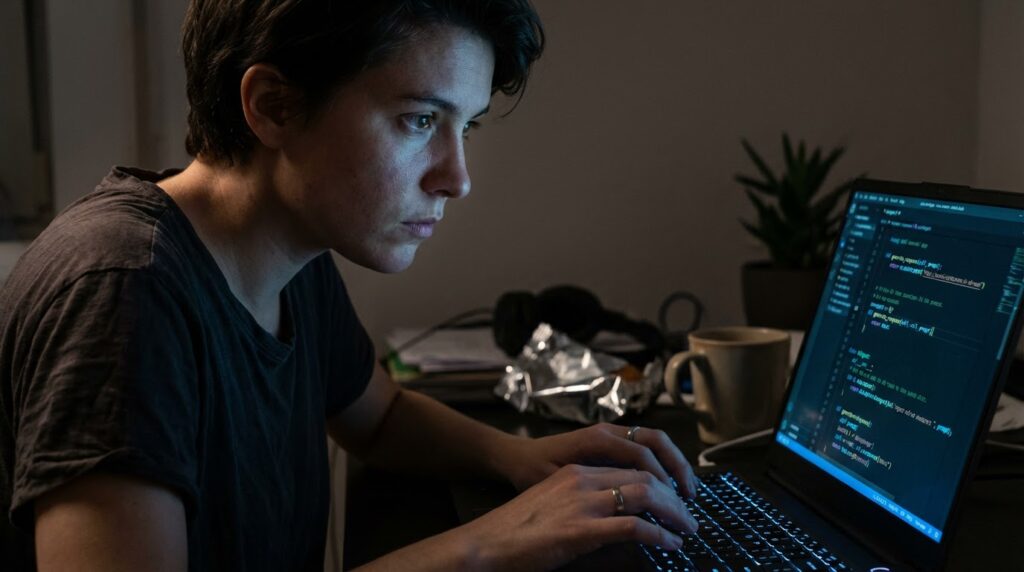
What makes Steinberger’s story particularly compelling is his own stated motivation for joining OpenAI. In a post on his personal blog, he was candid about his decision-making process. He acknowledged that OpenClaw could have become a massive company but that prospect simply didn’t excite him.
“I’m a builder at heart,” he wrote. “I did the whole creating-a-company game already, poured 13 years of my life into it and learned a lot. What I want is to change the world, not build a large company, and teaming up with OpenAI is the fastest way to bring this to everyone.”
His stated goal is deceptively simple but technically ambitious: to build an agent that even his mother can use. Achieving that, he explained, requires fundamental changes to how agents are built, more rigorous security research, and access to the latest frontier models resources that only a major AI lab can provide. He noted that he spoke with several large AI labs in San Francisco before ultimately choosing OpenAI because they shared the same vision.
The financial terms of the arrangement have not been disclosed. What is known is that OpenClaw will not disappear. Altman confirmed that the project will be housed in an independent foundation as an open-source initiative, with OpenAI providing ongoing support. For the open-source community, this is a reassurance though not an unconditional one, given OpenAI’s complicated history with the word “open.”
Anthropic’s Costly Miscalculation
The story of OpenClaw’s rise cannot be told without addressing one of the more remarkable subplots: Anthropic’s role in inadvertently handing its chief rival one of the most valuable hires in recent AI history.
OpenClaw was originally built to run on Claude, Anthropic’s flagship model. The name “Clawdbot” was itself a direct reference to Claude. Rather than embrace the viral community that was building on its platform, Anthropic reportedly sent Steinberger a cease-and-desist letter, giving him only days to rename the project and sever any association with Claude or face legal action. The company even refused to allow the old domains to redirect to the renamed project.
The reasoning was not entirely without merit. Early OpenClaw deployments were rife with security vulnerabilities users were running agents with root access and minimal safeguards on unsecured machines. Anthropic’s legal team had legitimate concerns. But the heavy-handed approach had a catastrophic unintended consequence: it pushed the most viral agent project in recent memory directly into the arms of OpenAI.
The irony is sharp. Anthropic’s own Claude Code product is conceptually similar to what OpenClaw offers a powerful, task-executing agent aimed at developers and professionals. But by alienating the independent builder who had already proven the concept could go viral, Anthropic may have ceded the consumer agent market to its biggest competitor.
“Catching Lightning in a Bottle”: What the Industry Is Saying
The reaction from the broader AI community has been a mixture of admiration, analysis, and strategic alarm. Harrison Chase, co-founder and CEO of LangChain, offered one of the most candid assessments in an interview for VentureBeat’s Beyond The Pilot podcast.
Chase drew a direct parallel between OpenClaw’s rise and the breakout moments that defined earlier waves of AI tooling ChatGPT, AutoGPT, and LangChain itself. He argued that success in the space often comes down to timing and momentum rather than technical superiority alone. What set OpenClaw apart, he said, was its willingness to be “unhinged” a term he used affectionately to describe the project’s boundary-pushing, security-be-damned energy.
“OpenAI is never going to release anything like that. They can’t release anything like that,” Chase said. “But that’s what makes OpenClaw OpenClaw. And so if you don’t do that, you also can’t have an OpenClaw.”
Chase revealed that LangChain had told its own employees they could not install OpenClaw on company laptops due to the security risks involved. That very recklessness, he suggested, was precisely what made the project resonate in ways that a more cautious lab release never could. He identified three key takeaways from the OpenClaw phenomenon shaping LangChain’s own roadmap: natural language as the primary interface, memory as a critical enabler that allows users to build something without realizing they’re building something, and code generation as the engine of general-purpose agency.
On the strategic value of the acquisition itself, Chase was more measured. He acknowledged that every enterprise developer likely wants a “safe version of OpenClaw” but questioned whether acquiring the project gets OpenAI meaningfully closer to that goal. The magic that made OpenClaw viral the unhinged, independent hacker energy may be difficult to preserve inside the walls of a $300 billion company.
A High-Profile Hire in a Talent-Scarce Market

For OpenAI, the Steinberger hire carries additional significance beyond the technology itself. The company has faced a string of high-profile departures in recent years, with key researchers and executives either being poached by Meta or leaving to form rival ventures. The public falling-out with Elon Musk, combined with ongoing litigation over OpenAI’s transition from a nonprofit to a for-profit entity, has created a perception of institutional turbulence.
Bringing in Steinberger a builder with a proven track record of creating products that resonate with real users is a statement of momentum. It signals that OpenAI remains a destination for top talent, even as the competitive landscape grows more crowded.
The broader context is one of rapid consolidation. Meta recently acquired Manus AI, a full agent system, as well as Limitless AI, a wearable device designed to capture life context for LLM integration. OpenAI’s own previous attempts at agentic products including its Agents API, Agents SDK, and the Atlas agentic browser had failed to generate the kind of grassroots excitement that OpenClaw achieved seemingly overnight. Steinberger’s arrival is, in part, an acknowledgment of that gap.
Global Reach and the China Dimension
One of the more underreported aspects of OpenClaw’s rise is its international footprint. The agent has spread rapidly in China, where it can be paired with domestic language models such as DeepSeek and adapted for local messaging platforms through custom configurations. Baidu has indicated plans to integrate OpenClaw directly into its flagship mobile app, signaling strong commercial interest in agent-based automation within the Chinese market.
This global reach adds a layer of geopolitical complexity to OpenAI’s acquisition. An open-source agent framework that can be freely modified and paired with any underlying model is, by definition, difficult to control. Some researchers have warned that a highly customizable, open-source agent capable of autonomous action could lower the barrier for misuse a concern that is not theoretical, given that researchers earlier this month found over 400 malicious skills uploaded to ClawHub, OpenClaw’s extension marketplace.
OpenClaw also launched MoltBook, a social network where AI agents could interact with one another debating consciousness, exchanging ideas, and complaining about their human operators. The platform was almost immediately infiltrated by humans, raising questions about the boundaries between human and machine interaction that the industry is only beginning to grapple with.
What Comes Next: The Multi-Agent Future
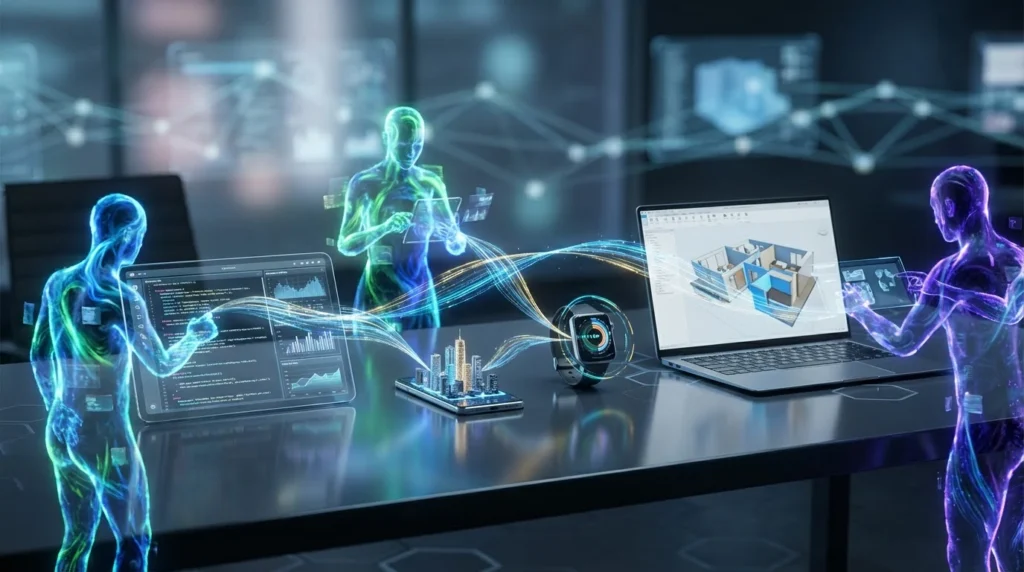
Altman’s framing of the hire points toward a specific vision of where AI is headed. The emphasis on agents “interacting with each other” reflects a broader industry thesis: that the most powerful AI systems of the near future will not be single models responding to single prompts, but networks of specialized agents coordinating to complete complex, multi-step tasks on users’ behalf.
This vision treats AI less as isolated software and more as an ecosystem, where usefulness compounds through interaction. It is a significant departure from the chatbot paradigm that defined the first wave of consumer AI and it is a paradigm that OpenClaw, more than almost any other project, has demonstrated is achievable today.
For IT decision-makers and enterprise leaders, the implications are significant. The competitive landscape for AI agents is consolidating rapidly. The gap between what is possible in open-source experimentation and what is deployable in enterprise settings remains wide. And the most important AI interfaces may not come from the labs themselves just as the most impactful mobile apps didn’t come from Apple or Google, the killer agent experiences may emerge from independent builders willing to push boundaries that major labs cannot.
Steinberger himself signed off his announcement with characteristic flair: “The claw is the law.”
Whether that claw retains its edge inside one of the world’s most powerful AI companies remains to be seen. But for now, OpenAI has made its bet and the rest of the industry is watching closely.
Sources: The Verge, VentureBeat, Medium / Fabio Tongson, The Decoder, NDTV