


The chip giant’s pivot to artificial intelligence leaves PC gaming enthusiasts in limbo as memory shortages reshape the graphics card landscape
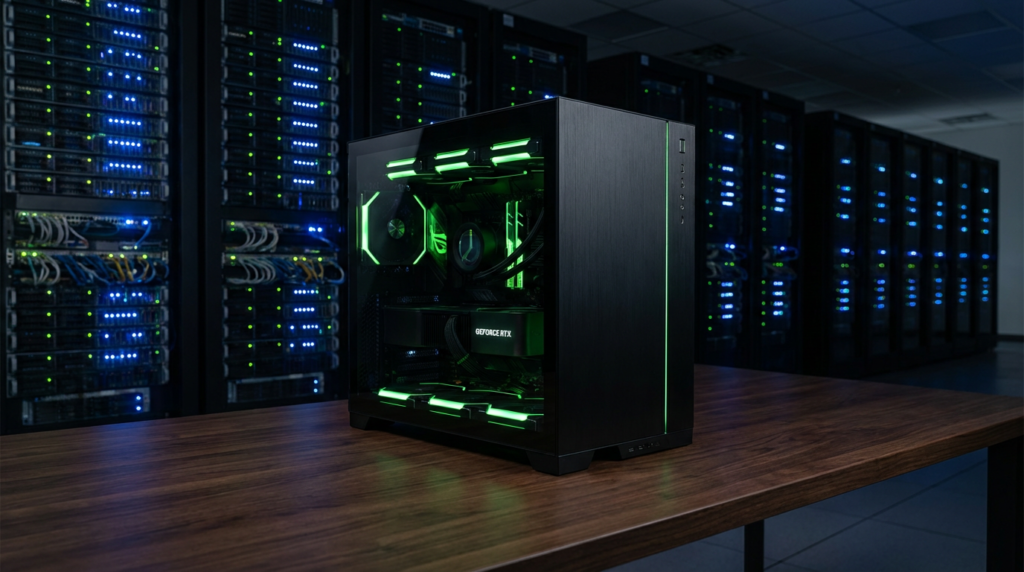
If you’ve been holding out for Nvidia’s next generation of gaming graphics cards, you might want to get comfortable. The wait just got a whole lot longer. According to multiple industry reports, Nvidia has effectively shelved its plans for new gaming GPUs throughout 2026, with the highly anticipated RTX 6000 series now unlikely to arrive until 2028 at the earliest.
This marks a seismic shift in the gaming hardware landscape. For the first time in three decades, Nvidia won’t be releasing any new gaming graphics processing units during a calendar year not even the incremental “Super” refreshes that gamers have come to expect between major generational leaps.
The Memory Crisis Driving the Delay
At the heart of this unprecedented delay lies a global memory shortage that’s sending shockwaves through the entire tech industry. The Information broke the story in early February 2026, citing sources with direct knowledge of Nvidia’s internal roadmap. The report reveals that Nvidia managers made the decision to delay their gaming GPU plans back in December 2025, prioritizing the company’s lucrative AI chip business over consumer gaming products.
The math behind this decision is brutally simple. Nvidia’s third-quarter 2026 earnings painted a stark picture of where the company’s priorities now lie. Data center revenue driven almost entirely by AI chips accounted for a staggering $51.2 billion out of Nvidia’s total $57 billion in revenue. While gaming revenue did grow by 30 percent during the same period, it represents an increasingly small slice of Nvidia’s financial pie.
When memory chips are in short supply and you have to choose between products that generate billions in AI revenue versus millions in gaming revenue, the decision practically makes itself. That’s the cold reality facing PC gamers in 2026.
What Happened to the RTX 5000 Super Series?
The gaming community had been eagerly anticipating the RTX 5000 Super refresh, which was widely expected to make an appearance at CES 2026 in January. Those cards never materialized. According to GamesRadar, Nvidia had completed the design work for these refreshed graphics cards, codenamed “Kicker,” but pulled the plug on their scheduled release without providing a new timeline.
The rumored specifications for these Super variants were mouth-watering. Industry leakers had suggested an RTX 5070 Super with 18GB of video RAM, while the RTX 5070 Ti Super and RTX 5080 Super were each expected to pack 24GB of VRAM. In an era where memory is scarce and expensive, launching products that require such generous helpings of RAM simply doesn’t make business sense for Nvidia right now.
But the bad news doesn’t stop there. TechRadar reports that Nvidia is also “slashing production” of its existing RTX 5000 series cards. While the company hasn’t disclosed specific numbers, industry sources suggest production cuts could range from 15 to 20 percent. For gamers already struggling to find RTX 5000 cards in stock at reasonable prices, this is particularly troubling news.
The RTX 6000 Series: A 2028 Story
Perhaps most concerning for enthusiasts planning their next build is the fate of Nvidia’s next-generation RTX 6000 series. These cards were originally scheduled to enter mass production at the end of 2027, which would have positioned them for a consumer launch in early 2028. However, with the Super refresh now delayed indefinitely and production of current-gen cards being scaled back, that timeline appears increasingly optimistic.
TechDator notes that the RTX 6000 series will likely be based on Nvidia’s Rubin architecture, which is expected to debut first in data center products in late 2026 or early 2027. Consumer adaptations typically follow professional releases by several months, if not longer. With the entire roadmap now in flux, a 2028 launch for RTX 6000 gaming cards seems like the best-case scenario and even that’s not guaranteed.
This extended cycle represents a significant departure from Nvidia’s recent pattern of roughly two-year generational updates. The RTX 30 series launched in 2020, the RTX 40 series arrived in 2022, and the RTX 50 series debuted in late 2024 and early 2025. Stretching that cycle to three or even four years could allow for more substantial architectural leaps, but it also risks ceding market momentum to competitors.
AMD’s Opportunity and Challenges
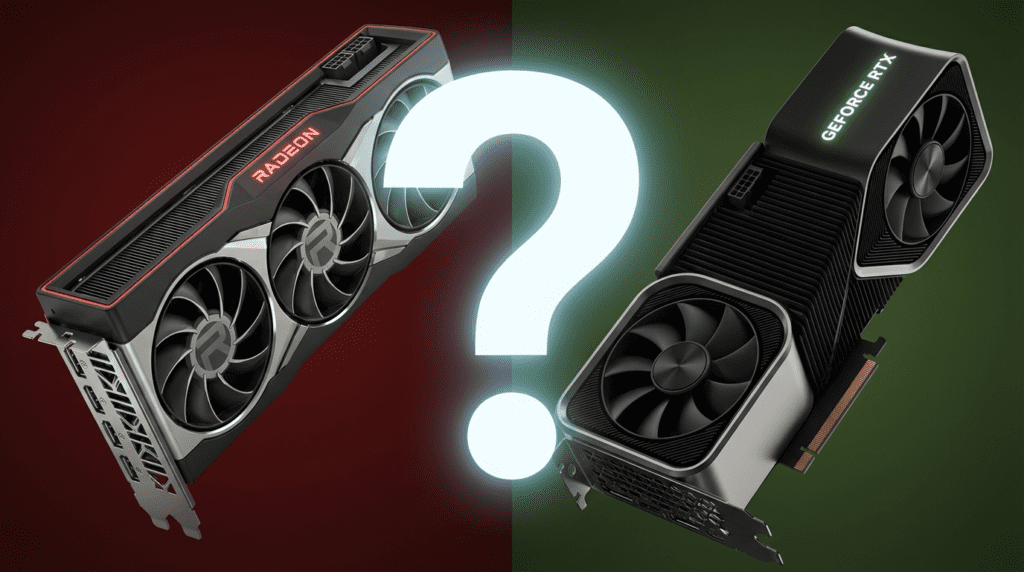
Nvidia’s retreat from the gaming GPU market in 2026 theoretically opens a window of opportunity for its primary rival, AMD. The company is preparing its RDNA 4 architecture for a 2026 release, which could challenge Nvidia’s high-end gaming segment if the RTX 50 series remains the current flagship lineup without any refreshes.
However, AMD faces its own challenges. Recent rumors suggest that both Nvidia and AMD are shifting production priorities toward 8GB graphics cards rather than 16GB models, much to the frustration of gamers who consider 8GB insufficient for modern gaming at high settings. If AMD is facing similar memory constraints and market pressures, the company may not be able to fully capitalize on Nvidia’s absence from the new product launch calendar.
The DLSS 4.5 Consolation Prize
While Nvidia may not be delivering new hardware in 2026, the company isn’t leaving gamers completely empty-handed. At CES 2026, Nvidia announced DLSS 4.5, featuring a new technology called Dynamic Multi-Frame Generation. According to GamesRadar, this feature is expected to roll out in April 2026.
Dynamic Multi-Frame Generation represents an evolution of Nvidia’s AI-powered frame generation technology. Rather than applying a fixed level of frame generation, the new system can adjust the number of artificial frames situationally, ramping up to a new x6 mode when your GPU really needs a performance boost. The technology uses refresh rate as a target, theoretically making slideshow-style frame rates and stuttering a thing of the past, even on lower-end GPUs handling demanding workloads.
On paper, this sounds promising. The driver-controlled mode could provide a more logical approach to frame generation, delivering smooth performance without requiring gamers to manually adjust settings. However, the technology has sparked debate within the gaming community about the growing distance between native rendering and AI-enhanced experiences that critics dismiss as “fake frames.”
Some industry observers worry that Nvidia’s strategy is to answer hardware demands with software enhancements, potentially creating a future where gaming PCs become increasingly reliant on AI tools rather than raw computational power. As one hardware editor put it, there’s a legitimate concern that this rabbit hole leads to a place where home rigs depend on the same AI technologies that are financially locking gamers out of hardware upgrades.
What This Means for PC Gamers
The practical implications of Nvidia’s strategy shift are significant and multifaceted. First and most obviously, gamers planning system upgrades in 2026 and 2027 will have fewer options than they’ve enjoyed in recent years. The RTX 5000 series will remain the current generation for an extended period, with no Super refreshes to provide mid-cycle performance bumps at various price points.
econd, Nvidia is cutting back production of existing RTX 5000 cards while demand remains strong, making price increases likely. The basic economics of supply and demand suggest that scarcer products command higher prices, and we’re already seeing RTX 5000 cards consistently sold out at major retailers. Some reports have even surfaced of lucky shoppers finding deeply discounted cards due to pricing errors, highlighting just how chaotic the market has become.
Third, the extended wait for next-generation hardware means that current-generation cards will need to last longer. Gamers who purchased RTX 4000 series cards expecting to upgrade to RTX 6000 models in 2027 may need to hold onto their current hardware until 2028 or beyond. This isn’t necessarily catastrophic modern GPUs remain capable for several years but it does represent a shift in the upgrade cycle that many enthusiasts have come to expect.
The Broader Industry Impact
Nvidia’s pivot away from gaming GPUs reflects broader trends in the technology industry. The AI boom has fundamentally reshaped priorities across the semiconductor sector, with companies racing to meet insatiable demand for AI accelerators and data center hardware. Digitimes reports that the global memory shortage intensifying these pressures, forcing difficult allocation decisions across product lines.
This isn’t just a Nvidia story. The memory crisis is affecting everything from smartphones to gaming consoles. Apple is reportedly working to keep iPhone 18 prices flat despite RAM shortages, while Valve has had to revisit both pricing and release timing for its Steam Machine due to rapidly increasing memory and storage costs. Even Raspberry Pi has announced price increases as memory shortages continue to squeeze margins across the industry.
The situation has become so severe that some analysts are warning of an “unprecedented and record-breaking surge” in RAM costs. For an industry built on the expectation of steadily improving price-to-performance ratios, this represents a significant disruption to the normal order of things.
Could Nvidia Change Course?
It’s worth noting that Nvidia hasn’t set its roadmap in stone. As The Verge points out, it’s not impossible that the company could move the timeline for its new gaming GPUs back up if market conditions change. If the memory shortage eases or if AMD begins to make significant inroads in the gaming GPU market, Nvidia might find reason to accelerate its gaming product plans.
However, given the company’s current financial trajectory and the ongoing strength of AI demand, such a reversal seems unlikely in the near term. Nvidia has transformed from a gaming-focused company into an AI powerhouse, and that transformation appears to be permanent rather than temporary.
When asked for comment on these reports, Nvidia has provided only generic reassurances. The company told The Information that it continues to ship all GeForce products and is working with suppliers to maximize memory availability. Nvidia offered the same reassurances when rumors circulated that it was dropping the RTX 5070 Ti from production lines claims the company flatly denied at the time.
Looking Ahead
For PC gaming enthusiasts, the next two years present an unusual challenge. The rapid pace of GPU innovation that characterized the 2020s appears to be taking a pause, at least on the gaming side of Nvidia’s business. Gamers will need to make their current hardware last longer, pay premium prices for existing inventory, or consider alternative platforms.
The silver lining, if there is one, is that game developers will have a more stable hardware target for a longer period. When the installed base of gaming GPUs remains relatively static, developers can optimize more effectively for existing hardware rather than constantly chasing the next generation of capabilities.
There’s also the possibility that this extended cycle will result in more substantial generational leaps when new hardware finally does arrive. If the RTX 6000 series doesn’t launch until 2028, it will represent a three-to-four-year gap from the RTX 5000 series. That’s enough time for meaningful architectural improvements and process node advancements that could deliver more impressive performance gains than the incremental updates we’ve seen in recent generations.
The Bottom Line

Nvidia’s decision to prioritize AI chips over gaming GPUs is a rational business decision that reflects the realities of the current technology landscape. AI is where the money is, and in a world of constrained memory supply, companies must make hard choices about resource allocation.
For gamers, however, this is undeniably disappointing news. The prospect of no new gaming GPUs in 2026, reduced production of existing models, and a next-generation launch pushed back to 2028 represents the most significant disruption to the PC gaming hardware market in decades.
The situation underscores a fundamental tension in the modern technology industry: the same companies that built their reputations serving gamers and enthusiasts are now finding far more lucrative opportunities in enterprise and AI markets. As these companies grow and evolve, their priorities inevitably shift toward wherever the revenue and profit margins are highest.
Whether this represents a temporary disruption or a permanent reordering of priorities remains to be seen. What’s clear is that PC gamers will need to adjust their expectations and upgrade plans accordingly. The era of regular, predictable GPU launches may be over, at least for the foreseeable future.
Sources
- GamesRadar – Nvidia RTX 6000 GPUs might not actually happen next year
- TechDator – Nvidia Reportedly Skipping RTX 60-Series Launch in 2026
- Digitimes – Nvidia delays new gaming GPU as AI boom strains memory supply
- TechRadar – Nvidia might not have any new gaming GPUs in 2026
- Boing Boing – Gamer GPUs delayed as Nvidia prioritizes AI
- The Verge – Nvidia’s RTX 50-series Super refresh is delayed







Comments 2