The FCC Just Spilled the Tea on Meta’s Boldest Wearable Move Yet
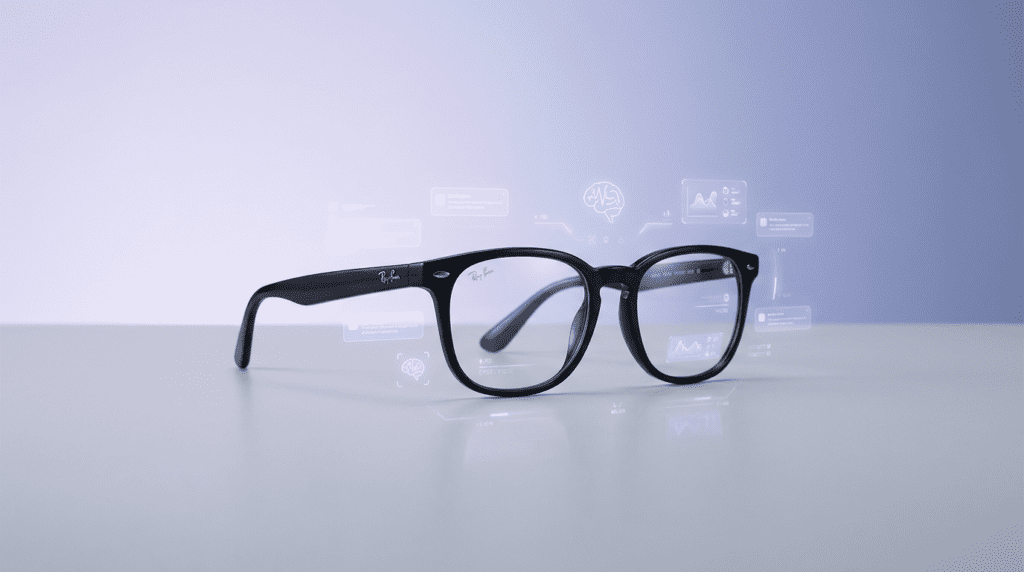
Okay, let’s talk about something exciting. Something that might actually change how you interact with the world around you, without making you look like a cyborg doing it.
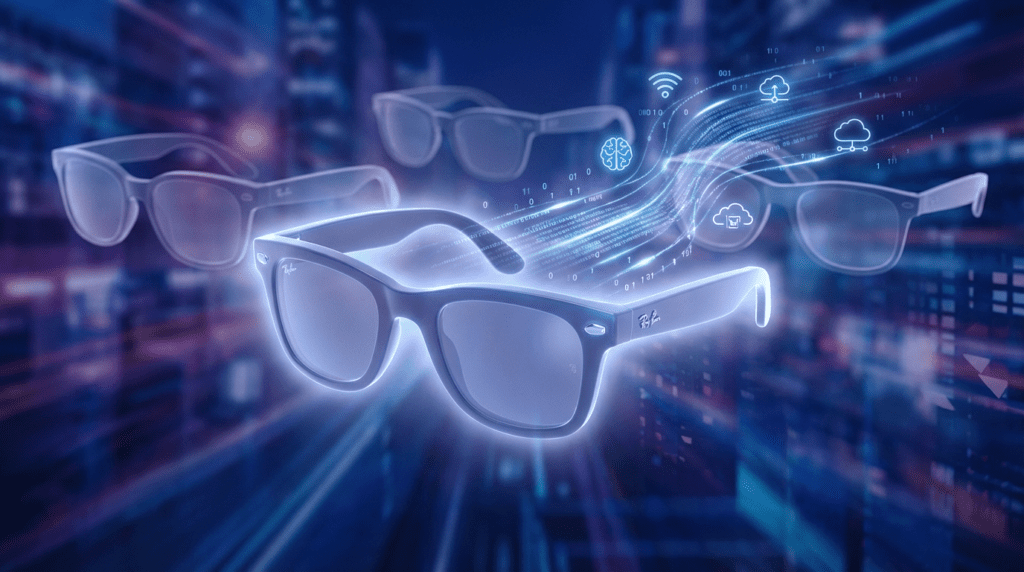
Meta is gearing up to launch not one, but two brand-new Ray-Ban AI glasses. And we’re not talking vague rumors or leaked concept art. We’re talking FCC filings, the kind of regulatory paperwork that basically screams, “We’re about to ship these things.”
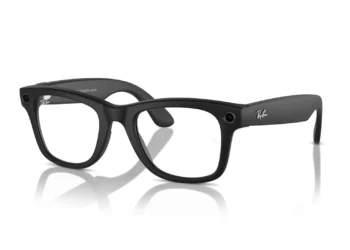
The devices? Meet the RayBan Meta Scriber and the RayBan Meta Blazer. Cool names. Very cool names. And if history is any guide, they could land on store shelves within weeks.
Meet the Scriber and the Blazer
So what do we actually know? Let’s break it down.
The FCC filings, first reported by Lowpass and The Verge, describe both models as production units. Not prototypes. Not test mules. Production units. That’s a big deal. It means Meta isn’t just experimenting anymore. They’re manufacturing.
The Blazer comes in two sizes, regular and large. That’s a nice touch. Not everyone has the same head, and Meta seems to finally acknowledge that. The Scriber, meanwhile, carries model number RW7002, while the Blazer is RW7001.
Here’s where it gets interesting. Current Ray-Ban Meta glasses carry model numbers ranging from RW4002 to RW4014. The jump to the RW7000 series? That’s not a minor refresh. That’s a signal. A big one. It suggests a significant hardware upgrade, possibly a newer, more powerful chipset under the hood.
Both models also include a charging case, which means you can still top them up on the go. Practical. Smart. Very much appreciated.
Wi-Fi 6 Is in the Mix — Here’s Why That Matters
Here’s a detail that flew under the radar but deserves some attention.
The new Scriber and Blazer models support Wi-Fi 6 UNII-4 band. If that sounds like alphabet soup, here’s the plain-English version: it means faster, more reliable wireless data transfers.
Why does that matter for glasses? Think about it. These aren’t just fashion accessories. They stream video, they run AI features in real time. They potentially transmit live footage for things like livestreaming or AI-powered visual assistance.
Wi-Fi 6 support makes all of that smoother. Less lag. Better performance. More reliable connections when you’re doing something that actually requires the glasses to think in real time.
It’s a quiet upgrade. But it’s the kind of upgrade that makes the whole experience feel less like a gadget and more like a tool you actually rely on.
The Timeline: When Are These Dropping?
Here’s the fun part — the detective work.
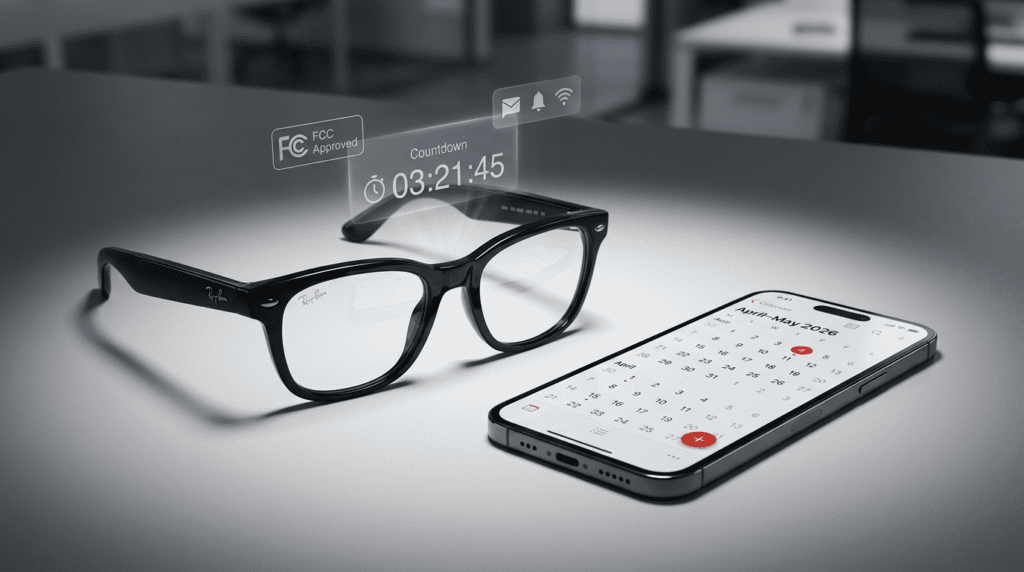
When Meta launched its second-generation Ray-Ban glasses in late 2023, it did so just over a month after FCC approval. The FCC filings for the Scriber and Blazer surfaced earlier in March 2026. Do the math.
If Meta follows the same playbook, and there’s every reason to think it will, we’re looking at an announcement sometime in April or early May 2026. That’s weeks away. Not months. Weeks.
TechBuzz puts the window at 4–6 weeks based on historical patterns. That tracks. Meta moves fast when it’s ready to move.
Meta hasn’t officially confirmed anything yet. The company didn’t immediately respond to requests for comment. But the FCC filings speak for themselves. You don’t submit production units to the FCC for fun.
Seven Million Pairs. Let That Sink In.
Before we talk about what’s next, let’s appreciate how far Meta has already come.
Ray-Ban Meta glasses sold more than seven million pairs in 2025 alone, according to EssilorLuxottica’s most recent earnings report. For context, combined sales for 2023 and 2024 totaled just two million units. That’s not growth. That’s a rocket ship.
Mark Zuckerberg said it himself during Meta’s most recent earnings call: “Sales of our glasses more than tripled last year, and we think that they’re some of the fastest growing consumer electronics in history.”
Fastest growing consumer electronics in history. That’s a bold claim. But the numbers back it up.
EssilorLuxottica is now ramping up manufacturing capacity to 20–30 million units annually by the end of 2026, Bloomberg reported in January. That’s not a company hedging its bets. That’s a company going all in.
Meta Is Betting Big on Glasses — and Pulling Back on VR
Here’s the bigger picture, and it’s worth paying attention to.
Meta is shifting. Hard.
The company has been quietly, and not so quietly, pulling back from its VR ambitions. Earlier this year, Meta laid off 1,000 Reality Labs employees. It shut down multiple VR game studios. It even planned to kill off its Horizon Worlds metaverse project in VR, though it reversed that decision last week after pushback from users.
Meanwhile, Zuckerberg made the company’s new direction crystal clear: “For Reality Labs, we’re directing most of our investment towards glasses and wearables going forward.”
That’s a massive pivot. The metaverse dream, the one Meta literally renamed itself for, is taking a back seat. AI glasses are driving now.
And honestly? It makes sense. People don’t want to strap a headset to their face to check their email. But stylish glasses that happen to have AI built in? That’s a different conversation entirely.
The Secret Sauce: Fashion Meets Function
Let’s talk about why Meta’s glasses actually work when so many others have failed.
Remember Google Glass? Of course you do. Everyone does. Not because it was great, because it was a cautionary tale. People called Glass wearers “Glassholes.” The product died a quiet, embarrassing death.
Meta learned from that disaster. Instead of building something that screams “I am a tech person wearing a computer on my face,” they partnered with EssilorLuxottica, the company that owns Ray-Ban, and built something that looks like… glasses. Normal glasses. Stylish glasses.
That’s the secret. The AI is invisible. The camera is discreet. The speakers are hidden in the frames. You look like someone who cares about their appearance, not someone who just walked out of a sci-fi convention.
EssilorLuxottica brings decades of eyewear expertise. Meta brings the AI and the miniaturized electronics. Together, they’ve cracked a code that Apple, Amazon, and Snap are still trying to figure out.
Amazon tried with Echo Frames. Didn’t stick. Snap has Spectacles. Still niche. Apple is working on AR glasses, but those are reportedly years away from a consumer launch.
Meta is shipping. Right now. And it’s about to ship again.
What Could the Third Gen Actually Do?
Here’s where we have to be honest: the FCC filings are heavily redacted. Meta hasn’t revealed features. We don’t have a spec sheet.
But we can make some educated guesses based on where the technology is heading.
The second-gen Ray-Ban Meta glasses already packed in real-time translation, object recognition, and conversational AI powered by Meta’s Llama language models. They let you take photos and videos hands-free, they answered questions through voice commands. They were genuinely useful.
The third generation could push further. Better battery life is almost a certainty, it’s always on the wishlist. Improved camera quality makes sense given how much people use the photo and video features. Enhanced AI capabilities, especially with Meta’s continued investment in Llama models, seem likely.
True augmented reality displays, the kind that overlay digital information on the real world, probably remain further out. But the Wi-Fi 6 upgrade hints at more data-intensive features coming. Livestreaming improvements. Faster AI responses. Smoother real-time video processing.
The model number jump to the RW7000 series strongly suggests a new chipset. A faster processor means more on-device AI processing, which means less reliance on cloud connectivity and faster responses. That alone would be a meaningful upgrade.
Meta Also Expanded Beyond Ray-Ban
One more thing worth noting: Meta didn’t just iterate on Ray-Ban this past year. It expanded.
In 2025, Meta launched its first pair of Oakley-branded AI glasses, bringing the same technology to a sportier, more athletic audience. It also launched the first Ray-Ban Display glasses, featuring an integrated monocular display. That’s a small screen built into one lens, giving users a heads-up display without going full AR.
These aren’t just product launches. They’re market experiments. Meta is testing different form factors, different audiences, different use cases. It’s figuring out what people actually want from AI glasses before committing to one direction.
That’s smart product strategy. And it’s working.
The Race Is On — But Meta Has a Head Start
The competitive landscape is heating up fast. Apple is coming. Google is watching. Snap is trying. But right now, Meta holds a lead that’s harder to close than it looks.
It’s not just about having the technology. It’s about having the manufacturing relationships, the fashion credibility, the AI software stack, and the consumer trust to actually sell millions of units. Meta has all of that. Its competitors are still assembling the pieces.
TechBuzz put it well: “Meta’s actually shipping products people buy, which puts it ahead in a race most competitors are still warming up for.”
The Scriber and Blazer represent Meta’s third lap around the track. Everyone else is still tying their shoes.
What This Means for You
So here’s the bottom line. If you’ve been curious about AI glasses but haven’t pulled the trigger yet, the timing might be perfect.
A new generation is coming. It’s production-ready. It’s likely weeks away. And based on everything we know, the model number jump, the Wi-Fi 6 upgrade, the charging case, the two-size Blazer option, it looks like Meta is bringing meaningful improvements, not just a minor refresh.
Whether you’re a tech enthusiast, a content creator, or just someone who wants a smarter pair of sunglasses, the Ray-Ban Meta lineup is becoming harder to ignore.
The future of computing might not be a phone in your pocket or a headset on your face. It might just be the glasses on your nose.
And Meta is betting everything on it.
Sources
- The Verge — Meta gets ready to launch two new Ray-Ban AI glasses by Janko Roettgers, March 26, 2026
- TechBuzz — Meta Preps Third-Gen Ray-Ban AI Glasses Launch, March 26, 2026
- Lowpass — Scoop: Meta gets ready to launch two new Ray-Ban AI glasses by Janko Roettgers, March 26, 2026
- FCC Filings — RayBan Meta Scriber & Blazer