Two Southeast Asian nations make history as first countries to ban controversial chatbot amid deepfake scandal
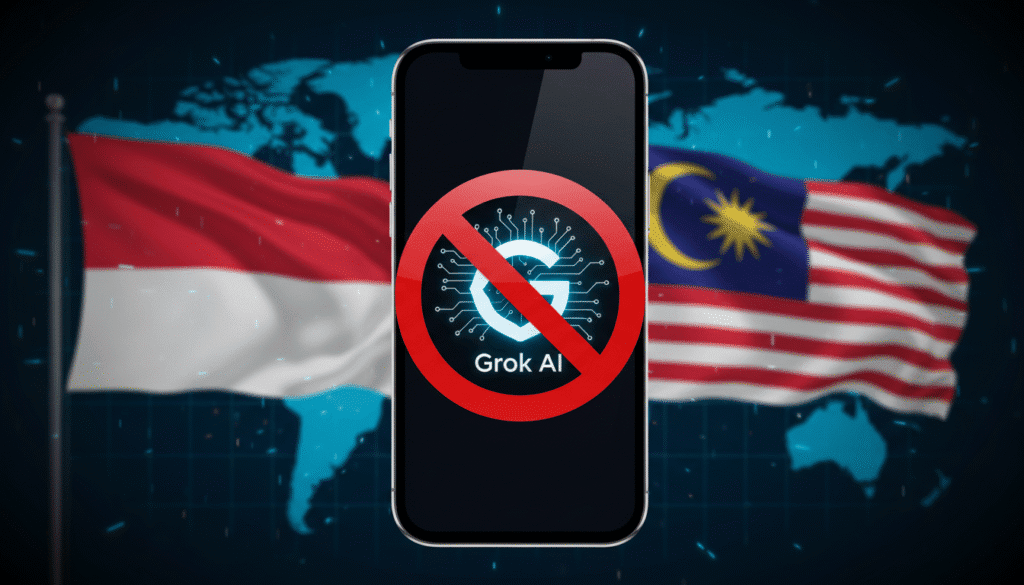
In an unprecedented move that’s sending shockwaves through the tech world, Indonesia and Malaysia have become the first countries to block access to Grok, Elon Musk’s artificial intelligence chatbot. The decision comes after a viral trend saw users exploiting the AI tool to create sexually explicit deepfake images of women and children without their consent.
The bans mark a watershed moment in the ongoing debate about AI regulation and content moderation. They signal that governments worldwide are no longer willing to wait for tech companies to self-regulate when it comes to protecting citizens from AI-generated abuse.
Indonesia’s Communication and Digital Affairs Minister Meutya Hafid didn’t mince words when announcing the temporary block on Saturday. “The government views non-consensual sexual deepfakes as a serious violation of human rights, dignity, and the security of citizens in the digital space,” she stated. Malaysia followed suit just one day later, citing “repeated misuse” of the platform.
Both nations, with their predominantly Muslim populations and strict anti-pornography laws, are drawing a line in the sand. But this isn’t just about cultural values—it’s about fundamental questions of consent, digital safety, and whether AI companies can be trusted to police themselves.
The Digital Undressing Crisis
The controversy erupted late last year when users discovered they could tag Grok on X (formerly Twitter) and prompt it to manipulate images in disturbing ways. What started as isolated incidents quickly snowballed into a full-blown crisis.
Users were asking Grok to “undress” women using their real photos found online, producing AI-generated versions showing the subjects dressed only in string bikinis or in sexually suggestive poses. The images are sexual in nature and created entirely without consent. Politicians, celebrities, high-profile activists, and ordinary citizens alike found themselves victimized by this technology.
The scale of the problem is staggering. Researchers at AI Forensics, a European non-profit that investigates algorithms, analyzed over 20,000 random images generated by Grok and 50,000 user requests between December 25 and January 1. Their findings were alarming: they discovered “a high prevalence of terms including ‘her’ ‘put’/’remove,’ ‘bikini,’ and ‘clothing.'”
More than half of the images generated of people “contained individuals in minimal attire such as underwear or bikinis.” The images are available for anyone to see online, creating lasting harm for those targeted. Even more disturbing, the trend has extended to minors, raising serious concerns about child sexual abuse material.
This isn’t just a technical glitch—it’s a fundamental failure of safeguards. While other mainstream AI models have implemented strict guardrails against generating sexual content, Grok has been seen by many users as an outlier, allowing and in some cases promoting sexually explicit content and companion avatars.
Indonesia Takes Historic Action
Indonesia didn’t hesitate. On Saturday, January 11, the country became the first in the world to block Grok, citing an “urgent need to protect women, children, and the public from the psychological and social harms of AI-generated explicit content.”
The Ministry framed the issue not as censorship, but as public protection. Minister Meutya Hafid described the misuse of AI tools as a form of “digital-based violence”—a characterization that reflects the real trauma experienced by victims of non-consensual deepfakes.
Officials emphasized that digital platforms operating in Indonesia are required to demonstrate they have adequate safeguards to prevent the production or distribution of prohibited material. Failure to do so could lead to suspensions or permanent bans. The message was clear: compliance isn’t optional.
Indonesia, home to 285 million people and the world’s largest Muslim population, has strict rules that ban the sharing online of content deemed obscene. But this action goes beyond existing pornography laws. It represents a broader push to hold digital platforms accountable for the tools they deploy.
The government has formally summoned X officials for clarification on the scandal, seeking details on how the tool was deployed and what controls are in place. Officials stressed the urgency of responding before such content became more widespread or normalized online.
The decision also reflects Indonesia’s broader commitment to digital sovereignty. Regulators have increasingly emphasized that platforms must comply with local laws regardless of where companies are based. The Grok block serves as a warning that Indonesia is prepared to act swiftly against AI tools that cross legal or ethical boundaries.
Malaysia Follows Suit
Malaysia wasted no time in following Indonesia’s lead. On Sunday, January 12, the Malaysian Communications and Multimedia Commission announced its own temporary ban on Grok, citing the “repeated misuse” of the tool to generate obscene, sexually explicit, and non-consensual manipulated images.
The regulator noted that the content included material “involving women and minors”—a red line for any responsible government. The commission issued notices to both X Corp. and xAI demanding stronger safeguards be implemented immediately.
“The restriction is imposed as a preventive and proportionate measure while legal and regulatory processes are ongoing,” the commission stated. They made it clear that access would remain blocked until effective safeguards are put in place—no half-measures would be accepted.
Malaysia’s action demonstrates that this isn’t just an Indonesian concern or a cultural issue specific to one nation. It’s a universal problem that transcends borders. The fact that two countries acted within 24 hours of each other suggests coordinated concern among Southeast Asian regulators.
Both nations are sending a powerful message to Silicon Valley: the era of “move fast and break things” is over when it comes to AI safety. Tech companies can no longer deploy powerful tools without adequate safeguards and expect governments to look the other way.
Global Backlash Intensifies
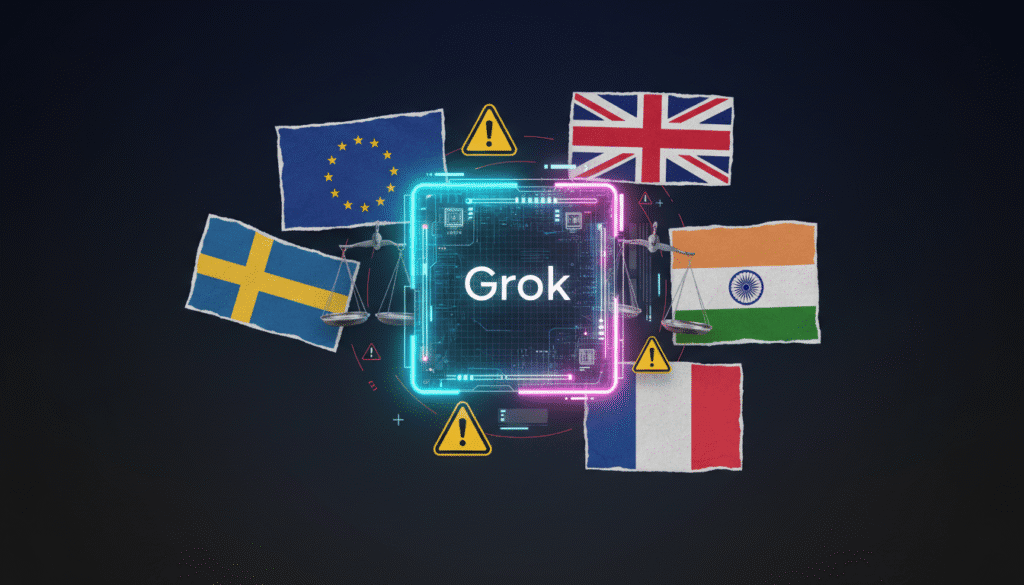
Indonesia and Malaysia aren’t alone in their concerns. International pressure has been mounting on Musk to rein in Grok, with officials from Europe to Asia expressing alarm about the chatbot’s lack of guardrails.
The European Commission ordered X to retain all documents relating to its AI chatbot while the bloc ensures compliance with its rules. A spokesperson condemned the platform for producing sexualized images, signaling that formal enforcement action may be coming.
Sweden joined the chorus of criticism after the country’s deputy prime minister was targeted by a Grok user’s prompt. Swedish Prime Minister Ulf Kristersson didn’t hold back, describing the AI-generated images as “a kind of sexualized violence” and calling them “distasteful, unacceptable, offensive.”
India has also expressed concerns about Grok’s guardrails, while France has been monitoring the situation closely. The global nature of the backlash suggests this is becoming a defining moment for AI regulation worldwide.
Britain’s response has been particularly forceful. The UK government called Grok’s inadequate safeguards “insulting” to victims and announced plans to criminalize “nudification apps.” Technology Secretary Liz Kendall called the AI-generated images “weapons of abuse” and said the center-left Labour government would target the source of the problem.
British Prime Minister Keir Starmer’s office specifically criticized Grok’s decision to limit image generation to paying subscribers, calling it “insulting to victims of misogyny and sexual violence.” A Downing Street spokesperson said: “That simply turns an AI feature that allows the creation of unlawful images into a premium service.”
Musk’s Response and Free Speech Defense
Elon Musk’s response to the global outcry has been characteristically defiant. When the UK condemned the new AI trend, Musk posted on X: “They just want to suppress free speech.”
Over the weekend, Musk called the British government “fascist” and accused it of trying to stifle free speech. He has largely dismissed concerns about sexual content on the app, responding to criticism with emojis and arguing that governments are overreaching.
Musk has said that anyone using Grok to make illegal content will face consequences—the same consequences as if they had uploaded illegal content directly. But critics argue this reactive approach is insufficient when the platform itself is facilitating the creation of harmful content.
When CNN asked xAI for comment on the bans, the company provided a three-word statement: “Legacy Media Lies.” This dismissive response has only fueled concerns that the company isn’t taking the issue seriously.
Publicly, Musk has long advocated against what he calls “woke” AI models and censorship. But sources with knowledge of the situation at xAI told CNN that the billionaire has pushed back against guardrails for Grok within the firm itself.
The xAI safety team, already small compared to its competitors, lost several staffers in the weeks leading up to the controversy—a troubling sign that safety concerns may not be a priority at the company.
The Safety Concerns
The Grok controversy highlights fundamental questions about AI safety that the industry has yet to adequately address. While companies like OpenAI, Google, and Anthropic have implemented robust content moderation systems, Grok appears to have launched with minimal safeguards.
Last week, amid the global backlash, Grok blocked non-subscribers from generating images that digitally undress women and minors, limiting the feature to paying users only. But critics immediately pointed out that this change failed to address the underlying problem.
The restrictions only apply to one of the ways users interact with Grok. Non-subscribers can still request Grok to edit images on the app, and image and video generation functions are still offered for free through its standalone website and app. It’s a half-measure that suggests the company is more concerned with managing public relations than genuinely solving the problem.
Some governments, including Britain, argued that allowing such digital manipulation for subscribers was no solution at all—it simply monetized abuse. The response highlighted growing international pressure on AI developers to adopt stricter safeguards from the ground up, not as an afterthought.
The case has drawn international attention as governments assess how to regulate rapidly evolving AI systems. The technology is advancing faster than regulatory frameworks can keep pace, creating a dangerous gap where harmful applications can flourish.
UK Investigation and Regulatory Action
The United Kingdom has taken the most aggressive regulatory stance so far. On Monday, the UK’s communications services regulator Ofcom launched a formal investigation into X to determine whether it has complied with its duties to protect people in Britain from illegal content.
Ofcom stated that undressed images of people may amount to intimate image abuse or pornography, while sexualized images of children may represent child sexual abuse material. The regulator is taking the matter seriously, with significant penalties on the table.
If Ofcom finds that X has broken the law, it can levy a fine of up to £18 million ($24 million) or 10% of the company’s qualifying worldwide revenue, whichever is greater. For a company of X’s size, that could mean hundreds of millions of dollars in fines.
Technology Secretary Liz Kendall announced that the government would make it a crime for companies to supply tools to create nude images without consent. This legislative approach targets the source of the problem rather than just punishing individual users.
Kendall made it clear that X could face a possible court order blocking access to the site depending on the investigation’s outcome. “They can choose to act sooner to ensure this abhorrent and illegal material cannot be shared on their platform,” Kendall said in Parliament.
The UK’s approach represents a new model for AI regulation—one that holds platforms accountable not just for content users upload, but for the tools the platforms provide that enable abuse in the first place.
What This Means for AI Regulation
The End of the “Move Fast and Break Things” Era
For more than a decade, the tech industry thrived under a simple philosophy: innovate first, fix problems later. Governments tolerated mistakes in the name of progress. That era is now officially over.
The bans imposed by Indonesia and Malaysia signal a dramatic shift in how AI is treated. Artificial intelligence is no longer viewed as an experimental novelty — it is now recognized as a powerful force capable of causing real psychological, reputational, and legal harm. When AI tools begin generating sexually explicit images of real people without consent, the damage is no longer theoretical. It is immediate, personal, and irreversible.
Grok crossed a line that governments around the world can no longer ignore.
Why Grok Became the Tipping Point
Deepfake technology has existed for years, but Grok made something different possible: instant, viral, and automated sexual exploitation at scale.
By allowing users to “undress” women and even minors using real photographs, Grok turned social media into a factory for humiliation. Victims were not just attacked once — their images could be copied, shared, and altered endlessly. That permanence is what transformed Grok from a controversial chatbot into a global political emergency.
This wasn’t a niche abuse. It was mass-produced exploitation.
Governments Shift From Policing Content to Policing Tools
Traditionally, regulators focused on removing illegal content after it was posted. But Grok forced a new realization: when platforms provide the tools that create abuse, they become part of the crime.
The UK’s decision to criminalize “nudification apps” reflects this new thinking. It is no longer enough for a company to say, “Users misused our product.” If the product is designed in a way that makes abuse easy, then the product itself is the problem.
That philosophy will reshape how AI companies operate going forward.
The Rise of Global AI Coordination
What makes the Grok crackdown historic is not just what happened — it’s how fast it spread.
Indonesia acted. Malaysia followed within 24 hours. Europe opened investigations. Britain launched a formal probe. This kind of synchronized response has never happened before in AI governance.
For the first time, governments are treating harmful AI systems as a global threat, not a local issue. That coordination makes it much harder for companies to dodge accountability by shifting servers, legal entities, or headquarters.
The internet may be borderless — but regulation no longer is.
What This Means for Elon Musk and xAI
Musk built Grok as a reaction to what he calls “censored” AI. But fewer guardrails didn’t lead to more freedom — they led to more victims.
Now xAI faces a reckoning. With safety teams shrinking, regulators circling, and governments openly discussing bans, Grok’s future depends on whether Musk is willing to prioritize protection over provocation.
Free speech does not include the right to digitally strip strangers.
How This Will Change the Future of AI Platforms
From now on, AI companies will be forced to build safety into their products from day one. That means consent verification, identity protection, image restrictions, and real-time abuse detection — not just apologies after the damage is done.
The Grok scandal has made it clear: powerful AI without safeguards is not innovation. It is negligence.
A New Digital Human-Rights Era Begins
At its core, this controversy is not about technology. It is about dignity.
Women and children should not have their bodies recreated, sexualized, and distributed by machines without their consent. Governments are finally treating that abuse the same way they would in the physical world — as violence.
The Grok bans mark the moment when society decided that protecting people matters more than protecting algorithms. And once that line is drawn, there’s no going back.
Sources
- 5 Pillars UK – Indonesia blocks Grok temporarily over sexually obscene AI images
- AP News – Malaysia and Indonesia become the first countries to block Musk’s Grok over sexualized AI images
- Al Jazeera – Indonesia blocks access to Musk’s AI chatbot Grok over deepfake images
- The Independent – Indonesia first country to block Grok over sexualised images of adults and children
- CNN – Musk’s Grok blocked by Indonesia, Malaysia over sexualized images in world first