Faster. Cheaper. Smarter. Google just dropped its most ambitious image generation model yet and it’s already taking over.
The Upgrade Nobody Saw Coming (But Everyone Needed)
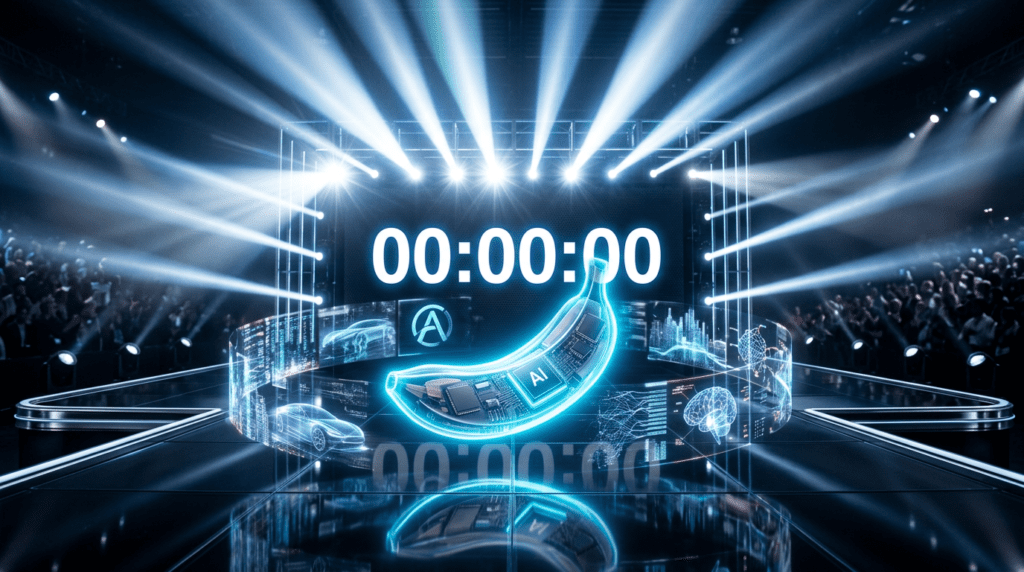
Google doesn’t do things quietly. On February 26, 2026, the tech giant officially launched Nano Banana 2, the latest version of its wildly popular AI image generation model. And this time, it’s not just an incremental update. It’s a full-on power move.
The new model runs on Gemini 3.1 Flash Image Google’s fastest multimodal engine yet. That means you get the creative muscle of the premium Nano Banana Pro, but at the speed of Flash. Think of it as getting a sports car engine installed in a vehicle that already drove pretty well.
This isn’t Google’s first rodeo with Nano Banana. The original model launched in August 2025 and immediately caught fire. People generated millions of images through the Gemini app, especially in markets like India. Then came Nano Banana Pro in November 2025, which raised the bar on quality and detail. Now, Nano Banana 2 is here to raise it again and it’s doing so at a fraction of the cost.
What Exactly Is Nano Banana 2?
Let’s break it down. Nano Banana 2 is technically the gemini-3.1-flash-image-preview model. It’s built on the same Gemini 3.1 Flash architecture that powers some of Google’s fastest AI tools. But don’t let the word “Flash” fool you into thinking it’s lightweight.
According to The Decoder, the model supports resolutions ranging from 512 pixels all the way up to 4K. It handles multiple aspect ratios. It produces more vivid lighting, richer textures, and sharper details than the original Nano Banana. And it does all of this faster than its predecessor.
But here’s the part that really matters: it’s smarter. Nano Banana 2 draws on Gemini’s knowledge base and pulls real-time information and images from web searches. That means it can render specific subjects more accurately than any previous version. Ask it to generate an image of a real-world landmark, a specific product, or a niche concept and it actually knows what you’re talking about.
Gizmodo described it as a “best of both worlds” mashup. That’s a fair assessment. Google essentially took the intelligence of the Pro model and married it to the speed of Flash. The result is something that feels genuinely new.
Text Rendering Gets a Major Glow-Up
One of the biggest pain points in AI image generation has always been text. Ask most models to put words inside an image, and you’ll get something that looks like a toddler scribbled on a whiteboard. Blurry. Misspelled. Unreadable.
Nano Banana Pro tackled this problem head-on when it launched. Now, Nano Banana 2 takes it even further.
Google says the new model produces legible, accurate text inside images. We’re talking marketing mockups, greeting cards, infographics, and data visualizations. The model can even translate and localize text within an image meaning it can swap out English text for Spanish, French, or another language while keeping the visual design intact.
That’s a genuinely useful feature. Marketers, designers, and content creators who work across multiple languages will immediately see the value here. No more exporting images and manually editing text in a separate tool. Nano Banana 2 handles it in one shot.
TechCrunch noted that the model can also maintain character consistency for up to five characters and fidelity of up to 14 objects in a single workflow. That’s a big deal for storytelling. If you’re building a visual narrative a comic strip, a storyboard, a product campaign you need your characters to look the same from frame to frame. Nano Banana 2 makes that possible.
The Price Drop That Changes the Game for Developers

Here’s where things get really interesting. Nano Banana 2 doesn’t just perform better it costs significantly less to use through the API.
The Decoder published a detailed pricing breakdown that tells the full story:
| Resolution | Nano Banana 2 | Nano Banana Pro | Savings |
|---|---|---|---|
| 1K | $0.067 | $0.134 | ~50% |
| 2K | $0.101 | $0.134 | ~25% |
| 4K | $0.151 | $0.240 | ~37% |
At 4K resolution, developers save nearly 40%. At 1K, they save a full 50%. For anyone building apps, tools, or platforms on top of Google’s API, that’s a massive cost reduction. It changes the math on what’s viable to build.
Think about it this way. A startup building an AI-powered design tool was previously paying $0.134 per 1K image. Now they pay $0.067. That’s not a rounding error that’s a business model shift. Products that weren’t economically feasible before suddenly become worth building.
Google is clearly making a play for developer mindshare here. Lower costs mean more experimentation. More experimentation means more products built on Google’s infrastructure. It’s a smart long-term strategy.
Nano Banana Pro Isn’t Dead It’s Just Niche Now
So what happens to Nano Banana Pro? It’s not going away. But it is getting demoted.
Nano Banana 2 now replaces Nano Banana Pro as the default image generation model in the Gemini app across Fast, Thinking, and Pro modes. If you’re a regular Gemini user, you’ll be using Nano Banana 2 automatically. You won’t have to do anything.
Google AI Pro and Ultra subscribers can still access Nano Banana Pro. But they’ll have to manually select it through the three-dot menu. It’s no longer front and center. It’s a specialty tool for users who need maximum detail and are willing to pay for it.
The Decoder’s testing found that Nano Banana 2 is a clear step up from the original model. It even nailed one of the trickiest benchmark prompts generating an image of a horse riding a human, rather than the other way around. That’s a reversal of a scenario the model has seen millions of times in training data. Only Nano Banana Pro could consistently pull that off before. Now Nano Banana 2 can too.
That said, the Pro output still looks more dynamic and realistic overall. Nano Banana 2 has a slightly artificial quality by comparison. So if you’re a professional photographer, a high-end creative agency, or someone who needs photorealistic output for commercial work Pro is still your best bet. For everyone else, Nano Banana 2 is more than enough.
It’s Everywhere Now And Getting More Everywhere
Google isn’t just updating one app. It’s rolling Nano Banana 2 out across its entire ecosystem. The scope of this launch is genuinely impressive.
Google Search gets Nano Banana 2 as the default for AI Mode and Google Lens. The rollout covers 141 new countries and territories, with eight additional languages coming online. That’s a massive global expansion.
Google Flow, the company’s AI creative studio, now uses Nano Banana 2 as its default model. Better yet, it’s available to all Flow users at no credit cost. Free. No strings attached.
Google Ads will use Nano Banana 2 to power campaign creation suggestions. That means advertisers can generate visual assets faster and cheaper than before.
Developers get access through AI Studio, the Gemini API, Gemini CLI, and Vertex AI on Google Cloud. The model is currently available as a preview, which means early adopters can start building with it right now.
Every image generated through Nano Banana 2 carries a SynthID watermark Google’s system for marking AI-generated content. The images are also compatible with C2PA Content Credentials, an industry standard backed by Adobe, Microsoft, Google, OpenAI, and Meta. Since Google launched SynthID verification in the Gemini app in November, people have used it over 20 million times. That number is only going to grow.
Could Nano Banana Be Coming to Google Maps?
Here’s where things get a little wild. While Google was busy announcing Nano Banana 2, a separate report surfaced suggesting the model might be heading somewhere unexpected: Google Maps.
9to5Google reported that code discovered in Google Maps version 26.09.00.873668274 hints at a Nano Banana integration. The feature, surfaced through an APK insight report, would allow users to “make an image of their favorite places in a fun, new style.” Google Maps would offer select visual styles for users to choose from similar to how Google Photos already lets you apply AI-powered edits.
It’s a quirky idea. Why would you want to restyle Street View? But think about it for a second. Imagine being able to reimagine your childhood street in a watercolor style. Or seeing your favorite travel destination rendered as a vintage postcard. Or showing a friend what a neighborhood looks like through an artistic lens.
It’s not a practical feature. It’s a fun one. And fun features drive engagement. Google knows this. The company has been steadily weaving Gemini and its AI models into every corner of its product suite. Maps is just the next frontier.
The feature isn’t live yet. There’s no confirmed launch date. It may never ship publicly. But the fact that it’s in the code suggests Google is at least thinking about it seriously.
What This Means for the AI Image Generation Race
Let’s zoom out for a moment. The AI image generation space is crowded. OpenAI has DALL-E. Midjourney has its own devoted community. Adobe Firefly targets creative professionals. Stability AI keeps iterating. The competition is fierce.
Google’s move with Nano Banana 2 is strategic. By combining Pro-level quality with Flash-level speed and cutting API costs by up to 50%, Google is making a compelling case for developers and everyday users alike. It’s not just competing on quality anymore it’s competing on value.
The SynthID watermarking and C2PA compatibility also signal that Google is thinking about the long game. As AI-generated images flood social media and the web, provenance and authenticity become critical issues. Google is positioning itself as a responsible actor in this space one that takes content credibility seriously.
Gizmodo put it bluntly: “Get ready to check the corners of images you see on social media for the Gemini watermark so you can figure out if it’s fake or not.” That’s the world we’re living in now. And Google is at least trying to make it navigable.
The Bottom Line
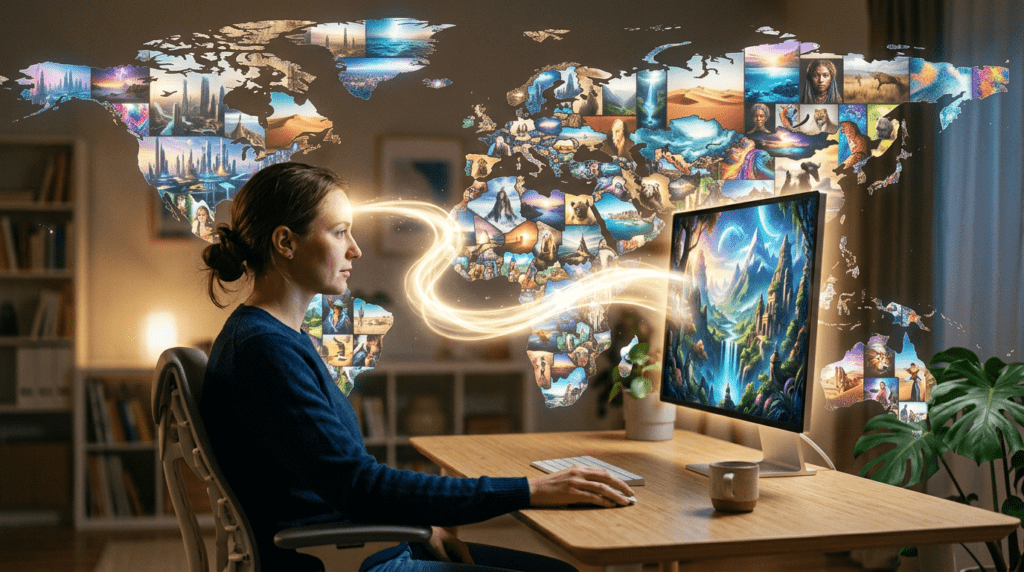
Nano Banana 2 is a genuinely impressive release. It’s faster than its predecessor. It’s cheaper for developers. It handles text better. It knows more about the world. And it’s rolling out everywhere from Search to Maps to Ads to Flow.
Is it perfect? No. The Pro model still edges it out on raw visual quality. And some of the “new” features are really just improvements on things Nano Banana Pro already did. But for the vast majority of users and use cases, Nano Banana 2 is the right tool at the right price.
Google just made AI image generation more accessible than ever. And that changes things for developers, for creators, and for anyone who’s ever wanted to turn an idea into an image in seconds.
The banana has evolved. And it’s only getting faster.
Sources
- The Decoder — Google’s Nano Banana 2 brings Pro-level image generation to Flash speeds at up to 40% lower API cost
- TechCrunch — Google launches Nano Banana 2 model with faster image generation
- 9to5Google — Google Maps might let you restyle Street View with Nano Banana, for some reason
- Gizmodo — Google Rolls Out Nano Banana 2, Now Faster Than Ever