Samsung just made its boldest move yet. With the Galaxy S26 series now officially unveiled at Galaxy Unpacked February 2026, the Korean tech giant didn’t just release a new phone. It redefined what a smartphone can do. From a revolutionary AI-integrated camera system to a multi-agent AI ecosystem powered by Perplexity, Samsung is swinging hard and it’s aiming straight at Apple and Google.
But not everything landed perfectly. Some of Samsung’s pre-launch teasers stirred controversy. And the question on everyone’s mind is this: does the Galaxy S26 actually deliver, or is it all just hype dressed up in artificial intelligence?
Let’s break it all down.
Samsung Goes All-In on AI And It Shows
Samsung didn’t ease into the AI conversation. It dove in headfirst.
In the weeks leading up to Galaxy Unpacked, Samsung flooded its social media channels with teasers. Some were genuinely exciting. Others? Not so much. But the message was clear: AI is the backbone of the Galaxy S26 experience.
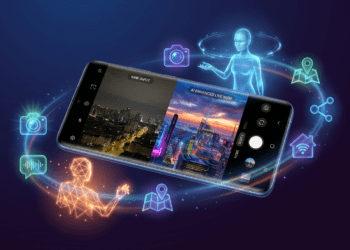
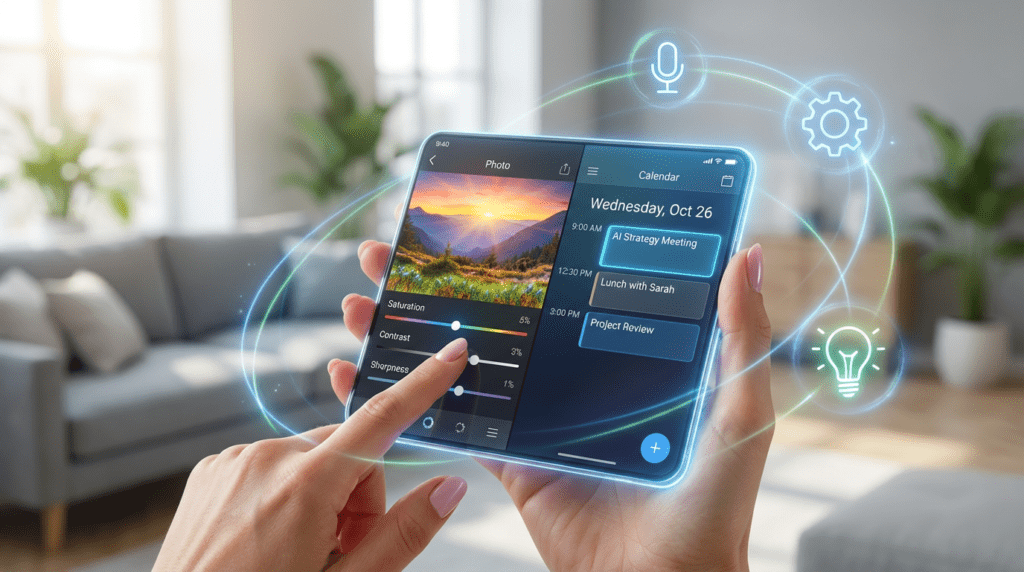
The company describes the Galaxy S26 as offering “the easiest and most user-friendly Galaxy camera experience yet.” That’s a bold claim. But Samsung backs it up with a suite of generative AI tools baked directly into the native camera interface no third-party apps required.
According to FoneArena, Samsung’s goal is to unify capturing, editing, and sharing into one seamless, end-to-end experience. The idea is simple: remove the friction. Let the AI do the heavy lifting so users can focus on being creative.
That philosophy is ambitious. And if it works as advertised, it could change how millions of people interact with their phones every single day.
The Camera Upgrade That Has Everyone Talking
Let’s talk about the camera because that’s where Samsung is making its biggest promises.
The Galaxy S26 series is built on what Samsung calls its “brightest Galaxy camera system ever.” That’s not just a marketing tagline. It signals a fundamental shift in how the phone handles light, detail, and post-processing.
Sunday World reports that Samsung SA described the upgrade as an “end-to-end experience” where capture, editing, and sharing are unified into a single intuitive flow. No more jumping between apps. No more exporting to a third-party editor. Everything happens in one place.
Here’s what the new AI camera system can actually do:
Environmental Transformation — Users can convert a daytime photo into a night scene in seconds. Just describe what you want, and the AI handles the rest.
Generative Restoration — Missing parts of an object in a photo? The AI fills them in. Samsung even demonstrated this with an example of digitally restoring a bite taken out of a piece of food.
Image Merging — Users can seamlessly combine elements from multiple photos into one cohesive image. No Photoshop skills needed.
These aren’t gimmicks. These are tools that previously required professional software and years of editing experience. Samsung is putting them in the hands of everyday users and that matters.
Natural Language Editing: Just Describe What You Want
Here’s where things get really interesting.
Samsung is introducing natural language processing directly into the camera editing workflow. That means users can type or speak a description of the edit they want, and the AI executes it.
Want to make the sky look more dramatic? Say so. Want to remove a stranger from the background of your photo? Describe it. Want to merge two shots from different moments into one perfect image? Just ask.
FoneArena highlights that this approach is designed to “democratize creative skills.” Samsung’s stated goal is to ensure that creativity is not limited by technical expertise. The new features are intended to allow users to produce cinematic video, capture detailed astrophotography, and perform advanced photo manipulation all without professional editing knowledge.
That’s a powerful idea. And it speaks directly to a generation of mobile-first content creators who want professional results without the professional learning curve.
The Low-Light Teaser That Sparked Debate
Not everything Samsung showed off before Unpacked was received with open arms.
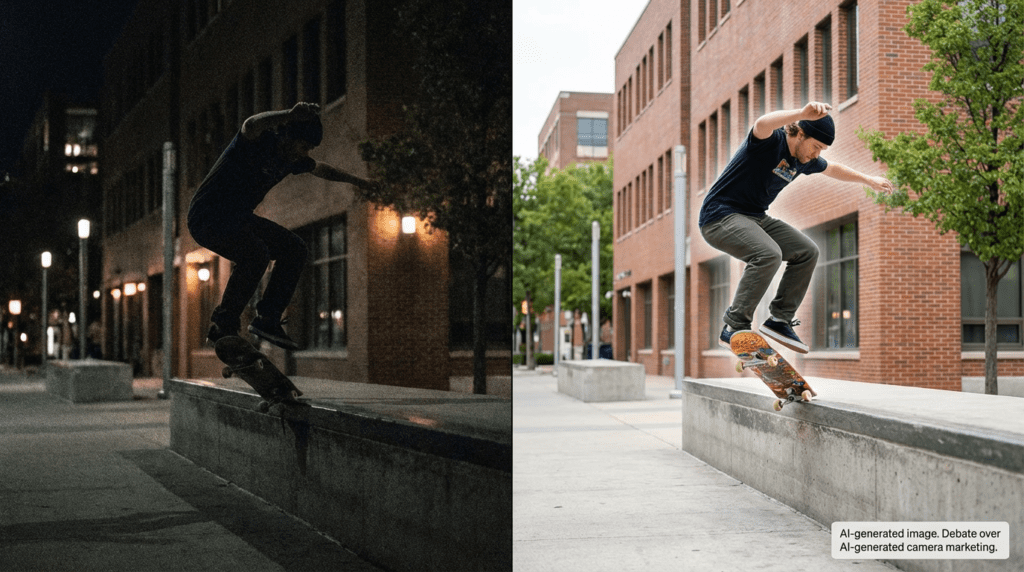
One teaser in particular caught a lot of attention and not entirely for the right reasons. Samsung released a clip showcasing the Galaxy S26’s apparent low-light video improvements. The video showed someone skateboarding at night, with a swipe transition revealing a dramatically brighter version of the scene.
It looked impressive. But there was a catch.
9to5Google pointed out that Samsung’s own disclosure on the clip stated: “this content was generated with the assistance of AI tools.” In other words, the comparison wasn’t shot on the Galaxy S26. It was AI-generated.
That’s a problem. When you’re trying to sell people on your camera’s capabilities, showing them AI-generated footage instead of actual camera output undermines the entire message. And it wasn’t an isolated incident.
Samsung’s social media channels were also filled with AI-generated videos for its smart home products including what 9to5Google described as “Beauty and the Beast” and fairy tale-style clips that were “very clearly mostly or entirely generated by AI models.” The telltale signs were there: strange textures, unnatural motion, and inconsistent details.
To make matters worse, Samsung’s disclosure practices around AI-generated content were inconsistent across different posts. Some videos were labeled. Others weren’t. That inconsistency drew criticism from tech journalists and consumers alike.
The lesson here is straightforward. If your product is genuinely impressive, show the real thing. AI-generated marketing for an AI-powered camera is a confusing message and it erodes trust at exactly the moment you’re trying to build it.
“Hey, Plex” Samsung Bets Big on Multi-Agent AI
Now here’s the story that might actually change everything.
Samsung isn’t just adding AI features to its camera. It’s rethinking how users interact with AI on their phones entirely. And the centerpiece of that vision is a new multi-agent ecosystem one that includes a surprising new player: Perplexity.
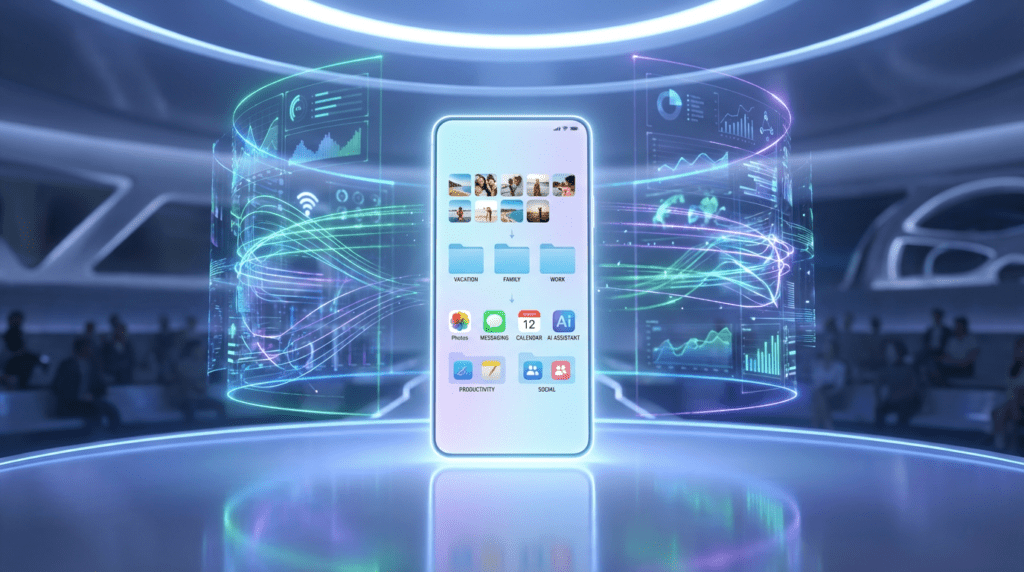
According to The Verge, Galaxy S26 users can now summon Perplexity by saying “Hey, Plex.” That puts Perplexity alongside Bixby and Gemini as a first-class AI assistant on Samsung devices.
But this isn’t just a shortcut to the Perplexity app. The integration runs much deeper.
Perplexity will have access to Samsung’s core apps including Samsung Notes, Clock, Gallery, Reminder, and Calendar. It will also connect with select third-party apps, though Samsung hasn’t specified which ones yet. That level of system-level access means Perplexity can actually do things on your behalf, not just answer questions.
Think of it this way: instead of opening your calendar, checking your notes, and then searching the web separately, you can ask Plex to do all of it in one go. That’s a fundamentally different way of using a phone.
Why a Multi-Agent Ecosystem Makes Sense
Samsung’s multi-agent strategy is smart. Here’s why.
People don’t use just one AI. Some prefer Gemini for creative tasks. Others trust Perplexity for research. Many still rely on Bixby for device-level controls. The reality is that different AI agents have different strengths and users have already started developing preferences and loyalties.
Samsung recognizes this. Rather than forcing users into a single AI ecosystem, the company is opening up its platform to let users choose. As The Verge reports, Samsung believes that “giving people the freedom to put whatever agent they want at the heart of their phone will help differentiate them from competition like Apple and Google.”
That’s a direct shot at Apple, which has been criticized for its slow and limited Siri integration, and at Google, which has been pushing Gemini as the dominant Android AI. Samsung is saying: we’re not picking sides. We’re building a platform.
It’s a bold differentiator. And it could be exactly what Samsung needs to stand out in an increasingly crowded premium smartphone market.
What This Means for Content Creators
For content creators especially those who live on their phones the Galaxy S26 could be a genuine game-changer.
Think about what the new camera system offers. You can shoot in low light and get dramatically improved results, edit photos using plain language instead of complex tools, merge images, restore missing elements, and transform scenes all from the same app, on the same device.
Add to that the multi-agent AI ecosystem, and you have a phone that doesn’t just capture content. It helps you create, refine, and share it all in one fluid workflow.
Sunday World notes that for South African consumers and content creators in particular, “the promise of a more powerful, AI-assisted camera experience could be a significant draw especially in a market where social media, digital storytelling and mobile-first content creation continue to grow.”
That sentiment applies globally. Mobile-first content creation is the norm now. And Samsung is building tools that meet creators exactly where they are.
The Galaxy Z Trifold: Samsung’s Wildcard
Samsung didn’t stop at the S26. Industry insiders were buzzing about another potential reveal at Galaxy Unpacked: the long-rumored Galaxy Z Trifold.
Sunday World reports that speculation was running high that Samsung could unveil a tri-fold device One that would expand its foldable portfolio beyond the current book-style and clamshell formats. If confirmed, it would mark another industry first for Samsung and signal an even bolder push into next-generation form factors.
Samsung has consistently used the Unpacked platform to showcase flagship innovation. A tri-fold device would strengthen the brand’s leadership in the premium smartphone category and give consumers yet another reason to stay in the Galaxy ecosystem.
Samsung’s AI Vision: Ambitious, Imperfect, and Undeniably Exciting
Here’s the honest take: Samsung’s AI vision for the Galaxy S26 is genuinely exciting. The camera upgrades are real. The multi-agent ecosystem is innovative. The natural language editing tools could democratize mobile photography in a meaningful way.
But Samsung also stumbled. The AI-generated marketing teasers were a misstep. Showing AI-created footage to promote a camera’s capabilities is confusing at best and misleading at worst. Samsung needs to trust its own product enough to let the real camera do the talking.
Still, the overall direction is clear. Samsung is building a phone that thinks alongside you. It captures your world, helps you shape it, and connects you to the AI tools you already trust all from one device.
That’s not just a smartphone upgrade. That’s a new way of living with technology.
Sources
- The Verge — Samsung is adding Perplexity to Galaxy AI
- 9to5Google — Galaxy S26 teaser uses AI, not the camera, to show off low-light upgrades
- Sunday World — Samsung teases AI-powered camera upgrade ahead of Galaxy Unpacked
- FoneArena — Samsung teases new AI-integrated camera experience ahead of Galaxy S26 series launch