Beijing walks a tightrope between innovation and control as draft rules reshape the future of human-like AI systems

In a sweeping regulatory move that could reshape the global AI landscape, China’s Central Cyberspace Affairs Commission released draft regulations on December 27, 2025, targeting artificial intelligence systems that simulate human personalities and forge emotional connections with users. The proposed rules, open for public comment until January 25, 2026, represent Beijing’s latest attempt to balance technological advancement with ideological control a delicate dance that has officials debating how much censorship is too much.
The Scope of China’s AI Crackdown
The draft regulations cast a wide net over what Chinese authorities call “anthropomorphic AI systems.” We’re not just talking about simple chatbots here. These rules encompass any AI product or service that mimics human personality traits, thinking patterns, and communication styles while interacting with users emotionally through text, images, audio, or video.
Think AI companions, virtual friends, and digital personalities that blur the line between human and machine. These systems have exploded in popularity worldwide, with companies like Character AI reporting users spending an average of 80 minutes daily glued to their smartphones, chatting with AI personalities.
But China sees potential dangers lurking beneath the surface of these seemingly innocent digital friendships.
“Core Socialist Values” Enter the Chat
Perhaps the most eyebrow-raising aspect of the proposed regulations is the requirement that AI systems align with “core socialist values.” This phrase, translated from the Chinese “社会主义核心价值观,” appears prominently in the document and signals Beijing’s determination to ensure AI development doesn’t stray from party ideology.
What exactly are these core socialist values? The regulations don’t spell out every detail, but they make clear what’s off-limits. AI personalities would be prohibited from endangering national security, spreading rumors, inciting what authorities call “illegal religious activities,” promoting obscenity or violence, producing libel and insults, making false promises, encouraging self-harm or suicide, and soliciting sensitive information.
It’s a comprehensive list that reflects the Chinese government’s broader concerns about AI’s potential to destabilize society or challenge Communist Party rule.
The Addiction Problem Gets Real
Beyond ideological concerns, China’s draft rules tackle a growing global problem: AI companion addiction. The regulations would require providers to implement several safeguards against users becoming too dependent on their digital friends.
First up? A mandatory pop-up reminder after two hours of continuous use, nudging users to take a break. It’s similar to screen time warnings on smartphones, but specifically targeted at AI interaction.
But the regulations go much deeper than simple time limits. Providers would be required to actively monitor users’ emotional states and assess their level of dependence on the service. If the system detects extreme emotions or addictive behavior, providers must intervene.
This creates an interesting paradox: AI systems designed to understand and respond to human emotions must now also police those same emotions, potentially cutting off access when users need it most or when they’re most engaged.
The rules explicitly state that providers cannot make intentionally addictive chatbots or systems designed to replace human relationships. This strikes at the heart of many AI companion business models, which thrive on creating deep emotional bonds between users and artificial personalities.
Crisis Intervention Built Into the Code

In what may be the most significant safety provision, the draft regulations require AI systems to detect when users express suicidal thoughts or self-harm intentions and immediately hand the conversation over to a human operator.
This requirement comes in the wake of several high-profile tragedies involving AI chatbots. The case of Adam Raine, who committed suicide after prolonged conversations with OpenAI’s ChatGPT, has sparked intense debate about the role AI plays in mental health crises. While the exact influence ChatGPT had on Raine’s death remains disputed, the incident highlighted the potential dangers of AI systems engaging with vulnerable individuals.
Character AI has faced multiple lawsuits over similar concerns, and leaked internal documents from Meta revealed that their chatbots could engage in romantic or sexual conversations with minors a revelation that intensified calls for regulation.
Danish psychiatrist Soren Dinesen Ostergaard, writing in Acta Psychiatrica Scandinavica, has warned of a sharp rise in cases where AI chatbots intensify delusions or create emotional dependency in mentally unstable users. China’s regulations appear designed to address exactly these scenarios.
The Innovation Dilemma
Here’s where things get complicated. While Beijing pushes for strict AI controls, some Chinese officials worry that excessive regulation could doom the country to “second-tier status” behind the United States in the global AI race.
According to The Wall Street Journal, this internal debate has created tension within Chinese government circles. On one hand, authorities fear AI could threaten Communist Party rule by generating responses that encourage people to question the political system. On the other hand, they recognize that AI is crucial to China’s economic and military future.
The numbers tell the story of this dilemma. In a recent three-month period, Chinese authorities took down nearly 1 million pieces of what they deemed illegal or harmful AI-generated content. That’s aggressive enforcement by any standard.
Western chatbots like ChatGPT and Claude are blocked entirely in China. Local AI companies must ensure their models are trained on data filtered for politically sensitive content and pass an ideological test before going public. These requirements, formalized in November 2025, represent some of the strictest AI content controls anywhere in the world.
But here’s the catch: the very features that make AI chatbots engaging their ability to think independently, respond naturally, and form emotional connections are the same features that make them potentially dangerous from a political control perspective.
Privacy and Transparency Requirements
The draft regulations don’t just focus on content and addiction. They also establish comprehensive privacy and transparency requirements that would fundamentally change how AI systems operate in China.
First, AI systems must clearly identify themselves as artificial. No more pretending to be human or leaving users uncertain about whether they’re chatting with a person or a machine.
Second, users must have the ability to delete their conversation history. This seems straightforward, but it has significant implications for AI companies that rely on user data to improve their models.
Speaking of data, the regulations explicitly state that people’s information cannot be used to train AI models without consent. This puts China ahead of many Western jurisdictions in terms of AI data protection, though it remains to be seen how strictly this provision will be enforced.
Providers would also need to establish comprehensive systems for algorithm review, data security, and personal information protection throughout the entire product lifecycle. This isn’t a one-time compliance check it’s an ongoing responsibility that could significantly increase operational costs for AI companies.
California Follows a Similar Path
Interestingly, China isn’t alone in cracking down on AI companions. California’s SB 243, which takes effect January 1, 2026, marks the first state-level regulation in the United States specifically targeting AI companion chatbots.
The California law requires providers to ensure their chatbots don’t engage in conversations about suicide, self-harm, or sexually explicit content. Starting in July 2027, companies will also face annual transparency and reporting requirements designed to help regulators understand the psychological risks these systems create.
New York is working on similar legislation, suggesting a broader trend toward AI companion regulation in the United States.
This puts companies like OpenAI in a difficult position. Emotional, human-like interactions drive strong user engagement and commercial success. But regulatory and social pressure to make these systems safer especially for vulnerable groups like minors continues to mount on both sides of the Pacific.
The Global Implications
China’s proposed regulations could have ripple effects far beyond its borders. As the world’s second-largest economy and a major player in AI development, China’s regulatory approach influences global standards and business practices.
If Chinese companies successfully implement systems that can monitor emotional states, detect addiction, and intervene in crisis situations, these technologies could become industry standards worldwide. Conversely, if the regulations prove too burdensome and stifle innovation, other countries might take note and pursue lighter-touch approaches.
The requirement for AI systems to align with “core socialist values” is uniquely Chinese, but the underlying principle that AI should reflect societal values and norms resonates globally. Western democracies grapple with similar questions, even if they frame them differently: Should AI systems promote certain values? Who decides what those values are? How do we balance free expression with safety?
What Happens Next?
The draft regulations are open for public comment until January 25, 2026. After that, Chinese authorities will review feedback and potentially revise the rules before final implementation.
AI companies operating in China are likely already preparing for compliance, even as they hope for modifications that might ease some requirements. The two-hour usage reminder seems relatively straightforward to implement, but monitoring emotional states and assessing addiction levels requires sophisticated technology that may not yet exist.
The requirement to hand conversations over to human operators during crises raises practical questions: How many human operators would be needed? What training would they require? How quickly must the handoff occur? These details will need to be worked out in implementation.
For users, the regulations promise greater protection from addiction and exploitation, but at the cost of potentially less engaging AI experiences. The prohibition on systems designed to replace human relationships could fundamentally change how AI companions are marketed and developed.
The Bigger Picture
China’s draft AI regulations represent more than just rules for chatbots. They’re a window into how authoritarian governments approach the challenge of emerging technologies that could empower individuals in ways that threaten state control.
The tension between innovation and control isn’t unique to China, but it’s particularly acute in a system where the Communist Party maintains tight grip on information and ideology. AI systems that can think independently and engage users emotionally represent both tremendous opportunity and existential threat.
As one Chinese official reportedly put it, the fear is that without proper controls, China could fall to “second-tier status” in AI. But with too much control, the same outcome might occur just for different reasons.
The world will be watching closely as China navigates this challenge. The draft regulations offer a glimpse of one possible future for AI governance: comprehensive, safety-focused, ideologically aligned, and tightly controlled.
Whether that future proves successful or whether it stifles the very innovation it seeks to harness—remains to be seen. What’s certain is that the decisions China makes in the coming months will influence AI development and regulation worldwide for years to come.
Conclusion
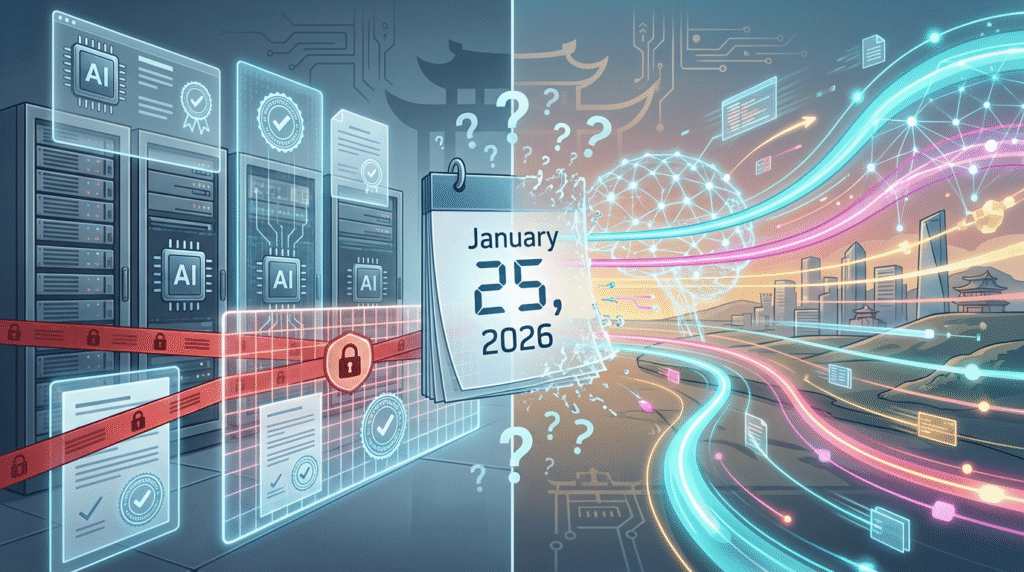
As the January 25, 2026 comment period deadline approaches, the global AI community faces fundamental questions about the relationship between humans and artificial intelligence. China’s proposed regulations with their focus on preventing addiction, ensuring ideological alignment, and protecting vulnerable users represent one answer to these questions.
But they also raise new concerns about innovation, freedom, and the role of government in shaping technology. The debate within Chinese official circles about how much to regulate AI mirrors similar debates happening in Silicon Valley, Brussels, and capitals around the world.
What makes China’s approach unique isn’t just the specific requirements, but the explicit acknowledgment that AI poses political risks that must be managed through comprehensive state control. Whether other countries follow this model or chart different courses will shape the future of artificial intelligence for generations to come.
For now, AI companies, users, and regulators worldwide are watching China’s experiment in AI governance with intense interest and perhaps a bit of apprehension about what it means for the future of human-AI interaction.
Sources
- Gizmodo – Draft Chinese AI Rules Outline ‘Core Socialist Values’ for AI Human Personality Simulators
- Semafor – Chinese authorities debate how much they should censor AI
- The Decoder – China proposes rules to combat AI companion addiction
- NDTV – China Issues Draft Rules To Regulate Human-Like AI Systems
- Bioethics.com – China Is Worried AI Threatens Party Rule—and Is Trying to Tame It