Opening the doors to a new tech carnival
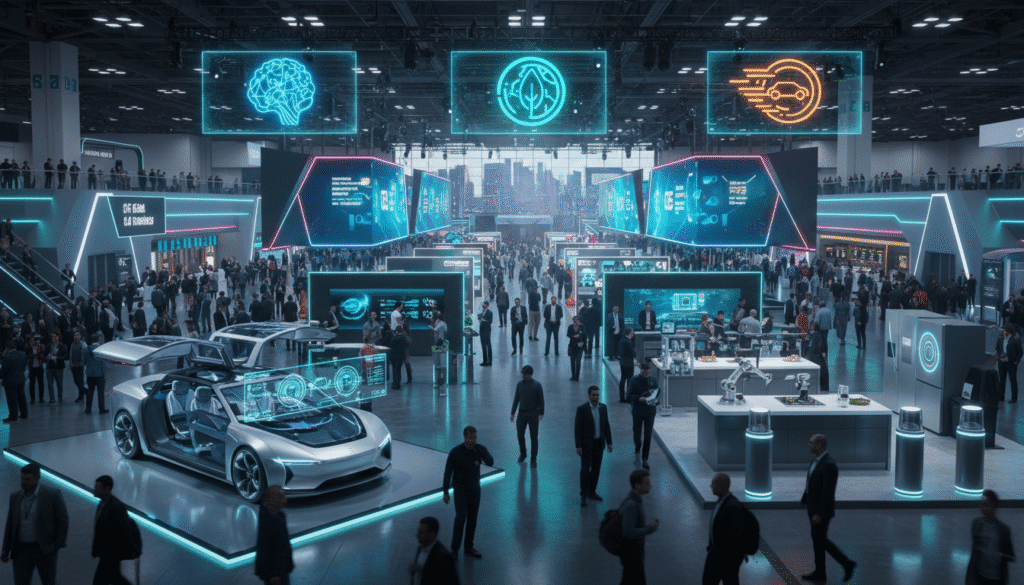
Las Vegas wasn’t just neon lights in early January 2026 – it was a parade of robots, quantum computers and AI‑infused gadgets. The Consumer Technology Association (CTA) said this year’s CES – the world’s largest technology show – returned with more than 3,600 Innovation Award submissions and 2.6 million square feet of exhibition space. In other words, if you’d walked the entire floor you’d deserve a medal. Gary Shapiro, CTA’s executive chair, called CES the place “where innovators show up to connect, forge partnerships and do business” and the vibe certainly matched that hype. AI, digital health, energy and mobility dominated the agenda; there were accessible‑tech stages, creator spaces and a new “Foundry” hub exploring how quantum computing and AI will shape the next era.
The crowd arriving on January 6 was a blend of startup founders, giant tech companies, government leaders and media. With an official schedule running through January 9, you could bounce from Dr. Lisa Su’s keynote to a demo of a robot vacuum climbing stairs. On the show floor, AI seeped into everything: TVs predicted your mood, ovens recommended recipes, cars recognized your face, and even the expo’s official app featured a built‑in chatbot. AI wasn’t just a buzzword; it was the glue holding together the biggest product debuts, from foldable laptops to quantum computing demos. By day two, more than 4,100 exhibitors filled booths across 13 venues and attendees were already joking about needing AI to manage their schedules. If you’re a gadget geek, this was the equivalent of Disneyland – except the rides talk back.
AI everywhere, and everywhere AI
Ask anyone on the show floor what stood out, and the answer is “AI.” The CES organizers predicted that 2026 would showcase AI agents, digital twins and AI on devices and they weren’t kidding. Exhibitors like Aizip, AMD, DEEPX, LG Electronics and Samsung filled booths with chips and algorithms designed to make our homes, workplaces and vehicles smarter. The digital‑health zone buzzed with startups claiming to predict disease through wearable sensors; energy companies pitched solar arrays and micro‑nuclear reactors; enterprise firms showed off AI‑powered security tools and robotics companies exhibited everything from farming drones to robot baristas. Even conference rooms turned into AI‑themed stages, with keynote speakers like AMD’s Dr. Lisa Su and Siemens CEO Roland Busch exploring how AI and quantum computing will reshape industries.
But beyond marketing slogans, real product innovations hinted at how seamlessly AI is being integrated. Lenovo’s rollable gaming laptop could expand its screen at the press of a button. Razer’s Project Motoko headphones, essentially a head‑mounted AI computer with 4K cameras, promised to identify objects and respond to voice requests thanks to a Snapdragon chip and compatibility with leading AI models. At the same time, everyday devices gained superpowers: vacuum cleaners recognized cables and liquids, washing machines sensed fabric types and soil levels, and refrigerators tracked expiration dates without human intervention. In a show known for futuristic prototypes, the common thread was the shift from AI as software to AI as a built‑in companion. Put simply, AI is no longer the garnish; it’s the main course.
Smart homes become chatty companions
Samsung dominated the home‑appliance conversation by turning its booth into a vision of zero housework. In the Home Companion zone, the Bespoke AI Refrigerator Family Hub a CES Innovation Awards honoree flashed personalized schedule summaries and grocery recommendations on its screen. What made it special? Samsung integrated Google’s Gemini language model into its AI Vision system, allowing the fridge to recognize a broader range of ingredients as users add or remove food. This upgrade not only tracks what’s inside but also suggests recipes and analyses usage patterns through an improved AI Food Manager. You could watch it identify a bottle of soy sauce, then propose a stir‑fry and update your shopping list almost like having a sous‑chef in the door.
The AI kitchen extended well beyond the fridge. Samsung highlighted SmartThings features like an AI Wine Manager that scans labels and tracks storage, alongside hybrid cooling systems designed to save energy. In the laundry room, the Bespoke AI Laundry Combo adjusted water and detergent automatically, while AI Wash+ and AI VRT+ reduced noise and vibration. Samsung also introduced the Bespoke AI Jet Bot Steam Ultra robot vacuum, using advanced sensors and a Qualcomm chip to avoid cables, detect liquids and clean with steam. Executives said SmartThings now reaches over 430 million users, positioning the Gemini-powered Family Hub as the center of an increasingly conversational smart home one that doesn’t just respond, but speaks up.
Cars that know your birthday: Mobility gets personal
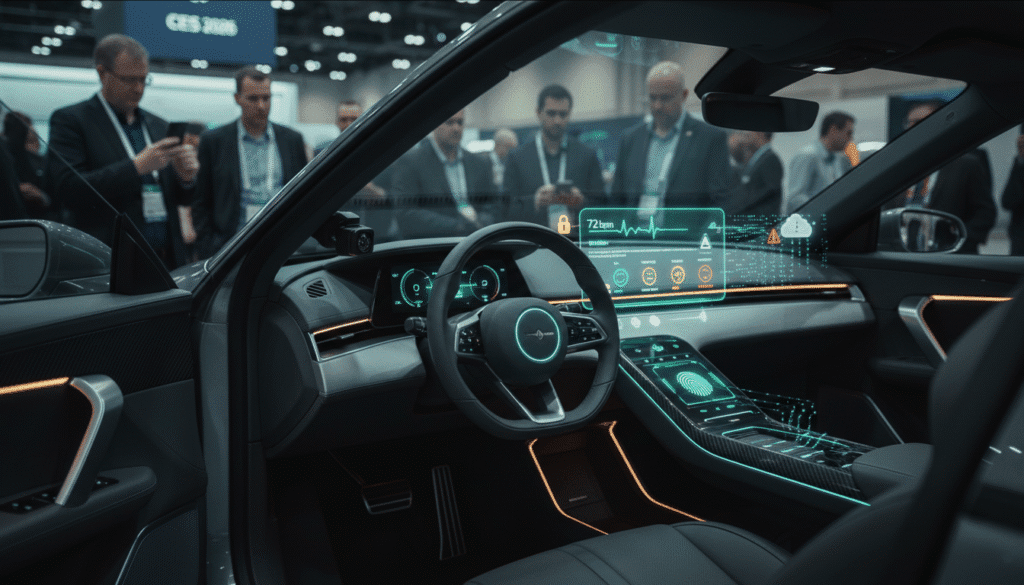
Step into the mobility halls at CES 2026 and the cars don’t just start they introduce themselves. In one standout demo from Nvidia’s automotive team, a girl slides into the back seat of her parents’ vehicle. The cabin instantly recognizes her. It knows it’s her birthday. Her favorite song starts playing without a single command.
Sri Subramanian, Nvidia’s global head of generative AI for automotive, summed it up neatly. He urged attendees to “think of the car as having a soul and being an extension of your family.” That idea wasn’t just philosophical. It was technical, tangible, and very real on the show floor.
From Vehicles to Proactive Companions
That emotional pitch came backed with serious hardware and software. Bosch introduced an AI vehicle extension built to turn the cabin into what it calls a proactive companion. Nvidia followed with Alpamayo, a generative-AI initiative it described as a “ChatGPT moment for physical AI.”
Across exhibits, cars demonstrated how far personalization has gone. Systems tracked heart rates and emotional cues. Seats adjusted automatically. Cars reminded parents if a baby was left in the back seat. Playlists shifted based on mood. The vehicle no longer waited for instructions it anticipated needs.
When Personalization Meets Privacy
But the same intelligence that makes cars feel friendly also makes some people uneasy. Justin Brookman of Consumer Reports warned that modern vehicles are quickly becoming repositories of deeply personal data, with few clear rules about how that information is stored, used, or shared.
People don’t see cars as just tools, Brookman noted. They see them as extensions of themselves. That makes always-on cameras, microphones, and biometric sensors feel less like features and more like intrusions. The magic, he cautioned, shouldn’t come at the expense of privacy.
Watching the Driver and Deciding What to Do With the Data
That tension was on display at Gentex’s booth. Inside a mock van, AI-equipped sensors monitored whether drivers were sleepy, drowsy, distracted, or emotionally off-balance. Brian Brackenbury, Gentex’s product line director, emphasized that the technology itself doesn’t decide outcomes. Automakers do.
According to Brackenbury, it’s ultimately up to manufacturers to choose how vehicles respond to collected data and how long that data exists at all. The tools are powerful. The responsibility, he said, has to match.
Hyundai Mobis and the Eyes of the Future
On the supplier side, Hyundai Mobis leaned fully into the idea of intelligent vision. The company announced it would showcase more than 30 mobility technologies at CES, led by M.VICS 7.0, an advanced cockpit platform built around a holographic windshield display.
Developed with optics specialist Zeiss, the system projects driving information directly onto the windshield, effectively turning the glass into an ultra-large screen. It pairs that display with an 18.1-inch vertically expandable center screen and X-by-Wire electronic steering and braking for optimized driving dynamics.
The holographic windshield earned a CES Innovation Award, and for good reason. If cars are gaining a “soul,” they’re also gaining a second set of eyes watching the road, the driver, and everything in between.
Quantum dreams and the CES Foundry
While AI dominated headlines, quantum computing quietly took a step toward the mainstream. D‑Wave, the Canadian pioneer of annealing quantum computers, announced it would sponsor the CES Foundry event and showcase real‑world use cases. Vice President Murray Thom will deliver a masterclass on January 7 explaining how businesses can leverage quantum computing; he’ll also demonstrate how D‑Wave’s hybrid quantum‑classical solvers integrate with AI and blockchain to tackle manufacturing, supply‑chain and telecom problems. The company emphasised that its energy‑efficient quantum systems already deliver measurable benefits and that its presence at CES signals a move toward mainstream adoption.
In the broader CES landscape, quantum computing was tied to AI. The CES Foundry aims to explore how AI, quantum computing and blockchain will shape the next era of innovation. With AI increasingly running on device and at the edge, quantum systems could provide a computational boost to solve optimization problems – think route planning or material simulation – that classical computers struggle with. Exhibitors like D‑Wave hope to show that quantum isn’t just theoretical physics but a toolkit businesses can deploy today. For attendees, it was a welcome reminder that the “next big thing” often arrives quietly, with a handful of qubits tucked between robots and smart fridges.
The CES press release also highlighted energy as a key theme, noting that the growth of high‑power technologies like AI and quantum requires new generation methods. Exhibitors showcased solar, wind and even nuclear innovations to power data‑hungry devices. In this context, quantum computing’s efficiency message resonated: solving tough problems with fewer resources could help mitigate the energy demands of our AI future. For the first time at CES, quantum felt less like sci‑fi and more like a business strategy.
Gadgets galore: Laptops, wearables and robot vacuums
Engadget’s Day 1 coverage put NVIDIA front and center. The company introduced G-Sync Pulsar, a new display technology that pulses a monitor’s backlight in precise sections to reduce motion blur. Fast movement becomes easier to track, a clear win for competitive gaming.
NVIDIA also unveiled DLSS 4.5, powered by a second-generation Transformer-based model. The upgrade promises improved temporal stability and more efficient frame-rate generation, especially for high-end systems pushing visual limits.
Foldable Phones and Expanding Screens
Samsung grabbed attention with its Galaxy Z TriFold, a phone-tablet hybrid featuring a 10-inch AMOLED display that folds twice. Magnets and dual hinges allow smoother transitions, suggesting foldables are finally growing up.
Lenovo took a different approach with its Legion Pro Rollable laptop concept. At the push of a button, the screen expands from 16 inches to 23.8 inches, shifting from a 16:10 to a cinematic 24:9 aspect ratio. It remains a prototype, but it hints at a future where displays adapt to the task, not the other way around.
Robot Vacuums That Climb Stairs
The Verge’s gadget roundup added a sense of play. Roborock’s Saros Rover robot vacuum stole the show by sprouting extendable, wheeled legs. The result? A robot vacuum that can climb and clean stairs something home robotics has struggled with for years.
It’s a small mechanical trick with big implications. Multi-floor homes may finally get fully automated cleaning without human intervention.
Keyboards, Screens, and Shape-Shifting Laptops
Corsair merged a mechanical keyboard with Elgato’s Stream Deck, combining a hot-swappable PCB on one side with 12 customizable buttons and rotary dials on the other. It’s built for streamers and multitaskers who want physical control at their fingertips.
Lenovo also turned its ThinkBook Plus Gen 7 Auto Twist from concept into reality. A motorized hinge opens the laptop with a knock and tracks your head to automatically adjust screen orientation.
Wearables Get Smarter and Stranger
Razer’s Project Motoko looked like gaming headphones but hid two 4K cameras, near- and far-field microphones, and AI capable of identifying images and responding to voice commands. It’s part wearable, part assistant, part experiment.
Shokz introduced OpenFit Pro earphones that deliver open-ear noise reduction using triple microphones and adaptive algorithms. Dell went big with its UltraSharp 52 Thunderbolt Hub Monitor, a 52-inch 6K display loaded with enough ports to run a small office.
The Bigger Pattern
Taken together, these gadgets capture the mood of CES 2026: imaginative, but grounded. Many of these devices could ship within months. Almost all rely on AI chips or sensors to make everyday actions climbing stairs, pivoting a screen, tuning sound feel smarter.
The message is clear. Even your keyboard and your vacuum now want a little intelligence. And frankly, they’ve earned it.
Weaving It All Together
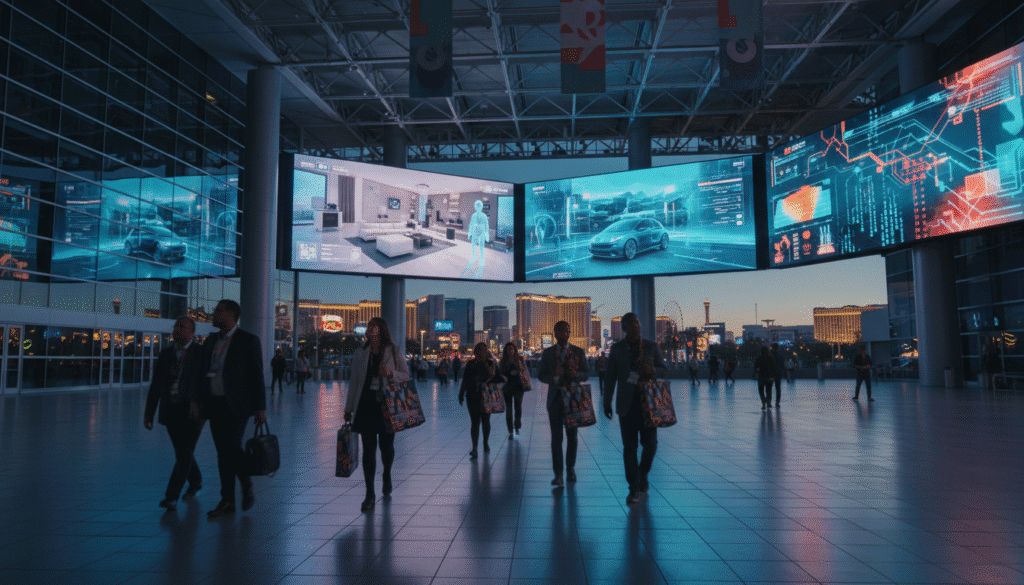
As CES 2026 wound down, one thing became clear. This wasn’t just a parade of gadgets. It was an ongoing conversation about how deeply AI is embedding itself into everyday life. From fridges that plan meals to cars that remember birthdays and quantum computers aimed at speeding up logistics, the common thread was adaptation. Devices now sense, predict, and respond.
CTA leadership emphasized that CES is where innovators come to do business but the business of 2026 is inseparable from questions of privacy, energy use, and inclusivity. As Consumer Reports’ Justin Brookman warned, products that personalize experiences also collect sensitive data. A car that tracks emotions or a fridge that knows dietary habits becomes a long-term data platform, something Samsung acknowledged by highlighting extended software support and ecosystem partnerships.
Between Vision and Reality
The show also highlighted a careful balancing act. Concept designs like Lenovo’s rollable and twisting laptops, Razer’s AI headset, and Roborock’s stair-climbing vacuum pushed imagination forward. At the same time, near-term deployments such as Hyundai Mobis’s M.VICS 7.0 cockpit and D-Wave’s quantum demonstrations showed what’s ready to move beyond the show floor.
Between those extremes sat quieter upgrades: AI-powered washers that reduce vibration, voice-controlled fridges, and headphones that adapt sound in real time. Together, they explain why CES feels both overwhelming and delightful. The jokes about talking gadgets are easy. Understanding that these prototypes shape how we’ll live with technology for decades is harder and more important.
The Questions That Linger
Leaving the convention center, the buzz doesn’t fade. Cars may sing “Happy Birthday.” Fridges may nag about leftovers. Quantum systems may optimize deliveries. The real questions are bigger. Who owns the data? Who benefits from the efficiency? And who gets left out?
CES 2026 didn’t answer everything. But it made one thing clear. The future isn’t waiting and it already has a playlist.
Sources
- CES 2026 press release outlining exhibition size, innovation award submissions and key trendsces.techces.tech.
- Samsung Global Newsroom article on Bespoke AI appliances and integration with Google Gemininews.samsung.comprnewswire.com.
- PR Newswire release about Hyundai Mobis’s CES showcases: M.VICS 7.0 cockpit, holographic windshield display, and X‑by‑Wire technologyprnewswire.com.
- D‑Wave press release via The Quantum Insider about quantum computing demonstrations at CES 2026thequantuminsider.com.
- Engadget’s Day 1 coverage of gaming tech, foldables and Lenovo’s rollable laptopengadget.comengadget.com.
- The Verge’s roundup of best gadgets: Roborock’s Saros Rover, Corsair’s Stream Deck keyboard, Lenovo’s Auto Twist laptop and Razer’s Project Motokotheverge.comtheverge.comtheverge.comtheverge.com.
- AP/News4Jax article on AI‑powered cars and privacy concerns.