TL;DR
The most dangerous belief in B2C AI in 2026 is that a better model wins. It does not. Distribution wins.
Generative AI app downloads reached 3.8 billion in 2025, in-app purchase revenue topped $5 billion, and the market is now crowded enough that awareness, belief, and explanation are the true bottlenecks for most consumer AI companies — not product quality alone.
Sponsored YouTube solves the hardest part of AI marketing: turning abstract capability into concrete belief. YouTube’s own research shows 78% of viewers find YouTube creators most trustworthy for product recommendations. For B2C generative AI companies — products that are inherently abstract, frequently oversold, and almost always better understood through demonstration than description — this trust infrastructure is one of the most valuable acquisition assets available.
Channels like Kingy AI (@kingy-ai) occupy a particularly potent position. They sit at the exact intersection of AI curiosity, creator ambition, and technology appetite. Their audience does not merely consume AI news. They are builders, creators, side-hustlers, and optimization-minded prosumers actively searching for leverage. That is the buyer identity that most B2C AI companies most need to reach — and that YouTube creator channels already own.
The core argument is simple: for B2C AI, sponsored YouTube is not an awareness channel. It is a belief-formation channel, a category education channel, a proof channel, and increasingly a reusable performance asset. That is a combination no other distribution channel can match at the same cost.
Part I: The Real Problem Is Not Building the Product — It’s Getting Someone to Care
1.1 The Attention Economy Has Shifted Into a Belief Economy
For the first wave of consumer AI companies, existing was enough. If you shipped a product with GPT-4 integration in 2023, the novelty of the category was your marketing. Curiosity did the work. That era is over.
Kingy AI’s own editorial acknowledged this directly in early 2026 with the publication of “When Execution Becomes Free, Distribution Becomes Everything.” The piece makes a point that no AI founder should ignore: when building becomes commoditized — when any competent team can ship a generative video tool, an AI avatar product, a coding copilot, or a voice synthesis layer — the barrier to market entry collapses. What does not collapse is the cost of capturing attention and forming belief.
This is the current state of B2C generative AI. Sensor Tower data shows that AI app downloads reached 3.8 billion in 2025 and revenues exceeded $5 billion. Stanford’s 2025 AI Index reported continued acceleration in AI usage and investment. The Microsoft AI Economy Institute put global generative AI adoption at 16.3% of the world’s population by the second half of 2025. These are not signs of a niche market. They are signs of a crowded market.
And in crowded markets, distribution quality becomes the primary moat.
1.2 What Distribution Actually Means in 2026
Most founders still define distribution too narrowly: “How do we reach more people?” But distribution in the B2C AI era means something richer and harder than reach alone. It means:
- Legibility: Can a stranger understand in under 60 seconds what your product does and why it matters?
- Believability: After seeing or hearing your pitch, does the prospect believe the product delivers what you claim?
- Desirability: Does the prospect want it for themselves, not just find it intellectually interesting?
- Trial-readiness: Is the path from “I want this” to “I’m using this” short, simple, and low-risk?
- Memorability: When the relevant use case arises in the prospect’s life, do they remember your product?
Most B2C AI companies are adequate at one or two of these. The best distribution channels for AI are the ones that can do all five in a single exposure. Sponsored YouTube, done well, is the closest thing to a channel that achieves all five simultaneously. Which is precisely why it deserves the serious, systematic treatment this guide provides.
Part II: Why Consumer AI Products Require Explanation-Heavy Distribution
2.1 The Uncertainty Stack
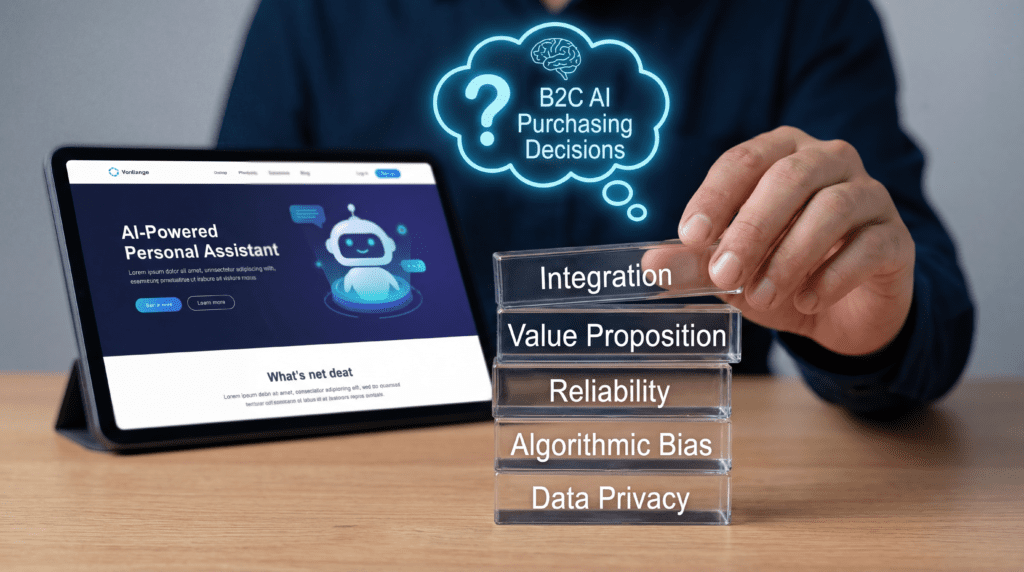
Other consumer categories can sell off aesthetics, social proof, habit, or price. AI usually cannot — at least not on first contact. Consumer AI products typically face what we can call the “uncertainty stack”: multiple overlapping forms of doubt that must be resolved before a purchase decision can form.
Category uncertainty: “Is this a real product category or just a demo?”
Quality uncertainty: “Is the output actually good enough for my use case?”
Workflow uncertainty: “Will this actually fit into how I work, or will it disrupt more than it helps?”
Trust uncertainty: “Is this company going to disappear in three months, or have I heard of someone using it?”
Value uncertainty: “Is this worth $20/month when ChatGPT already does some of this?”
Every one of these doubts must be addressed before conversion. And importantly, they must be addressed in the right order. A consumer who does not yet believe the category is real will not be moved by pricing comparisons. A consumer who is uncertain about output quality will not be moved by a case study from an enterprise client they have never heard of.
The format that can carry this entire stack — from category education to proof to workflow to trust to value — is long-form, creator-led video. Not because it is the cheapest or fastest channel. Because it is the only channel capable of doing all five jobs in a single sitting.
2.2 The Demonstrable Output Advantage
Look at the products covered in Kingy AI’s recent corpus. The review of Vidu AI as a video generator, the deep-dive on OiiOii (oiioii.ai) as an AI animation studio, the coverage of Kling AI across versions 2.0, 2.5 Turbo, and 3.0, the review of HeyGen and Akool for avatar-based content, the exploration of ElevenLabs for voice synthesis, the coverage of Suno for AI music generation, and the guide on Deep Agent by Abacus AI for avatar video creation — every single one of these products has a fundamental property in common: their value is visible.
You can see the output. You can hear the voice. You can watch the animation. You can compare before and after. You can see a 5-second AI video go from prompt to screen.
That visual demonstrability is the key property that makes sponsored YouTube not merely useful but structurally superior for this category. A banner ad cannot show Kling AI’s cavalry charge prompt producing a cinematic crane shot in 15 seconds. A search ad cannot prove that OiiOii can replace an entire production team for animated content. A landing page cannot convey the emotional surprise of hearing ElevenLabs produce a voice clone that is indistinguishable from a real speaker.
A creator video can do all of that. And crucially, it can do it while providing the interpretive layer that raw demos lack — the creator’s honest judgment, their real workflow integration, their commentary on where the tool is strong and where it falls short.
Part III: YouTube’s Structural Advantages for AI Marketing
3.1 Scale, Trust, and the Discovery Infrastructure
YouTube is not just a large platform. It is a qualitatively different platform for brand trust formation.
YouTube’s own research and Google’s advertising materials confirm several remarkable properties. 78% of viewers say YouTube has the most trusted creators for product recommendations. Among U.S. Gen Z, 79% trust recommendations from creators on YouTube. Think with Google’s creator marketing research found that YouTube creators provide “helpful context or expertise for more confident purchase decisions,” and that YouTube’s influence can shorten the average online video shopper’s purchase journey by six days.
Google has also built out the infrastructure that makes YouTube sponsorships increasingly measurable and reusable: creator partnership hubs, linked creator videos inside Google Ads campaigns, audience segments from creator interactions, organic metric access for linked videos, and “Partnership Ads” that let brands amplify organic creator content through paid distribution. In practical terms, this means a single sponsored video on a channel like Kingy AI is not a one-off media buy.
It can become a reusable creative asset that powers organic discovery, paid amplification, retargeting, branded search capture, and lifecycle campaigns simultaneously.
That is not influencer marketing. That is distribution infrastructure.
3.2 YouTube as a Shopping and Research Platform
Google’s “Super-Empowered Consumer” research found that people turn to Google and YouTube twice as often as leading social media platforms when shopping. 70% of shoppers are open to learning about products on YouTube from brands. McKinsey has noted that consumers are increasingly using AI for research and decision support during shopping. BCG found that shopping-related GenAI use grew 35% between February and November 2025.
This convergence — of AI-assisted consumer research and YouTube’s role as a trusted product discovery platform — creates an interesting dynamic for B2C AI companies specifically. Your prospective customers are already using YouTube to research technology products. They are already trusting creator voices over polished brand messaging.
And they are increasingly AI-assisted in their own research process, meaning the questions they bring to YouTube are getting sharper and more specific. A well-positioned sponsored video on a relevant channel can intercept that research journey at exactly the right moment.
3.3 The Long Shelf Life of Creator Video
One of the most underappreciated properties of YouTube sponsorships compared to almost every other digital channel is time horizon. A paid social post fades within 24-48 hours. A newsletter mention lives for one send. A podcast sponsorship survives as long as the episode is actively promoted. But a YouTube video sits permanently in search results, recommendations, embedded blog posts, playlists, and social shares — often for years.
Kingy AI’s article on Vidu AI, their deep-dives on Kling AI’s successive versions (2.0, 2.5 Turbo, 3.0), their review of OiiOii — these are not ephemeral pieces. They are indexed, searchable, embeddable, and linkable indefinitely. For a B2C AI company considering where to put its first $10,000-$50,000 in marketing, the question is not “what gets the most immediate clicks?” It is “what builds a library of proof and explanation that keeps working for 24 months?” A thoughtfully executed YouTube creator sponsorship often wins on that horizon.
Part IV: What Kingy AI’s Content Mix Reveals About Real B2C AI Demand
4.1 Kingy AI as a Window Into Buyer Motivation
Kingy AI’s content corpus — spanning kingy.ai and the @kingy-ai YouTube channel — is one of the most useful real-world signals available for understanding where B2C AI demand actually lives in 2026. The channel sits at a specific and valuable intersection: technically curious, practically motivated, creator-adjacent, and actively looking for leverage.
Recent Kingy AI content spans:
AI video generation and animation: Reviews of Vidu AI, Kling AI (v2.0, v2.5 Turbo, v3.0 with multi-shot, dialogue, binding elements), OiiOii (which claims to replace entire production teams for animation), and Runway. These reviews consistently focus on real-world workflow capability: Does the output look good enough? Can it handle dynamic camera motion and complex character actions? Does the pricing make sense at scale?
AI avatars and synthetic voice: Coverage of HeyGen, Akool, and Deep Agent by Abacus AI for creating avatar-based video content. Kingy AI’s own blog produced a comprehensive guide on “How to Create Viral AI Avatar Videos for TikTok & YouTube Using Deep Agent” — which is itself a case study in how creator channels serve as both educational and promotional vehicles for B2C AI tools.
AI music: Coverage of Suno v5.5, which now includes voice cloning capabilities, showing that the channel’s audience is interested not just in video creation but in full content production stacks.
AI assistants and coding tools: Multiple articles covering Claude (Anthropic’s computer use, Claude Code’s auto mode, Claude on mobile), which shows that even in a B2C content-focused channel, there is strong audience interest in AI-assisted building and automation tools.
Hardware and prosumer gear: A dedicated assessment of the MacBook Neo “for content creators” — showing that the Kingy AI audience is not purely software-focused. They buy gear. They are builders and creators who think about their full tech stack.
4.2 The Four Motivational Clusters That Drive Purchases in This Audience
Looking across Kingy AI’s content, four distinct buyer motivations emerge, each of which creates a different sponsorship strategy:
Cluster 1 — The Creator Seeking Output Leverage
This buyer wants to make better content with less effort. They are comparing Kling AI vs. Runway vs. Vidu AI for video generation, evaluating ElevenLabs vs. Resemble AI for voice, and asking whether OiiOii can actually replace the animation work they currently outsource. They buy on demonstrated quality. They respond to head-to-head comparisons and “from prompt to final output” workflows. This is the ideal audience for AI video tools, AI music tools, avatar platforms, and voice synthesis products.
Cluster 2 — The Builder Seeking Speed
This buyer is building something — a product, a workflow, a side project. They are reading about Claude Code’s Auto Mode, vibe coding with AI-native tools, and the emergence of plain-English app builders. They want to ship faster without being blocked by engineering bandwidth. They buy on proof of shipped output. The Kingy AI article on “The Complete Guide to Vibe Coding and AI-Native Software Development” speaks directly to this buyer. So does the coverage of Deep Agent, which creates complete video workflows automatically.
Cluster 3 — The Professional Seeking Competitive Edge
This buyer is a marketer, agency operator, content strategist, or brand manager who is watching AI transform their industry and wants to stay ahead. They read Kingy AI’s piece on “Marketers Are the New Engineers in the AI Economy” and feel it personally. They buy tools that make them more capable in their existing professional role. They are the primary audience for AI productivity layers, presentation tools, research tools, and workflow automation.
Cluster 4 — The Optimization-Minded Prosumer
This buyer follows the full Kingy AI content stack: software reviews, but also the MacBook Neo hardware review, adjacent tech, and gear that completes their setup. They think about their stack holistically. They are often early adopters who influence others in their networks. Their purchase decisions often carry downstream social proof.
4.3 The Crucial Insight: This Audience Buys Outcomes, Not Features
Kingy AI’s recent content exhibits a consistent editorial philosophy: translate features into outcomes. The review of Kling AI 3.0 asks “Is 3.0 Worth the Hype?” and evaluates multi-shot, dialogue quality, character binding, and the Omni model through real tests — asking whether the new version “actually solves the uncanny valley problem” for professional workflows. The OiiOii review evaluates whether it “can replace your entire production team.” The Vidu AI review asks whether it is “changing everything.”
These framings — ambitious, evaluative, outcome-first — perfectly match what B2C AI companies should want from their sponsorship partners. The Kingy AI audience is not impressed by capability announcements. They are impressed by demonstrated results. And they are extremely good at detecting when a tool is genuinely useful versus when it is polished but shallow.
That audience intelligence is an asset for honest AI companies and a liability for overpromising ones. Which is the first and most important strategic implication of this guide: only sponsor a channel like Kingy AI if your product can survive a real test.
Part V: The Creator as Pre-Sales Agent — How YouTube Sponsorships Replace the Missing Middle
5.1 The Problem With Most AI Marketing
The typical B2C AI company’s marketing funnel has a structural gap between awareness and trial. Awareness (a tweet, a Product Hunt launch, a blog post) generates curiosity. Trial requires motivation. The gap between the two is often bridged inadequately — by a landing page that speaks in product language instead of user language, by a demo that shows the best possible output without showing the workflow, by testimonials from power users that new visitors cannot relate to.
Creators fill that gap better than almost any other channel, for a reason that is often stated but rarely analyzed carefully: creators are proxy users, not brand representatives.
When a viewer watches a Kingy AI review of Vidu AI, they are not watching a Vidu AI employee tell them how great Vidu AI is. They are watching someone they already trust — someone whose taste and judgment they have calibrated against over many videos — actually use the product, react to it, form an opinion, and share both the successes and the limitations. That proxy-user relationship carries an enormous amount of credibility that no brand can manufacture.
5.2 The Five Pre-Sales Jobs That Creators Do Exceptionally Well
Translation: A skilled creator transforms “multimodal video synthesis with temporal coherence preservation” into “you can make a full scene where the camera orbits your character while she gives a speech — and it actually works.” Kingy AI’s Kling AI 3.0 coverage does exactly this: it moves from the press release claim (“biggest leap in AI video generation”) to a concrete test (“an FBI agent drinking coffee at a Pacific Northwest diner,” followed by “this is a damn fine cup of coffee” delivered with natural acting and multi-shot editing). The abstraction becomes concrete, the promise becomes testable.
Framing: A creator establishes who the product is for. This is often the most valuable thing a sponsorship can do. Kingy AI’s review of OiiOii frames it as “the AI animation studio that wants to replace your entire production team” — a frame that immediately signals who should be excited (small studios, solo creators, indie game developers) and who should be skeptical (large studios with existing pipelines). Good framing creates pre-qualified interest rather than indiscriminate awareness.
Risk reduction: Trust-based creator content can defuse AI skepticism in a way that brand content cannot. When a respected creator says “the output quality is genuinely impressive at this level, but it still struggles with fast-action fight scenes,” that honesty does two things simultaneously: it makes the overall recommendation more believable, and it pre-filters unconverted prospects into those who match the product’s current sweet spot. Kingy AI’s Kling AI coverage is exemplary here — the reviews consistently note both the impressive advances (cavalry charge prompt, multi-shot dialogue) and the persistent gaps (lip sync drift in longer generations, coherence issues in certain scenarios).
Workflow embedding: The most powerful creator content shows the tool inside a real workflow, not in isolation. Kingy AI’s Deep Agent guide takes the viewer from account setup through avatar customization, script generation, scene customization, editing, and publishing — an end-to-end view that lets the viewer locate themselves inside the workflow and decide whether they could execute it. This kind of content creates not just purchase intent but purchase confidence.
Call-to-action credibility: The most trustworthy CTA is not “use code KINGY for 20% off.” It is “you watched me use this for a real project, and this is what I would pay for it.” That earned-CTA dynamic is unique to creator content and converts at substantially higher intent levels than interruptive advertising.
5.3 Why Kingy AI Specifically Occupies a High-Value Position
Kingy AI’s editorial voice across both kingy.ai and its YouTube channel exhibits a consistent tone: authoritative but accessible, enthusiastic but evaluative, aspirational but practical. The channel’s own Monetizing Generative AI Apps article explicitly acknowledges the strategic value of creator sponsorships, noting: “the value of sponsored or dedicated YouTube videos — such as those on the channel @kingy-ai — in amplifying your app’s reach and credibility in the marketplace.”
That level of self-awareness in an AI media brand is unusual and useful. It means the channel’s editorial team understands the commercial dynamic they are embedded in, and — when executed well — that understanding produces sponsorship integrations that serve both the brand and the viewer simultaneously rather than sacrificing one for the other.
For a B2C AI company evaluating whether to sponsor Kingy AI, the key questions to ask are:
- Does your product produce visible, demonstrable output?
- Can it survive an honest real-world test?
- Does your target buyer match Kingy AI’s creator/builder/prosumer audience profile?
- Is your price point compatible with consumer-level willingness to pay?
- Do you have a clear next step for the viewer to take?
If all five answers are yes, a Kingy AI sponsorship is likely a high-leverage distribution investment.
Part VI: Not All Sponsorships Are Created Equal — Five Distinct Strategic Use Cases
6.1 Category Education Sponsorships
Best for: Products where the market is still learning what the category is.
AI agents are perhaps the clearest current example. Most consumers understand “chatbot” but not “autonomous agent.” Most understand “AI writes text” but not “AI builds, tests, and deploys a workflow.” Category education sponsorships do not prioritize immediate conversion. They prioritize being the first name associated with a new category in the viewer’s mind.
For this use case, Kingy AI’s editorial depth is particularly valuable. Their audience already operates at a level of AI literacy that accelerates category education — you do not need to explain what a large language model is before you can explain what your agent does with one.
Measurement: Branded search lift, direct traffic, organic mentions, and category association surveys — not last-click conversion.
6.2 Product Proof Sponsorships
Best for: Categories the market understands but does not yet trust.
AI video generation is the canonical example. The viewer knows what AI video is. They are skeptical that any current tool produces output that is actually usable for professional work. A proof sponsorship shows, concretely, that the product crosses the believability threshold.
Kling AI’s coverage across Kingy AI’s channel is a perfect case study. Each version — 2.0, 2.5 Turbo, 3.0 — arrives with a “prompt battle” format that tests specific capabilities (wingsuit flight, cavalry charge, FBI agent coffee scene) against named alternatives (VEO 3, Seedance Pro). This format builds product proof through comparison, which is far more convincing than a solo demo because it tells the viewer where the product sits in the competitive landscape.
B2C AI companies sponsoring for proof should brief creators to use comparison framing where possible: “How does this compare to what I was using before?” is a more powerful proof format than “here is what this tool can do.”
Measurement: Trial conversion rate, activation depth, post-purchase survey sentiment, and comparison keyword search volume.
6.3 Workflow Integration Sponsorships
Best for: Products with strong retention potential that need to become habits, not trials.
Workflow integration content shows the tool inside a real, sustained creative or professional practice. The best example in Kingy AI’s corpus is the Akool and HeyGen coverage, which moves beyond “here is what the avatar looks like” to “here is how a creator or brand would actually integrate this into a content production pipeline.”
For this use case, the key brief to the creator is: “Show us inside a real project. Not just the output — the full before/during/after of using this in your actual workflow.” The viewer who watches that content does not just get proof that the product works. They get a mental model for how they would use it themselves.
Measurement: D30 retention, upgrade rate, feature activation depth, and payback period against average order value.
6.4 Comparison and Consideration Sponsorships
Best for: Markets with mature buyer awareness and multiple alternatives being evaluated.
When a viewer is already considering Vidu AI, Kling AI, and Runway for their AI video needs, a sponsored comparison video can intercept that consideration directly. Kingy AI’s Kling AI 2.5 Turbo review (featuring a head-to-head against VEO 3 and Seedance 1.0 Pro across six distinct test prompts) is a masterclass in this format. The viewer arrives not knowing which tool is best and leaves with a clear recommendation — plus all the comparative evidence they would have had to assemble themselves.
For B2C AI companies entering a market with established alternatives, securing sponsorships in this comparison format can be more valuable than purely aspirational brand content. The viewer is already motivated. The question is just which product deserves their subscription.
Measurement: Win rate in trials, keyword rankings for comparison terms, and trial-to-paid conversion relative to organic average.
6.5 Audience Adjacency Sponsorships
Best for: Products that serve the same buyer identity as the channel’s primary content but occupy an adjacent category.
Kingy AI’s own editorial move into hardware — specifically the MacBook Neo content creator assessment — is the clearest signal of what this use case looks like in practice. The Kingy AI audience does not just buy AI software. They buy everything that helps them create, build, and operate at a higher level. A sophisticated B2C AI company can leverage this by sponsoring Kingy AI for a product that is not strictly “an AI tool” but serves the same underlying buyer identity: anyone who is trying to be more capable, more productive, or more creative with modern technology.
For adjacency sponsorships, the brief should lean into identity rather than category: “This is for the kind of person who watches this channel” is often more persuasive than “this is a type of AI product.”
Part VII: The Dedicated Video vs. Integrated Segment Decision Framework
7.1 Why Most Companies Choose Wrong
The most common mistake B2C AI companies make in creator marketing is choosing the wrong format for the wrong reason. They choose integrated segments (30-60 second mid-roll reads) because they are cheaper, then wonder why conversions are low. Or they commission dedicated videos for products that do not need 10 minutes of explanation, producing bloated content that loses viewers.
The right framework is not “what can we afford?” It is “how much explanation does the product need before a viewer can take meaningful action?”
Use a dedicated video when:
- The product is genuinely new or category-defining and requires workflow demonstration
- The output quality is central to purchase decision (video generators, voice tools, avatar platforms, animation tools)
- The buyer needs to see setup, real use, and realistic output — not just a highlight reel
- The company wants to create a long-lived search and discovery asset
- The product has multiple use cases worth exploring and a single 60-second read cannot do them justice
Vidu AI, OiiOii, ElevenLabs, Suno, HeyGen, Akool, Deep Agent — all of these belong in dedicated video territory. Their value is inherently demonstrated, their workflows are visually rich, and the purchase decision is high enough consideration that 10-15 minutes of honest creator-led exploration is appropriate and expected.
Use an integrated segment when:
- The category is already familiar and the product needs positioning rather than explanation
- The tool is a utility (grammar checker, scheduling app, simple image enhancer) where the value case is immediately intuitive
- The company is testing message-market fit before investing in deeper collaboration
- The goal is broad awareness rather than deep consideration
Use both when:
- You want the credibility and search shelf life of a dedicated video, plus the reach of repeated lighter integrations, plus paid amplification of the best-performing asset. This layered approach is often optimal for serious B2C AI product launches.
7.2 Length Is Not the Same as Depth
One nuance that is often missed: a longer video is not automatically a better-positioned video. Kingy AI’s Kling AI 3.0 review runs approximately 16 minutes. That length is justified because the review covers: a new image model, video quality improvements, multi-shot capabilities, a new binding feature for character consistency, grid-based generation workflows, and the Omni model’s cheat code for professional workflows. Every minute earns its place.
A 16-minute dedicated video for a simple AI scheduling tool would be padding. The creator’s job is not to fill time — it is to earn every minute of viewer attention through genuinely useful information. When briefing creators, the target length should emerge from the product’s actual complexity, not from a desire to get more “airtime.”
Part VIII: Building a Full Distribution Architecture Around Sponsored YouTube
8.1 Why Creator Sponsorships Must Be Embedded in a System
Most B2C AI companies treat creator sponsorships as isolated events: commission a video, run a code, measure clicks, assess CAC, repeat or abandon. This is the wrong operating model. A sophisticated B2C AI company treats creator-led YouTube content as a node in a distribution architecture, where each element amplifies every other.
Here is the full architecture.
Phase 1: Preparation (Before the Video)
Message hierarchy: Before any creator brief is written, the company must be able to answer three questions in plain English:
- What category is this product in?
- What specific problem does it solve better than anything else?
- What does the user’s life look like after they adopt it?
If those three answers are not clear internally, the creator will either invent the framing themselves or default to a generic walkthrough. Both outcomes waste the sponsorship budget.
Demo design: Do not hand creators a feature list. Hand them a set of workflows — specifically, the 2-3 scenarios where the product is most likely to produce a “wow” moment for a viewer. For an AI video generator, that might be: a cavalry charge prompt, a dialogue scene with multi-shot, and a character-consistent close-up sequence. For an AI animation studio like OiiOii, it might be: a full animated character from a single reference image, a scene with background and foreground interaction, and a speed-to-output comparison against traditional workflow time.
Landing page alignment: The highest-wasted resource in AI sponsorships is creator-driven traffic that arrives at a landing page speaking a completely different language from the video. If the video sells “from prompt to professional animation in minutes,” the landing page cannot open with “our proprietary transformer architecture enables…” The message must be continuous.
Trial path: The harder the product is to understand, the more important the trial path becomes. AI companies should default to the most generous reasonable trial: free tier, usage credit, 7-14 day full access, interactive demo. The viewer who just watched 12 minutes of an honest creator review is pre-sold. The only job of the trial path is to not get in their way.
Measurement setup: At minimum before launch:
- Creator-specific UTM tracking or unique landing pages
- Creator discount code with attribution tracking
- Analytics events for visit, signup, first meaningful action, and paid conversion
- Post-purchase survey with “how did you hear about us?” as a required field
- Branded search monitoring baseline
- If using Google’s creator partnership ads infrastructure: audience segments from video interactions, linked video metrics access
Phase 2: Launch
Lead with the best proof: The first 60-90 seconds of a dedicated video should answer: who is this for, what can it do, and why does it matter right now? This is where the “prompt battle” format that Kingy AI uses so effectively for video tool reviews works beautifully — the viewer gets immediate comparative evidence before the longer exploration begins.
Show real use, including friction: The biggest trust killer in AI demo content is the polished, perfect demo that appears to work flawlessly on the first try. Experienced AI audiences — and Kingy AI’s audience is experienced — can spot an overly scripted demo immediately. Encourage creators to show at least one moment of “this didn’t quite work as expected, here’s what happened” because that honesty makes every positive result more believable.
Activation bridge: The video should not end at admiration. It should end at a specific, simple first action: “Generate your first character scene,” “Build your first AI video,” “Clone your voice with the first paragraph of your script,” “Create your first avatar for TikTok.” The activation bridge is the gap between viewer enthusiasm and actual behavior, and it must be narrow and visible.
Paid capture during campaign window: Most viewers will not click a description link immediately. They will search your brand name days or weeks later. Run branded search ads aggressively during the window when creator content is publishing and in its first 30 days of discovery. This is often the highest-intent search traffic a B2C AI company will ever receive — people who have watched your creator content and are actively moving toward trial.
Phase 3: Expansion
Amplify the best asset: Google’s creator marketing infrastructure now supports partnership ads that let brands use a creator’s organic video inside paid ad campaigns, with access to organic view metrics and audience segments from creator video interactions. A high-performing Kingy AI video about your product can become a paid creative asset — serving in-stream, in-feed, and bumper formats — at a fraction of what bespoke ad production would cost.
Repurpose intelligently: One dedicated video should yield:
- 3-5 short clips for YouTube Shorts and paid social
- At least one embedded use on the product’s website or landing page
- 1-2 clips for app store creative testing
- 1-2 quotes or clips for sales and investor materials
- Email campaign content for trial conversion sequences
- At least one onboarding video embed for new users
Iterate by use case: If the first video wins on a specific use case (say, Kling AI’s dialogue and multi-shot for narrative creators), the second collaboration should explore adjacent use cases (character binding for consistent IP development, or image-to-video for brand asset animation). Do not repeat the same demo. Expand the creator’s and viewer’s understanding of the product’s range.
Part IX: The Measurement Model B2C AI Companies Must Use
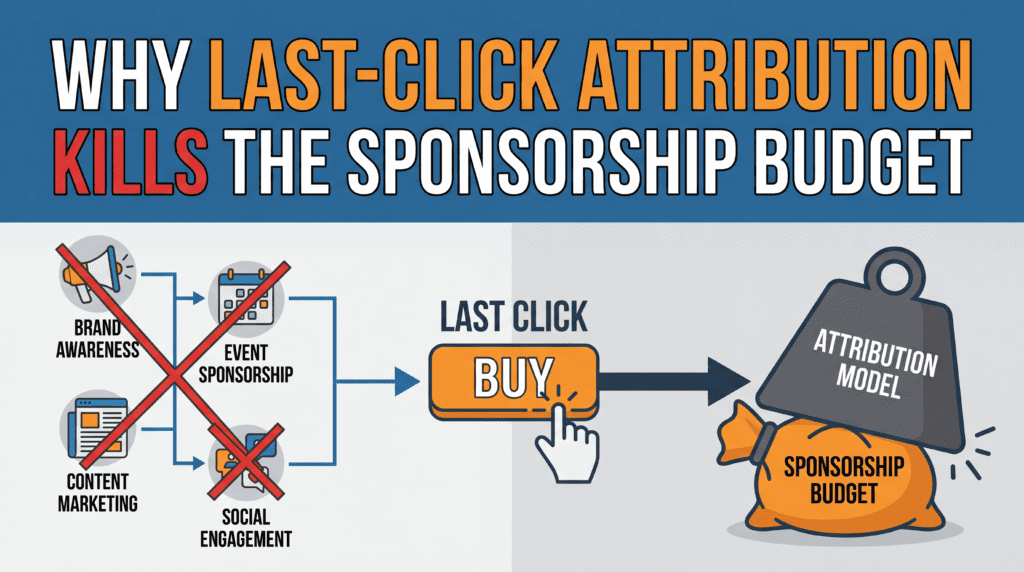
9.1 Why Last-Click Attribution Kills the Sponsorship Budget
The most common reason B2C AI companies underinvest in creator YouTube sponsorships is that they measure them like paid search ads. They look at last-click conversion within 7 days, see a “high” CAC, and conclude the channel does not work. This is measurement malpractice.
YouTube sponsorships for AI products operate on a different timeline and through different mechanisms than paid search. A viewer who watches a Kingy AI review of your product may not trial for 3 weeks — until the specific use case appears in their work. The conversion that attribution credits to “organic direct” or “brand search” may have been created entirely by the creator video. Without multi-touch measurement, that credit disappears.
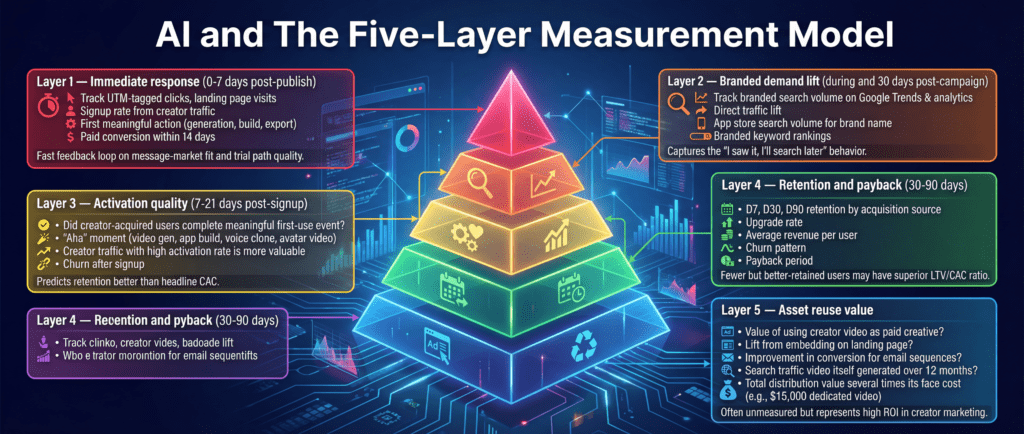
9.2 The Five-Layer Measurement Model
Layer 1 — Immediate response (0-7 days post-publish):
Track UTM-tagged clicks, landing page visits, signup rate from creator traffic, first meaningful action (first generation, first build, first export), and paid conversion within 14 days. This gives the fast feedback loop on message-market fit and trial path quality.
Layer 2 — Branded demand lift (during and 30 days post-campaign):
Track branded search volume on Google Trends and your analytics, direct traffic lift, app store search volume for your brand name, and branded keyword rankings. These signals often capture the “I saw it, I’ll search later” behavior that is characteristic of YouTube discovery.
Layer 3 — Activation quality (7-21 days post-signup):
Did creator-acquired users complete the meaningful first-use event — the “aha” moment that predicts retention? Generating a video, building a first app, cloning a voice, publishing a first avatar video? Creator traffic that converts at a high activation rate is more valuable than traffic that signs up and churns, even if the headline CAC looks the same.
Layer 4 — Retention and payback (30-90 days):
D7, D30, and D90 retention by acquisition source. Upgrade rate. Average revenue per user. Churn pattern. Payback period. A creator sponsorship that drives fewer but better-retained users may have a superior LTV/CAC ratio to a paid social campaign that drives volume with weak retention.
Layer 5 — Asset reuse value:
This layer is almost never measured but represents some of the best ROI in creator marketing. What was the value of using the creator video as a paid creative? What was the lift from embedding it on the landing page? What improvement in conversion did it drive for email sequences? What search traffic did the video itself generate over 12 months? When you account for all of these, a $15,000 dedicated video from a creator like Kingy AI may have a total distribution value several times its face cost.
Part X: How to Brief a Creator for a B2C AI Sponsorship
10.1 The Brief That Actually Works
Most startup creator briefs are either too controlling (a 12-page document specifying exact word choices) or too vague (“just make a video about our product!”). Both produce mediocre integrations. The brief that works gives the creator everything they need to be authentic and accurate while leaving them full freedom to be themselves.
Section 1 — What to say clearly:
- One sentence that describes the product in user language, not product language
- The exact target user (not “anyone who wants to be more productive” — be specific: “solo content creators who need to produce videos for multiple social platforms but do not have editing teams”)
- The 2-3 strongest outcomes your current users experience
- The preferred CTA and exactly what the creator should tell viewers to do
- Any claims that must be accurate and any claims that must be avoided
Section 2 — What to show clearly:
- The 2-3 workflows that produce the best “aha” moments
- Realistic input examples (the actual prompts, images, or scripts to use)
- Realistic expected outputs (do not hide what it actually produces)
- One clear demonstration of setup or onboarding simplicity
- One honest limitation or caveat (this builds trust far more than hiding weaknesses)
Section 3 — What not to force:
- Scripted language or brand-speak phrases
- Unnatural enthusiasm or hyperbolic claims the creator cannot honestly stand behind
- A sequential feature tour that buries the “aha” moment under specifications
- Claims about the model architecture or training methodology (viewers do not care and creators cannot credibly deliver this material)
The (AI) creator is not your ad agency. Their job is to help their audience understand whether your product deserves attention. Give them enough to do that honestly and well, then get out of the way.
10.2 The Content Formats That Win for B2C AI
Based on what performs in the AI creator category — including the formats Kingy AI has refined — here are the formats ranked by conversion quality for B2C AI sponsorships.
“Prompt Battle” format: Three models tested on the same prompts with honest comparative results. Extremely credible for video tools, image tools, and audio tools. The Kingy AI Kling AI series is the canonical example. Converts skeptical viewers because the evidence is present throughout.
“From Zero to Published”: The creator starts with nothing and finishes with a complete, real output — a video, an app, a piece of music, a voiced character. Best for builders and creators who need to visualize a full workflow before committing. Works exceptionally well for Deep Agent, OiiOii, AI video generators, and vibe coding tools.
“Does This Replace My Current Tool?”: Comparison against an established workflow. Works for mature categories where the viewer already has a solution they are considering replacing. Converts at high intent because it answers the specific question the buyer is already asking.
“I Used This for a Real Project”: The creator integrates the product into genuine work — producing an actual video for their channel, building something for a client, or creating content for a real campaign. The strongest retention-oriented format because it demonstrates sustained value rather than demo-day impressiveness.
“Honest Review After 30 Days”: Evaluates a tool after extended real use rather than first impressions. Extremely high trust. Best for subscription products where long-term value is the key uncertainty. The viewer has already watched the launch review; this one closes the deal with retention evidence.
Part XI: The Economics of Creator Sponsorships — What the Math Actually Says
11.1 Why B2C AI Companies Systematically Underprice Their Sponsorship Budget
The most common sponsor budget error is starting with “how much does an integration cost?” rather than “what is the lifetime value of a user acquired through this channel?” For B2C AI products with monthly subscriptions, usage-based pricing, or upgrade paths, LTV is often much higher than the first transaction suggests. A user who signs up for a $20/month AI video tool and stays for 8 months is worth $160 in revenue — before any upsells or referrals.
If a Kingy AI dedicated video costs $15,000-$20,000 and converts 500 paying users at $160 LTV each, the video generated $80,000 in revenue value. Even at 50% margin, the ROI on the sponsorship is positive and large — before accounting for organic search traffic the video drives for 12 months, the paid amplification value, the landing page lift, and the brand awareness that improves conversion across all other channels.
Most startups do not do this math explicitly. They compare the $15,000-$30,000 cost against short-term tracked conversions, see a CAC that looks high relative to paid search, and conclude creator marketing is inefficient. This is the wrong comparison. The correct comparison is against the total value of a sustained distribution asset, including all five measurement layers described above.
11.2 The Economics of Different Product Types
AI video generators (Vidu AI, Kling AI, Runway): High visual demonstrability, subscription pricing, usage-based tiers. Strong ROI case for dedicated videos because quality proof is the primary conversion driver and video is the ideal format to deliver it. Target a creator who uses these tools legitimately in their workflow.
AI animation studios (OiiOii): Complex enough to require dedicated video. The claim “replace your entire production team” is extraordinary and requires extraordinary evidence. A creator who actually tests this claim against a real animation project — and delivers a credible verdict — is worth a substantial sponsorship premium.
AI voice and music (ElevenLabs, Suno): Audio-first products have a unique advantage on YouTube: the output can be directly experienced, not just seen. A dedicated video that lets viewers hear the voice clone or the Suno v5.5 output side-by-side with reference material converts remarkably well because the sensory evidence is immediate and unambiguous.
AI coding and building tools: These require the longest form — “build something real from scratch” workflows that demonstrate the full capability. The Kingy AI coverage of vibe coding and Claude Code speaks to this audience. Expected view-to-trial rates may be lower than for consumer creative tools, but user LTV tends to be significantly higher.
AI hardware (MacBook Neo and adjacent): Not purely AI products, but the same audience. Prosumer hardware sponsorships on channels like Kingy AI benefit from established trust infrastructure. The ROI case differs from software — no subscription LTV — but audience adjacency and identity-level fit can make these extremely efficient.
Part XII: The Mistakes B2C AI Companies Make — And How to Avoid All of Them
Mistake 1: Treating the Creator Like Rented Ad Inventory
A creator is not a billboard. Treating them like one produces content that viewers instantly recognize as inauthentic — leading to low engagement, low trust transfer, and poor conversion. The creator must genuinely interact with your product. They must form an actual opinion. The moment a sponsored segment sounds like a teleprompter read of your marketing copy, the trust that makes creator content valuable evaporates.
The fix: Give creators enough time to genuinely explore the product (2-4 weeks minimum for AI tools), brief for outcomes not scripts, and accept that their honest opinion may include caveats or limitations. A video that says “this is genuinely impressive for X and Y, but it struggles with Z” will outperform a video that says “this is the best AI tool I have ever used” on almost every metric.
Mistake 2: Optimizing for Views Instead of Buyer Fit
A video with 500,000 views from the wrong audience is worth less than a video with 50,000 views from the right audience. Kingy AI’s audience — creators, builders, prosumers, AI enthusiasts — is the right audience for almost every consumer AI product reviewed in this guide. But not all creator audiences are. A sponsored segment on a general tech channel with 5 million subscribers may deliver worse CAC and worse retention than a dedicated video on a 1.6 million subscriber AI-focused channel like Kingy AI.
The fix: Evaluate audience identity fit before subscriber count. Ask the creator for demographic data, engagement rate, and if possible, data on what products their audience has purchased or trialed from creator recommendations before.
Mistake 3: Hiding the Real Workflow
Nothing destroys AI product credibility faster with an informed audience than a demo that shows only perfect, cherry-picked outputs with no indication of what inputs produced them, how long they took, how many attempts were made, or what the failure modes look like. Kingy AI’s Kling AI coverage is explicit about this: “This video took me 39 minutes to generate. It’s a 5-second video and since the model is fresh I think their servers are cooked at the moment.” That transparency does not hurt Kling AI. It makes the overall review believable enough that positive assessments carry real weight.
The fix: In the brief, explicitly encourage the creator to show generation time, prompt iteration, and at least one limitation or suboptimal result. This is not weakness — it is proof that the impressive outputs are real.
Mistake 4: Sending Sponsored Traffic to a Broken Landing Page
Creator trust gets the click. A landing page that contradicts the video’s framing, loads slowly, or buries the CTA can destroy the conversion in seconds. This is one of the most expensive and preventable mistakes in creator sponsorship.
The fix: Build a dedicated landing page specifically for each major creator partnership. The page should mirror the creator’s framing, feature the creator’s recommendation (with permission), and have a single, prominent first step that matches the activation bridge from the video.
Mistake 5: Expecting One Video to Fix Retention
Creator marketing can create belief and drive trial. It cannot create product-market fit. If users are churning rapidly after creator-driven acquisition, the problem is almost certainly not the distribution channel. It is the product’s onboarding, activation flow, or ongoing value delivery.
The fix: Before scaling creator spending, ensure that non-creator traffic is retaining at a reasonable rate. If it is not, fix the product and the onboarding before investing in distribution that will only amplify churn.
Mistake 6: Not Reusing the Asset
A creator-produced dedicated video is often the highest-production-value, most authentic piece of content your brand will ever have access to. Using it once and moving on is a waste. The asset should be repurposed across every channel where video content is useful.
The fix: Negotiate usage rights explicitly in every creator contract. Include language covering: website embedding, paid amplification, short-form cutdown use, and sales collateral use. Treat the video as a marketing asset with a 12-month useful life, not a one-time media placement.
Mistake 7: Measuring Exclusively in Short-Term CAC
As detailed in Part IX, this is the measurement failure that causes most companies to underinvest in creator marketing. Single-touchpoint, short-window CAC attribution systematically misvalues channels that work through trust and consideration rather than direct intent capture.
The fix: Implement the five-layer measurement model before the first campaign launches, so baseline data is available for comparison.
Part XIII: The Future of Creator Distribution in B2C AI
13.1 AI Is Entering the Discovery Stack — Which Makes Human Trust More Valuable
There is a significant irony in the future of B2C AI distribution. As AI becomes more embedded in consumer research and decision-making — McKinsey’s finding that consumers are using AI primarily for research and decision support, BCG’s finding of 35% growth in shopping-related GenAI use from early to late 2025 — the information landscape becomes more AI-mediated and, paradoxically, more dependent on human trust signals.
When AI assistants summarize product reviews, they favor sources that are authoritative, consistent, and well-structured. Creator video content is increasingly feeding into this AI-mediated research layer — through transcripts, embedded captions, linked descriptions, and indexed commentary. A strong Kingy AI review of your product does not just live on YouTube; it lives in the information ecosystem that AI research tools will increasingly synthesize for future buyers.
This means the value of high-quality creator content is about to compound. Building a body of honest, well-indexed creator coverage of your product is not just a 2026 distribution strategy. It is infrastructure for the AI-mediated discovery environment that is emerging around it.
13.2 The Creator Stack Is Becoming a Commerce Stack
Google’s expanding infrastructure around creator commerce — shopping features, affiliate integrations, linked creator ads, partnership infrastructure — signals a clear direction: YouTube is becoming a full-funnel commerce platform, not just a discovery surface. For B2C AI companies, this matters because it means creator sponsorships will become more measurable, more attributable, and more integrated with the purchase path over the next 24-36 months.
B2C AI companies that build robust creator relationships now — before the commercial infrastructure is fully standardized and therefore more expensive — are building a structural distribution advantage that will be hard for later entrants to replicate.
13.3 The “When Execution Becomes Free” Implication
Kingy AI’s own article — “When Execution Becomes Free, Distribution Becomes Everything” — may prove to be one of the most prescient editorial observations of the 2026 B2C AI moment. As model quality converges, as building tools proliferate, as the entry cost for launching a consumer AI product approaches zero, the companies that survive and dominate will not be the ones with the best models. They will be the ones with the deepest trust infrastructure with consumers.
Creator-led distribution on platforms like YouTube is one of the fastest and most durable ways to build that trust at scale. And in a market where execution has genuinely become commoditized, the ability to earn and sustain consumer trust through credible, expert-mediated demonstration may be the last defensible moat available to a B2C AI company.
Part XIV: The Practical Playbook — What a B2C AI Company Should Do Right Now
14.1 If You Are Launching an AI Video Generator
Commission a dedicated video with a prompt battle format. Use Kingy AI or a similar AI-focused creator channel with an audience that actively evaluates video tools. Brief for: three to five test scenarios that showcase your model’s specific strengths, direct comparison to one or two named alternatives, honest commentary on generation time and pricing, and a clearly defined first action for the viewer.
Amplify the top-performing video with paid partnership ads. Run branded search protection during the campaign window. Measure activation depth (first video generated and exported) as your primary conversion signal, not signup rate.
14.2 If You Are Launching an AI Animation or Avatar Platform
The OiiOii model is instructive: claim audaciously, then invite the creator to test the claim honestly. If your platform genuinely can replace significant parts of a traditional animation workflow, a Kingy AI-style deep dive review will prove it more convincingly than any amount of brand advertising. If it cannot yet, do not oversell — but consider a narrower claim that your product can legitimately win on.
Brief the creator to show a “studio session”: take a character concept, an animation goal, and a target output, and show the entire production process from start to finished asset. The viewer who watches a complete production session will have a clear and specific sense of whether your tool fits their workflow.
14.3 If You Are Launching an AI Music or Voice Tool
Audio is your competitive advantage. Structure the sponsorship around direct listening comparison: show the Suno v5.5 track, play the reference vocal, demonstrate the voice clone’s fidelity. Make the output the demonstration. Keep the workflow explanation brief and let the outputs do the persuasion. Pair the video with a trial path that immediately lets new users generate their first track or their first voice clone within minutes of signup.
14.4 If You Are Launching an AI Coding or Building Tool
Use the “build something real” format and do not shortcut it. The viewer who watches a complete “from idea to deployed app” workflow on a vibe coding tool is far more likely to trial than someone who watches a 90-second feature overview. The Kingy AI piece on “The Complete Guide to Vibe Coding and AI-Native Software Development” signals that this audience is actively exploring these tools and is ready for substantive educational content. Give them a creator experience that mirrors that.
Accept that dedicated videos for coding tools will run long (15-20 minutes is appropriate) and that the audience who watches that content will be more motivated and better retained than the casual browsers who might bounce from a shorter, shallower integration.
14.5 If You Are Launching AI-Adjacent Prosumer Hardware
Borrow the identity layer that channels like Kingy AI already own with their audience. The MacBook Neo review shows that an audience built on AI software interest is receptive to hardware that promises to make them more capable. The brief should focus on: how does this gear change what a modern creator or builder can do? What workflow or output does this enable that was not possible or was significantly harder before?
For hardware in the AI ecosystem, the most persuasive frame is always stack integration: “Here is where this fits next to the tools you are already using or have seen reviewed here.” That adjacency argument is one of the strongest trust signals available and is uniquely accessible to creator channels with a coherent editorial focus like Kingy AI.
Closing Argument: What the Definitive Distribution Strategy Actually Looks Like
The competitive landscape for B2C AI in 2026 is defined by a single paradox: the capability gap between products is shrinking faster than the trust gap between brands.
More products are reaching “good enough” on output quality. More products are achieving reasonable model performance. More products are offering competitive pricing. But fewer products are managing to make consumers genuinely believe in them, understand them, and build habits around them.
That is the distribution gap. And it is not closed by model announcements, launch threads, or press releases. It is closed, brick by brick, through credible proof delivered by trusted voices to motivated audiences.
Sponsored YouTube — and specifically, partnerships with creator channels like Kingy AI that occupy the exact intersection of AI curiosity, creator ambition, and prosumer purchasing power — is one of the highest-leverage ways to close that gap available to a B2C AI company in 2026.
The tools being reviewed on Kingy AI right now — Vidu AI, OiiOii, Kling AI 3.0, ElevenLabs, Suno v5.5, HeyGen, Akool, Deep Agent, Claude Computer Use, and everything adjacent — are the products competing for the same motivated, AI-forward buyer. Some of them will win the category. Some will fade. The ones most likely to win are not necessarily the ones with the best model. They are the ones that most effectively help their target buyers understand what they do, believe that it works, and take the first step toward using it.
Distribution is not a thing you do after the product is ready. Distribution is the thing you build while the product is being made. And in a market where Kingy AI literally published the article “When Execution Becomes Free, Distribution Becomes Everything” — the evidence that the smartest AI media brands already understand this reality is right there in the title.
Buy belief before you buy scale. Sponsored YouTube on the right channel is one of the best available mechanisms for doing exactly that.