The internet’s most provocative self-improvement trend isn’t about getting smarter — it’s about getting out of your own way.
There is a peculiar irony living at the heart of the modern self-improvement industrial complex. We have more books, podcasts, productivity frameworks, morning routine guides, and self-optimization tools available to us than at any point in human history — and yet, a remarkable proportion of people find themselves paralyzed. They can’t start the business. They can’t send the email. They can’t apply for the job, ask for the date, or ship the product. The more information they consume about how to act, the less they actually do.
Into this void stepped a word so deliberately offensive, so aggressively ugly, that it forced people to stop scrolling and actually pay attention: retardmaxxing.
Since it went viral in late 2025 and exploded into mainstream discourse in early 2026, retardmaxxing has been covered by India Today, Moneycontrol, Republic World, Forbes, and The Nation. It has been embraced by broke college students and Silicon Valley billionaires alike. And despite — or perhaps because of — its deeply provocative name, it contains a kernel of genuinely useful truth that psychology, behavioral economics, and neuroscience have all been circling around for decades.
This is the story of what retardmaxxing is, where it came from, who’s doing it, what it actually works for, and why its rise in this particular cultural moment is not an accident.
Defining the Term: What Retardmaxxing Actually Means
Let’s get the definition straight, because the word itself immediately distracts people into debating the language before they engage with the idea.
Urban Dictionary, which serves as the de facto lexicon of internet subculture, offers several crowd-sourced definitions that, taken together, paint a clear picture. The most-cited entry, submitted by user Wiseguy_spaghetti in September 2025, defines it as: “the philosophy of taking action without overthinking things.
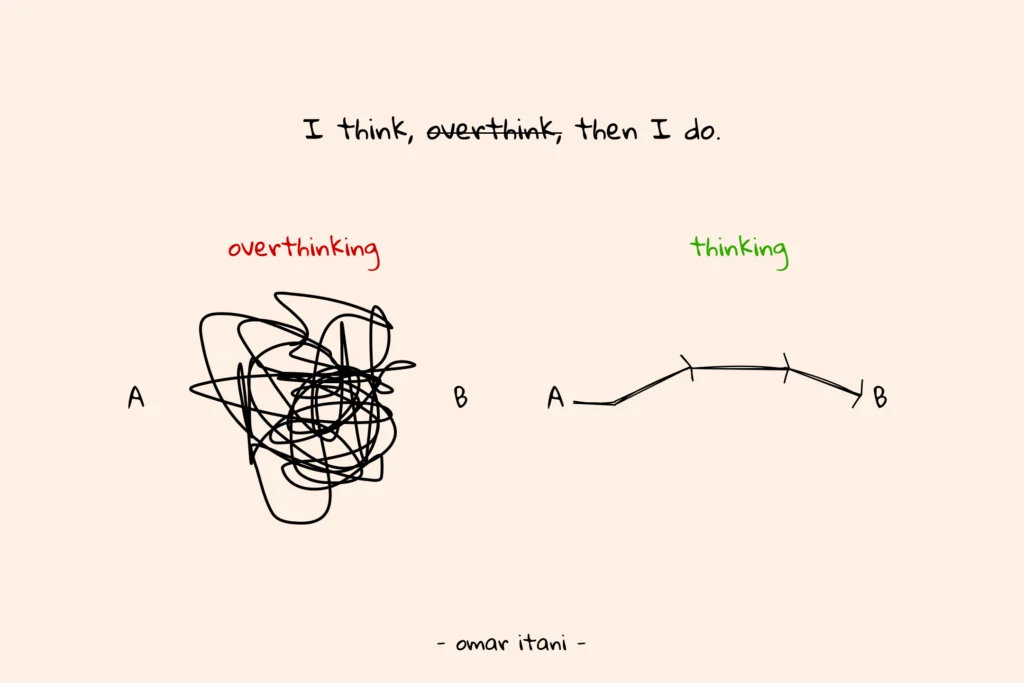
The idea is that you are not successful in life because overthinking prevents you from taking action and retardmaxxers are successful because they take action and are not held back by analysis paralysis due to overthinking every little decision.”
A second definition, submitted in January 2026, goes deeper: “Intentionally shutting off overthinking, analysis paralysis, perfectionism, and excessive hesitation so you can take fast, instinctive, gut-level action instead. Deliberately operating at reduced prefrontal-cortex inhibition to bypass overanalysis and maximize raw output velocity / instinct-driven decisions.”
A third, from October 2025: “A mindset of deliberately rejecting overthinking and excessive self-analysis, choosing instead to live simply, act instinctively, and use one’s mind only for practical tasks rather than self-doubt or rumination.”
Strip away the shock-value vocabulary and what you have is a philosophy that is neither new nor stupid. It is, in essence, a meme-compatible reformulation of ideas that have appeared across disciplines — from sports psychology (“trusting the process”), to Zen Buddhism (“beginner’s mind”), to behavioral economics (“action bias”), to the startup world (“move fast and break things”).
The word “retard” in the name is used in its older, informal internet sense of meaning “stupid” or “dumb” — and the “maxxing” suffix, borrowed from the broader internet culture of self-improvement subcultures, means to maximize or take something to its furthest extent.

Combined, retardmaxxing means: maximizing your ability to act stupidly — that is, to act without the paralyzing weight of intelligence, self-consciousness, and over-analysis.
As Republic World reported, the term describes “a mindset where people deliberately stop overthinking and ignore the fear of judgment so they can act quickly and boldly.” Importantly, proponents are quick to clarify that it is not about being reckless, ignoring consequences, or abandoning critical thinking altogether. It is specifically about breaking the loop of pre-action overthinking — the mental gridlock that keeps people from starting anything at all.
Where It Came From: Elisha Long and the Genesis of a Movement
Every internet philosophy needs a prophet, and retardmaxxing found its in Elisha Long, a YouTuber and men’s self-improvement content creator whose channel and Patreon community is titled “High Thumos Men’s Group.” Long had been publishing videos about masculine philosophy, action-orientation, and breaking free from societal expectations when the term he began attaching to these ideas began to catch fire.
The official retardmaxxing website — yes, one exists — credits Long directly: “Retardmaxxing, pioneered by Elisha Long, is the antidote to a world obsessed with perfection and hesitation. It’s about doing a 360, moonwalking away from what drags you down, and charging headfirst into what sets your soul on fire. You don’t need a PhD or a five-year plan; you need to act, fail, and keep moving.”
Long’s philosophy is not subtle. His rule on creativity and work is described simply: “Throw shit at the wall and see what sticks.” Start now, even if it’s messy. Write the book, launch the business, paint the masterpiece — don’t plan it to death. Action breeds inspiration, not the other way around.
His application of the philosophy extends across domains: relationships (cut toxic people without negotiating), creativity (ship imperfect work, always), fitness (just show up and push), and mental health (stop rehearsing your suffering; act instead).
As India Today noted, Long’s videos explaining and applying this approach to work, creativity, and decision-making were the spark that sent the concept viral. From there, the internet did what the internet does: it grabbed the idea, stretched it, memed it, argued about it, and turned it into something that transcended its original context.
Long even recorded a 30-minute conversation with Claude, Anthropic’s AI chatbot, in a video titled “A retard and AI talk about God” — an episode noted by Substack writer Amanda Claypool in her analysis of AI and human creation. In that conversation, Long used the philosophies underlying retardmaxxing to probe deep questions about existence, purpose, and the relationship between creator and created — demonstrating that the man behind the meme is considerably more philosophically oriented than the word “retard” in his brand might suggest.
Long also runs his Patreon community for men, where the philosophy is applied practically to life decisions in real time. The Reddit community at r/Healthygamergg drew connections between Long’s content and the work of Dr. K (HealthyGamer), a Harvard-trained psychiatrist who creates content about mental health for young men — noting that both creators are circling similar ideas about the dangers of overthinking and the importance of action.

The “Maxxing” Culture: Understanding the Subculture
To fully understand retardmaxxing, you need to understand the internet subculture from which it emerged. “Maxxing” as a suffix has been a feature of online male self-improvement communities — often overlapping with fitness communities, red-pill adjacent forums, and entrepreneurship spaces — for years. The original and most widespread use was “looksmaxxing,” which refers to maximizing one’s physical attractiveness through grooming, skincare, haircuts, gym work, and sometimes surgical interventions.
From there, the suffix proliferated:
- Looksmaxxing — optimizing physical appearance
- Moneymaxxing — maximizing income and financial status
- Statusmaxxing — building social proof and reputation
- Mogging — the act of dominating others in a given category
- Gymmaxxing — optimizing fitness and physique
Retardmaxxing represents an interesting meta-turn in this tradition. Rather than maximizing something external and measurable, it maximizes the absence of a cognitive behavior — overthinking. It is, in a sense, an anti-maxx within the maxxing tradition: optimizing by subtracting rather than adding. This distinguishes it philosophically and makes it feel transgressive even within spaces already accustomed to transgression.
The New Indian Express describes it well: “Retardmaxxing, a new viral trend, prioritises productivity over perfection — giving you the momentum you probably needed in life.” It’s a piece of brainrot culture, in the internet sense of that phrase — content and ideas that are deliberately absurd or low-brow on the surface while carrying a surprisingly substantive message underneath.
The Problem It’s Solving: The Overthinking Epidemic Is Real
If retardmaxxing is the medicine, the disease has genuinely alarming statistics behind it.
A 2025 study titled “Decoding the Emotional and Behavioural Triggers of Overthinking” explored how overthinking affects four key aspects of modern life: food and lifestyle choices, digital behavior, relationships, and work. Its findings were striking: 81% of Indians surveyed reported overthinking for at least three hours per day, often replaying conversations, imagining worst-case scenarios, or fixating on others’ opinions. Approximately 60% of respondents said they felt anxious over a single, simple received message.
These are not small numbers. As Moneycontrol reported, a YouGov report highlighted how people become indecisive over everything — “from what to wear and what to order, to making bigger life decisions like changing jobs or starting a business.” The phenomenon is sometimes referred to as “analysis paralysis” in psychology — a state in which the cognitive load of evaluating options becomes so great that the decision-making process breaks down entirely and the individual simply… stops.
The costs are not trivial. Psychologist Bhavya Shah of Saifee Hospital, Mumbai, explained to India Today: “If your thinking leads to action or peace, that’s good thinking. If it leads to more worry or paralysis, that’s overthinking.” Chronic overthinking degrades sleep quality, impairs focus, strains relationships, and generates anxiety — not as a byproduct of real problems, but as a self-sustaining mental loop that creates its own suffering.
Clinical psychologist Dr. Jaya Sukul, quoted in The New Indian Express, noted that even introducing a new five-minute activity of any kind helps break the rut: “It increases our happy hormones and prevents burnout.” Life coach Dr. Rasik Chopra added: “Sometimes, the enormity of a task can feel overwhelming because of our own insecurities.
The concept of retardmaxxing can be productive in such cases because it helps in breaking bigger tasks into smaller goals, taking away the fear of being incapable of performing the task altogether.”
This is not a trivial or made-up problem. The world genuinely has an overthinking crisis, and retardmaxxing, provocative name aside, is addressing something real.

Real-World Examples: What Retardmaxxing Actually Looks Like in Practice
The strength of retardmaxxing as a concept is that it applies across almost every domain of life. Here are concrete examples of how the philosophy manifests in practice:
In entrepreneurship and business: Rather than spending six months perfecting a business plan, conducting exhaustive market research, and waiting until conditions are “ideal,” a retardmaxxer launches a minimum viable product within weeks and learns from market feedback in real time. This is less a radical new idea than a meme-packaging of the lean startup methodology — except the meme version is infinitely more visceral and memorable.
In job searching: As one Urban Dictionary example put it succinctly: “I’ve been unemployed 2 years. So now I’m just retardmaxxing my job search by applying everywhere and it’s working. I’m actually getting interviews.” The logic is simple: endless tailoring and optimization of applications leads to zero applications sent. Mass action — even imperfect action — leads to actual interviews.
In creative work: A writer who retardmaxxes sends the first draft. A musician who retardmaxxes records the rough demo. A designer who retardmaxxes posts the sketch. None of it is polished, but all of it exists in the world where someone can see it, engage with it, and give feedback that makes the next version better. As Moneycontrol noted, “waiting for an idea to be ready is a trap; sharing rough first drafts invites growth, collaboration, and creative momentum.”
In fitness: Instead of spending three weeks researching the optimal program, calculating macros, buying new gear, and scheduling the “right time” to start, retardmaxxing means showing up to the gym today and doing something, anything, and going home.
In social situations: Rather than rehearsing a conversation for twenty minutes, retardmaxxing means opening your mouth and saying something, accepting that it may not be perfect, and trusting that real human interaction will sort the rest out.
In relationships: Aleena Wazir, a Delhi web designer quoted by The New Indian Express, described how she had planned for years to leave her 9-to-5 job and start her own travel company — but kept finding reasons not to move. It was a retardmaxxing reel on Instagram that gave her the initial push she needed to break inertia. “I always had the clarity that I wanted to be my own boss. But when it was time to do the real work, the fear of failing gripped me like never before.” Retardmaxxing, for her, wasn’t stupidity. It was permission.
The High-Profile Adopters: From Internet Creators to Silicon Valley Billionaires
Perhaps the most striking dimension of retardmaxxing’s cultural footprint is who has publicly aligned with its philosophy — because it extends far beyond the YouTube corners where it originated.
Marc Andreessen is the most prominent and controversial figure associated with the ethos. The billionaire venture capitalist and co-founder of Andreessen Horowitz (a16z), one of the most powerful venture capital firms in the world, publicly posted on X about “retardmaxxing” — a fact noted with varying degrees of horror and delight across the media landscape.
In early 2026, Andreessen went on a self-help podcast and declared that he engages in zero introspection, that dwelling on the past causes people to get stuck, and that “great men of history” did not sit around analyzing themselves. As Forbes reported, Andreessen framed what he called “casual ownership” as his operating philosophy — an approach built around a “deliberately provocative name and a surprisingly simple premise: stop internalizing outcomes and move on.”
The backlash was significant. The Nation published a sweeping critique by Elizabeth Spiers, titled “The Anti-Intellectualism of the Silicon Valley Elite,” which noted that “Marc Andreessen openly brags that he actively avoids utilizing any of these various forms of meta cognition to contemplate anything at all.” Hard Reset Media’s Alex Shultz wrote that “Marc Andreessen is a 54-year-old man who recently posted on X about ‘retardmaxxing,’ so I very much wish I did not have to consider the inner workings of his mind.”
And WebProNews published a piece titled “The Gospel of Not Thinking: Marc Andreessen and Silicon Valley’s War on Self-Reflection,” framing the phenomenon as the operating ideology of an industry deploying AI systems it doesn’t fully understand.
Andreessen’s embrace of the philosophy is not purely self-promotional trolling. It reflects a genuine and long-standing belief system among Silicon Valley’s builder class that excessive cognition — particularly the self-referential, doubt-generating kind — is an obstacle to building. The move-fast-break-things ethos of Silicon Valley, which dates to the early Facebook era, is philosophically continuous with retardmaxxing. The difference is that retardmaxxing gives it an internet-native, meme-ready name.

Elisha Long himself, the originator, continues to develop the philosophy across his YouTube channel, where he regularly applies it to practical life decisions. Long’s conversations — including his notable dialogue with Claude AI about the nature of God, consciousness, and creation — demonstrate a thinker who is using the label “retard” as a deliberate rhetorical device: calling himself stupid as a way of disarming the ego and creating space for fearless action.
Bryan, the host of the “Bryan’s World” podcast, released an episode in June 2025 titled “Retard Maxxing” where he applied his own spin on the concept to relationships, confidence, and life philosophy — continuing a tradition of independent creators taking the concept and running with it in their own direction.
Content creators across Instagram and LinkedIn have also picked up the term. The account BestofLinkedin shared a post about retardmaxxing that circulated widely, with the caption: “#retardmaxxing #bestoflinkedin” — a wry commentary on how the concept infiltrated even the most professionally sanitized corner of social media.
The Science Underneath the Slang: Why It Actually Works
Retardmaxxing would just be another internet fad if there weren’t serious intellectual scaffolding beneath it. The truth is that the phenomenon it describes — the debilitating effect of excessive pre-action deliberation, and the liberating power of committed action — is extensively documented across multiple disciplines.
Action bias is a well-established concept in behavioral economics and sports psychology. Researchers have demonstrated that in many high-pressure situations, people who act — even suboptimally — outperform people who deliberate. Goalkeepers who dive during penalty kicks, for example, fare similarly to goalkeepers who stand still — but the act of diving is perceived as agency rather than passivity, and in many real-world domains, that perceived agency translates into actual confidence and skill development.
Analysis paralysis has been studied extensively since psychologist Barry Schwartz popularized the concept in his book “The Paradox of Choice,” in which he argued that the proliferation of options in modern life paradoxically reduces decision satisfaction and increases the likelihood of non-choice — essentially freezing people in place. The internal experience of retardmaxxers who describe their relief at “just doing it” mirrors the psychological research on how reducing the number of evaluated options dramatically increases action rates.
The prefrontal cortex — the brain’s “executive” region responsible for deliberation, planning, risk assessment, and self-monitoring — is genuinely the neurological source of analysis paralysis. When it is overactive relative to the brain’s action-oriented systems, it creates the sensation of mental gridlock. As one Urban Dictionary definition colorfully noted, retardmaxxing involves “deliberately operating at reduced prefrontal-cortex inhibition to bypass overanalysis and maximize raw output velocity / instinct-driven decisions.” While this is not a neuroscience paper, it is a surprisingly accurate folk description of what high-performance athletes, improvisational musicians, and expert decision-makers actually do: learn to quiet the monitoring mind and operate from trained instinct.
Confidence building through action is another well-established psychological mechanism. Dr. Rasik Chopra, speaking to The New Indian Express, described how breaking a large, overwhelming goal into a single, immediate small action creates momentum: “It helps in breaking bigger tasks into smaller goals, taking away the fear of being incapable of performing the task altogether.” This is consistent with decades of research on self-efficacy, the concept developed by psychologist Albert Bandura, which holds that belief in one’s ability to perform a task is itself developed primarily through repeated performance — not through thinking about performing.
Crucially, a 2026 MIT Media Lab study titled “Your Brain on ChatGPT” — referenced in The Nation’s analysis of Silicon Valley anti-intellectualism — found that heavy LLM users “consistently underperformed at neural, linguistic, and behavioral levels.” The implication is dark: the more we outsource our thinking to tools designed to think for us, the more the atrophy of our own cognitive action sets in. Retardmaxxing, by demanding immediate, unmediated action from the individual, is in some ways a counter-movement to this atrophy — a demand to do rather than consult.
How to Retardmaxx: A Practical Framework
The philosophy translates into a set of actionable principles, which the retardmaxx.com website and various clinical commentators have articulated:
1. Prioritize action over optimization. Stop waiting for the perfect time or plan. The moment you have identified a direction — even a vague one — is the moment to take your first step. The New Indian Express frames this as: “Stop waiting for the perfect time or plan. Start working on your project immediately, even if you feel unprepared.”
2. Decouple from judgment. A significant portion of pre-action overthinking is not really about evaluating the action itself — it is about managing how the action will appear to others. Retardmaxxing requires a deliberate uncoupling of your action from your concern about how it will be perceived. This is harder than it sounds and may be the most psychologically demanding aspect of the philosophy.
3. Trust your instincts over your mental loops. There is a meaningful difference between actual risk assessment — which serves a purpose — and the recursive, anxiety-driven loops of “what if” that retardmaxxing targets. Learning to distinguish between these two is a skill, and the method retardmaxxing suggests is to act first and see what the real world reflects back, rather than simulating every possible outcome in your head.
4. Accept imperfection as the baseline, not the failure state. Retardmaxxing reframes imperfection not as something to be avoided but as the necessary starting condition for anything worthwhile. Every first attempt is supposed to be rough. The problem is that most people don’t make first attempts because they are waiting for the conditions under which their first attempt will not be rough.
5. Focus on the task, detach from the result. Much of overthinking is outcome-focused — the anxiety about whether something will succeed or fail. Retardmaxxing redirects attention to the process itself, which is the only part you can actually control. As the New Indian Express put it: “Focus purely on the task at hand rather than obsessing over the final outcome. Results induce anxiety and stress.”
The Controversy: What Critics Get Right (and Wrong)
Retardmaxxing has attracted genuine criticism from multiple directions, and not all of it is wrong.
The most compelling critique is about the name itself. The word “retard” carries a long, painful history of being used as a slur against people with intellectual and developmental disabilities. Many disability advocates, parents, and educators have pointed out that reclaiming the word as a meme-positive badge of honor — even in an ironic, self-deprecating context — normalizes language that causes real harm to real people. This critique is serious and cannot be simply dismissed by pointing to the ironic intent.
A second critique, articulated forcefully by The Nation and WebProNews, is that retardmaxxing, when adopted as an operating philosophy by powerful people — particularly tech billionaires like Andreessen who are deploying AI systems and influencing public policy — is not charming or liberating. It is dangerous.
There is a meaningful difference between an individual breaking personal inertia by applying to jobs without over-editing their cover letter, and a venture capitalist deploying billions of dollars into military technology without, by his own admission, exercising meaningful introspection about the consequences. Retardmaxxing the job hunt: probably fine. Retardmaxxing the development of autonomous weapons: quite a different matter.
A third critique is more subtle: that the philosophy, in its most extreme interpretations, can provide intellectual cover for impulsive, careless, or even harmful behavior. “Not overthinking” and “not thinking” are different things, but the language of retardmaxxing sometimes collapses that distinction.
The authentic philosophical tradition behind the concept — action-orientation, bias toward motion, trust in intuition — all presuppose a baseline of competence, values, and judgment. Stripped of that context, “just do it without thinking” can become reckless.
Proponents counter that these critiques misrepresent the philosophy. Long’s original articulation is not about abandoning judgment — it is about abandoning the paralysis that prevents judgment from ever being tested against reality. India Today’s coverage notes explicitly: “Importantly, proponents argue that it’s not about being reckless or ignoring consequences. It’s about breaking inertia.”
The Bigger Cultural Picture: Why Now?
The emergence and viral spread of retardmaxxing in 2025-2026 is not random. It is a response to a very specific cultural moment, and understanding that moment tells you something important about what is actually happening in the collective psyche.
We live in an era of maximized optionality and minimized action. Dating apps give us infinite potential partners; we match with thousands and commit to none. Career platforms give us access to every job description ever posted; we apply to far fewer than we scroll past. Social media gives us a front-row seat to everyone else’s apparent success, which triggers a constant background hum of comparison, self-evaluation, and recalibration. The optimization machine runs 24 hours a day, and its output is exhaustion.
There is also what might be called the AI factor. As language models become increasingly capable of planning, analyzing, drafting, and evaluating on our behalf, the human inclination to outsource cognition deepens. The risk — as the MIT Media Lab’s research on ChatGPT suggests — is that the cognitive muscles responsible for action, decision-making, and original output atrophy from disuse. Retardmaxxing is, in part, a reaction against this: a grassroots insistence that the most valuable skill in an age of AI-assisted paralysis is the ability to commit to an action and execute it, imperfectly but actually.
The Forbes analysis drew a line between retardmaxxing and the Stoic philosopher Epictetus, who taught the distinction between what is within our control and what is not. “Retardmaxxing collapses that framework into a single, meme-compatible response” — which is perhaps less elegant than the Enchiridion, but considerably more spreadable on Instagram.
And on a more prosaic level, a Reddit thread captured something real about the human experience that retardmaxxing is articulating: that ignorance, or at least the suspension of self-consciousness, is genuinely correlated with happiness. People who spend years consuming philosophy, metaphysics, psychology, and self-improvement content often end up less functional than people who simply do things. The accumulation of knowledge about how to live can become, paradoxically, an obstacle to living.
Conclusion: The Dumbest Smart Idea on the Internet
Retardmaxxing is many things simultaneously. It is a meme. It is a philosophy. It is a self-improvement framework dressed in the most deliberately ugly language its creators could find, because — and this is the meta-retardmaxxing of it all — using shocking language is itself a form of action bias, a way of cutting through the noise and forcing a response from people who might otherwise scroll past.
It is rooted in real psychology about the costs of analysis paralysis, real research on the benefits of action bias, and real human experiences of people who broke out of months or years of stagnation by simply deciding to start something imperfect. It has been carried from a YouTube creator’s corner of the internet to Forbes, The Nation, India Today, and the X feeds of Silicon Valley billionaires. It has been embraced by broke twenty-somethings job hunting and by the most powerful venture capitalists in the world, and the critiques of both use cases are simultaneously valid.
Whether or not you embrace the term — and there are legitimate reasons not to — the philosophical core of retardmaxxing is worth sitting with. Not for too long, though. That would defeat the whole point.
The Urban Dictionary example that best captures it all:
Kevin: “Damn bro, how did you become so successful recently?”
Bob: “I just stopped thinking and started retardmaxxing.”
Sometimes the dumbest answer is the right one.