In the digital gold rush of the 21st century, artificial intelligence is the new frontier. As AI models evolve from abstract research concepts into tangible, everyday tools, a fierce battle is being waged for the most valuable resource of all: users. While boardrooms and venture capital pitches set the stage, the real war for hearts, minds, and market share is happening on a platform once dominated by cat videos and makeup tutorials. That platform is YouTube.
Today, YouTube has become the premier battlefield for AI user acquisition. It’s a dynamic, sprawling ecosystem where complex technology is demystified, creative potential is unleashed, and brand loyalty is forged—one view at a time. For AI companies, from the titans like OpenAI to disruptive startups like Base44, a sophisticated YouTube strategy is no longer a “nice-to-have” marketing tactic; it is a fundamental pillar of growth. This isn’t about running a few pre-roll ads. It’s about building communities, educating markets, and proving value through a powerful combination of product-led content, strategic creator partnerships, and a deep understanding of the world’s most powerful recommendation algorithm.
This is the story of how AI companies are leveraging YouTube to not just find users, but to create evangelists. It’s a deep dive into the playbooks of industry leaders, the rise of a new creator economy, and the future of a platform being reshaped by the very technology it helps to promote.
Part One: The Algorithm Giveth — Why YouTube Is Fertile Ground for AI
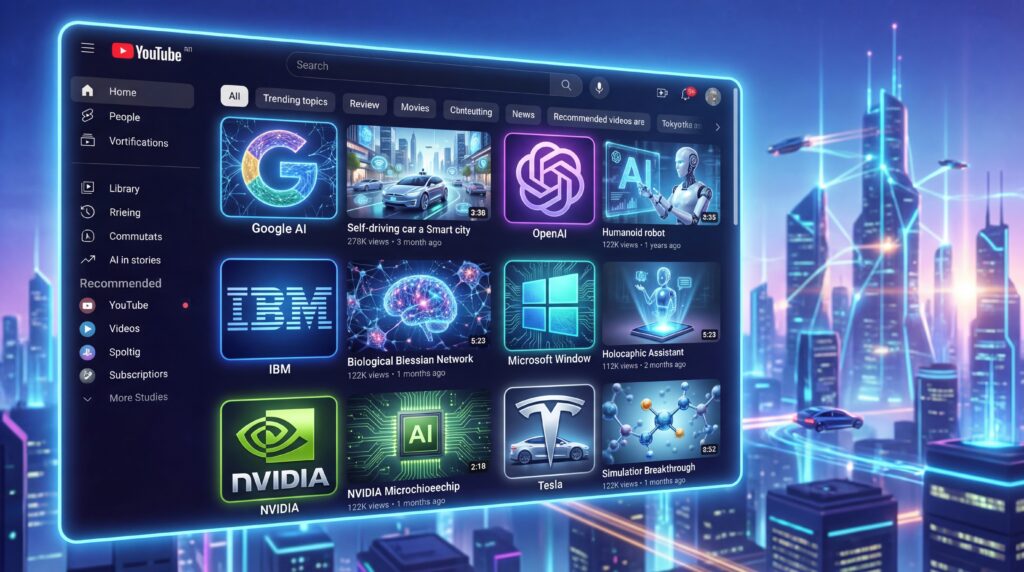
To understand why AI companies are flocking to YouTube, one must first understand the platform’s core engine: its recommendation algorithm. At its heart, YouTube’s AI is designed to maximize one thing: long-term viewer satisfaction. It achieves this by analyzing trillions of data points to understand not just what a video is about, but its quality, its style, and its ability to hold a viewer’s attention. This creates a perfect storm of opportunity for AI content.
The Evolution of Content Understanding
The algorithm has evolved far beyond simple keyword matching. By 2025, incorporating technology from Google’s advanced Gemini models, YouTube’s AI began a much deeper semantic analysis of content. It can now differentiate a beginner-friendly tutorial on prompt engineering from an advanced academic discussion on transformer architectures. It detects on-screen text, analyzes the pace of speech, assesses visual and audio cues, and even gauges the mood of a video. This allows it to serve the right content to the right viewer at the right time, which is invaluable for a topic as multifaceted as artificial intelligence.
This advanced understanding favors high-value educational content. When a user watches an in-depth tutorial on how to use a new AI tool, their long watch time and high audience retention send powerful positive signals to the algorithm. YouTube interprets this as a sign of quality and satisfaction, and in turn, promotes the video to a wider, similar audience. This creates a virtuous cycle where well-crafted, educational content from AI companies can achieve massive organic reach without spending a dollar on advertising.
The Key Metrics That Matter
For marketers and creators in the AI space, understanding the algorithm’s ranking signals is crucial. The primary currencies on YouTube are Watch Time and Average View Duration (AVD). The algorithm favors content that keeps users on the platform longer. For educational content, a benchmark of over 200 hours of watch time per 1,000 views is a strong indicator of value. Videos where audience retention drops below 40% are often deprioritized by the system, while those that maintain high retention, especially in the crucial first 30 seconds, receive aggressive promotion.
Impressions Click-Through Rate (CTR) measures the effectiveness of a video’s thumbnail and title. A CTR between 7-10% is considered good, while anything above 10% is excellent. A strong CTR signals to YouTube that the topic is in demand, leading to wider distribution. Engagement Rate, particularly comments, signals deep viewer investment. The algorithm values comments significantly more than likes, and channels that actively reply to comments often see increased reach.
For YouTube Shorts, the dynamics shift further. The most critical metric is completion rate—a high percentage of viewers watching a Short to completion, or looping it, will trigger aggressive promotion, even for brand-new channels with no subscriber base. This “small creator boost” provides a powerful pathway for new, high-quality AI channels to gain traction.
The Shadow Side: The Rise of “AI Slop”
However, this algorithmic opportunity has also given rise to a darker, more automated phenomenon: the flood of “AI slop.” The same tools that power innovation are being used to mass-produce low-quality, algorithmically-optimized videos designed purely for clicks and ad revenue. A late 2025 study by Kapwing found that over 20% of videos recommended to new YouTube users were AI-generated, with 33% of those falling into the category of “brainrot” content.

The scale and monetization of this content are staggering. The Kapwing study identified 278 channels consisting solely of this AI-generated material, which had collectively amassed over 63 billion views and 221 million subscribers. The estimated annual revenue for these channels was a remarkable $117 million. Specific examples highlight the viability of this model: “Bandar Apna Dost,” an India-based channel, was the most-viewed in the study, with 2.4 billion views and estimated annual earnings of up to $4.25 million. Singapore’s “Pouty Frenchie,” targeting children, was estimated to earn nearly $4 million annually.
This trend is enabled by the increasing accessibility of AI tools that automate video summaries, voiceovers, and editing, allowing for the rapid scaling of “faceless channels” that do not feature a human host. These operations use AI for scripting, voiceovers, and visuals, producing content at a volume that would be impossible for human creators to match. While some of this content finds genuine audiences, much of it is designed to exploit algorithmic preferences rather than provide real value—a pattern that has forced YouTube to respond.
In response, YouTube is refining its detection tools and enforcing new guidelines that prioritize authenticity and human creativity. The platform has begun requiring disclosure of AI-generated content and is developing more sophisticated systems to identify and deprioritize low-quality automated videos. This is pushing the ecosystem towards a new equilibrium, one where the most successful strategies blend AI-powered efficiency with genuine human insight.
For legitimate AI companies, this means the bar is high. They must not only showcase their technology but do so in a way that is engaging, valuable, and authentic—qualities that set them apart from the sea of automated content. The companies that can demonstrate genuine value—through education, community building, and authentic demonstration of their tools—will thrive, while those that rely solely on algorithmic manipulation will find diminishing returns.
Part Two: The Playbooks — How Leading AI Companies Are Winning on YouTube
The strategies for leveraging YouTube are as diverse as the AI industry itself. There is no one-size-fits-all approach. Instead, companies are crafting bespoke playbooks that align with their product, target audience, and brand identity. Let’s examine the distinct approaches of the major players.
The Foundational Model Builders: Education vs. Meta-Marketing
At the top of the AI food chain are the companies building the large language models (LLMs) and foundational systems that power the revolution. Their YouTube strategies are focused on demonstrating immense capability and fostering a developer ecosystem.
OpenAI: The Polished Demonstrator
With a massive YouTube channel boasting 1.93 million subscribers, OpenAI uses the platform as a primary vehicle for high-level communication and developer education. Their content is a masterclass in polished, professional demonstration. Videos showcasing new features for flagship products like ChatGPT and Codex are slickly produced, clearly illustrating practical applications for both enterprise clients and the general public. For instance, videos detail how companies like Rakuten use Codex to boost efficiency, or demonstrate new beta skills for ChatGPT Business users.
For its more technical audience, OpenAI produces long-form “Build Hour” sessions. These developer-focused workshops on topics like “API & Codex” or “Prompt Caching” serve as critical educational resources. They empower developers to build on top of OpenAI’s platform, nurturing the robust ecosystem of applications that is crucial to its long-term dominance. By offering glimpses into the internal “thinking” processes of its models and producing promotional content for major events like the Super Bowl, OpenAI uses its channel to demystify its technology, inspire developers, and build broad brand recognition.
While their official channel focuses on showcasing their own products, the influence of OpenAI’s technology on the wider YouTube ecosystem is profound. A thriving community of developers and content creators discusses and demonstrates how to use OpenAI’s APIs for tasks like automating the creation of content for their own YouTube channels, highlighting the platform’s role as a foundational tool for the creator economy.

Anthropic: The Ultimate Case Study
In stark contrast to OpenAI’s broad-based approach, Anthropic has adopted a brilliantly meta-marketing strategy for its AI model, Claude. Instead of producing a high volume of outward-facing tutorials, Anthropic’s primary strategy is to use its own marketing team as a living case study. They “show, don’t tell” by deeply integrating Claude into their internal workflows and then showcasing the staggering results.
This is powerfully articulated in blog posts and targeted videos like “How Anthropic uses Claude in Marketing.” A key demonstration reveals how a marketer with no prior coding experience used Claude to build a Figma plugin that slashed the time required to generate ad creatives from 30 minutes to just 30 seconds. This single innovation allowed the team to produce dozens of ad variations with one click, dramatically increasing their testing capacity.
By quantifying the impact—saving over 100 hours per month on influencer marketing scripts, or cutting ad copy creation time from two hours to 15 minutes—Anthropic provides tangible, undeniable proof of value. This strategy positions Claude not just as a content generator, but as a collaborative partner and an automation engine for business professionals. It cleverly sidesteps the need for a massive YouTube content library by creating high-impact, evidence-based narratives that prove the product’s worth in a real-world, high-stakes environment. The emphasis is on empowering marketing teams to shift from repetitive execution to strategic design, using Claude as the tool to make that transition possible.
The Generative Media Pioneers: Empowering the Creator
The rise of generative AI for video, images, and voice has created a new class of tools, and their purveyors use YouTube as both a gallery and a classroom.
Runway: The Cinematic Visionary
Positioning itself at the bleeding edge of generative video, Runway uses its YouTube channel, with 127,000 subscribers, to inspire and educate a creative, technically-minded audience. The channel is a showcase for cutting-edge research and model capabilities. Slickly produced videos introducing new models like “Gen-3 Alpha,” “Gen-4.5,” and “Gen-2: Text to Video” are among its most popular content, accumulating hundreds of thousands to over a million views.
These videos highlight the cinematic quality and creative potential of its AI, directly appealing to filmmakers, advertisers, and visual effects artists. The channel also hosts a “This Week in Runway” series to keep the community updated on feature releases and a “Research Demo Day” to engage with the more academic and R&D-focused segments of its audience.
Recognizing that inspiration must be paired with education, Runway’s strategy extends beyond its main channel. The company has established the Runway AI Academy, a comprehensive educational hub with structured courses on topics like “AI for Advertising,” “AI for Games,” and “Character Animation.” This academy content is sometimes featured on the main YouTube channel, such as the “Getting Started with Gen-3 Alpha” tutorial.
Furthermore, the broader YouTube community plays a significant role. Channels like “AI Video School” host dedicated playlists of Runway AI tutorials, providing practical, step-by-step guides on using specific features like the Motion Brush, creating consistent characters, and achieving lip-sync effects. This dual approach allows Runway’s official channel to focus on high-level, inspirational showcases, while the academy and third-party creators handle the granular, hands-on education required to build a proficient user base.
Midjourney: The Decentralized Community
Midjourney’s approach to growth is fundamentally different. Its primary operational hub is not a website or a YouTube channel, but a Discord server. Consequently, its YouTube strategy is almost entirely indirect and community-driven. Midjourney does not maintain a high-profile, tutorial-heavy official YouTube channel in the same way other AI companies do. Instead, its explosive growth is fueled by a vast and energetic user base that creates and shares an immense volume of content about the platform.
This decentralized army of marketers produces thousands of tutorials, prompt guides, and creative showcases on YouTube. They demonstrate how to leverage Midjourney for everything from designing eye-catching YouTube thumbnails to conceptualizing brand assets and creating unique illustrations for video essays. This ecosystem thrives on shared knowledge, with users on platforms like Reddit often recommending specific YouTube channels like “Future Tech Pilot” for advanced tips, directing new users to community-vetted resources.
The official Midjourney Discord server acts as the central repository for prompt-crafting techniques and support, while YouTube serves as the public-facing educational layer. This strategy has allowed Midjourney to achieve massive scale with minimal direct marketing spend, proving the power of a product that inspires its users to become its teachers. However, this community-led approach also brings ethical considerations to the forefront, with discussions on YouTube frequently addressing issues of copyright, transparency in disclosing AI-generated content, and the potential for bias.
ElevenLabs: The Voice of the “Faceless” Creator
ElevenLabs has established itself as the leader in AI voice generation, and its growth is deeply intertwined with the YouTube creator ecosystem, particularly the burgeoning trend of “faceless” channels. The company’s marketing explicitly emphasizes the ability to create professional, high-retention voiceovers without expensive recording equipment or voice actors, democratizing content creation. Their YouTube-focused voice library offers a range of AI voices designed for different formats like tutorials, long-form storytelling, and short-form vlogs.
Features like voice cloning, multilingual AI dubbing in 29 languages, and fine-grained control over pitch and tone directly address the needs of YouTubers looking to scale production and reach a global audience. The most compelling evidence of their strategy’s success comes from user-generated case studies. One creator reported launching a new YouTube channel using only ElevenLabs for narration and, within three months, amassed over 6,000 subscribers and approximately 8 million views with a minimal investment of just $11 for a creator plan.
This type of measurable success story is powerful, organic marketing. Discussions within the YouTube community on platforms like Reddit confirm that channels using ElevenLabs’ voices can be and are monetized, provided the content itself is original, valuable, and transparently disclosed as AI-generated. By positioning itself as a key enabler of a popular and profitable YouTube content format, ElevenLabs has successfully embedded its product into the creator workflow, driving user growth through the demonstrated success of its own customers.
The All-in-One Platforms: Building the Creator’s Toolkit
A growing number of companies are competing to become the go-to, all-in-one solution for video creation, bundling AI generation with editing tools and asset libraries.
Synthesia: The Corporate Storyteller
Synthesia’s YouTube strategy is a masterclass in product-led growth. Its channel is a direct and comprehensive demonstration of its AI avatar video generation platform, designed to educate potential business customers on its core value propositions: speed, cost-effectiveness, and scalability. The content revolves around in-depth tutorials showing how to create professional videos for corporate training, marketing, and customer onboarding. A key pillar is demonstrating the ability to convert existing documents—like PowerPoint presentations and PDFs—into engaging videos, highlighting the tool’s efficiency in repurposing content.
The channel also serves as the primary platform for major product announcements, such as the launch of Synthesia 3.0, which introduced more realistic avatars, interactive video elements, and advanced analytics. These announcements are often presented by the company’s CEO, adding a layer of authority and vision. Synthesia effectively uses YouTube Shorts for quick, viral content, such as “Which Person Is Real?” challenges that showcase the startling realism of their AI avatars.
The ability to create videos in over 160 languages is a frequently highlighted feature, appealing to global companies. By consistently demonstrating how the platform solves common video production bottlenecks—costly reshoots, time-consuming editing, and the challenges of localization—Synthesia directly addresses the pain points of its target enterprise audience, driving user acquisition by clearly illustrating tangible business benefits.
HeyGen: The Creator’s Co-Pilot
While Synthesia targets the corporate world, HeyGen focuses on empowering individual creators to scale their video production. The company’s official content positions it not merely as a video generator but as a strategic partner for channel growth, offering advice on niche selection, audience engagement, and understanding the YouTube algorithm.
HeyGen’s platform enables users to transform scripts into high-quality videos using a library of over 300 AI avatars and 175 AI voices. Its key selling point is efficiency. By eliminating the need for cameras, crews, and complex editing, it allows a single creator to produce a consistent stream of content. Their marketing highlights features like voice cloning, custom avatars, and text-to-video conversion, which are designed to make production faster and more accessible.
HeyGen encourages users to repurpose existing content, such as blog posts, into videos and to optimize them for discoverability with keyword-rich titles and descriptions. The tool supports both traditional 16:9 long-form videos and the 9:16 vertical format for YouTube Shorts, acknowledging the importance of a multi-format content strategy. By providing the tools for rapid, scalable production and pairing them with strategic advice on channel growth, HeyGen appeals directly to aspiring YouTubers and marketers who want to build a presence on the platform without the traditional barriers of time and resources.

Artlist: The Integrated Creative Suite
Artlist, traditionally known for its library of royalty-free music and stock footage, has strategically expanded into AI to provide an all-in-one solution for creators. Artlist AI offers an AI Video Generator, AI Image Generator, and AI Voice Generator, all designed to streamline the content creation workflow. This is particularly appealing to YouTubers who need to produce a high volume of content efficiently, with the ability to generate everything from YouTube intros and thumbnails to full promotional videos and social media clips.
A key part of its value proposition, highlighted in its marketing, is the provision of a commercial-safe license for all generated and stock assets. This directly addresses a major pain point for creators who need to monetize their content on YouTube without facing copyright issues. Artlist has even used its own AI video generator to create distinct brand campaign videos, serving as a direct demonstration of the tool’s capabilities. By bundling AI generation with its vast catalog of music, sound effects, and footage under flexible subscription plans, Artlist positions itself as an indispensable toolkit for the modern YouTube creator, aiming to capture users by offering a seamless and legally sound creative workflow.
The Developer and Business Tools: From Code to Content
Beyond generative media, another category of AI companies is using YouTube to market tools for developers, editors, and entrepreneurs.
Replit: The Interactive Classroom
Replit, an online IDE, leverages its YouTube channel as a cornerstone of its developer education and user acquisition strategy. The channel is a hub for tutorials demonstrating how users can quickly turn ideas into functional applications directly within the Replit environment. A significant focus is on AI integration, with numerous tutorials on building AI-powered applications like Discord bots and chatbots, and utilizing Replit’s own AI Agent and Assistant tools. This content directly targets the growing interest in AI development and positions Replit as an accessible platform for experimenting with and deploying AI.
Its most notable campaign is the “100 Days of Python” course. This free course combines video lessons on YouTube with an interactive written tutorial inside the Replit IDE, guiding users through daily, project-based lessons. This integrated learning experience is a powerful onboarding tool, teaching fundamental and advanced Python concepts while deeply embedding the user within the Replit ecosystem. By providing high-quality, practical, and free educational resources, Replit builds a strong community and drives adoption by making itself an indispensable tool for learning and development.
ByteDance/CapCut: The Viral Flywheel
ByteDance, the parent company of TikTok, has turned its video editor, CapCut, into a dominant force with over 200 million monthly active users. Its growth strategy is built on a seamless integration with TikTok, creating a “virtuous promotional circle.” Videos edited in CapCut can be easily published to TikTok, and the optional watermark serves as constant, organic promotion for the editor. This strategy extends powerfully to YouTube, where creators use CapCut for both long-form content and Shorts, benefiting from its extensive library of templates, effects, and licensed music.
CapCut has expanded with “CapCut for Business,” offering advanced AI tools like a script-to-video generator, AI-generated presenters for product demos, and collaborative workspaces for marketing teams. The AI can analyze a script and suggest visuals, or even convert a product webpage URL directly into a promotional video. CapCut’s freemium model makes its powerful tools accessible to a wide audience, while a Pro subscription unlocks advanced features. This combination of viral, user-driven growth through TikTok, a powerful and accessible feature set, and a strategic expansion into the business market has made CapCut an essential tool for millions of YouTube creators.
Minimax: The Multi-Modal Powerhouse
Minimax is a multi-modal AI platform offering a comprehensive suite of tools for generating text, speech, video, images, and music. Its marketing strategy positions it as a versatile solution for content creators, marketers, and educators, with a strong emphasis on video generation for platforms like YouTube and TikTok. The core of its offering is a text-to-video generator that allows users to transform written prompts into high-quality videos, complete with B-roll, voiceovers, and transitions.
The platform’s audio tools are another key component of its appeal. Minimax AI Audio provides a text-to-speech generator with a diverse library of over 100 voice templates in more than 50 languages, context-aware emotional adaptation, and voice cloning capabilities. This enables creators to produce consistent, professional-sounding voiceovers, enhancing brand identity and making content accessible to a global audience. The company offers a freemium model, with a free plan for beginners and a range of scalable premium subscriptions for professionals, which serves as a low-barrier entry point for new users. By offering an integrated toolkit that covers nearly every aspect of multimedia content creation and automating processes like video posting, Minimax aims to attract users by being a one-stop shop for efficient and scalable content production for social media.
Base44: A Cautionary Tale in Advertising
Base44, a no-code AI application builder, serves as a case study in the potential pitfalls of an overly aggressive ad strategy. The company became widely known for its frequent and repetitive YouTube ad campaigns, which generated significant negative feedback from viewers on platforms like Reddit. Users expressed frustration over their intrusive and repetitive nature, with some questioning whether the heavy ad spend was compensating for a subpar product. The use of AI-generated videos within the ads themselves further fueled discussions about the company’s authenticity.
While Base44 does maintain an official YouTube channel with educational tutorials designed to help beginners build applications with AI, the user sentiment shaped by its advertising strategy created a challenging environment. The platform is marketed as a tool for rapid prototyping and “vibe coding,” but some users have raised concerns about its credit-based pricing model and limited UI control. Base44’s experience demonstrates that on a community-driven platform like YouTube, perception can be just as important as the product itself. An aggressive, repetitive ad strategy can undermine brand trust, even if the underlying product has merit.
Part Three: The Symbiotic Ecosystem — Creators as Kingmakers
The relationship between AI companies and YouTube creators has evolved into a sophisticated, multi-billion-dollar ecosystem. Companies recognize that authentic endorsements from trusted creators are often more powerful than traditional advertising. This has led to a gold rush in AI sponsorships, with creators becoming essential distribution partners for the entire industry.
The Economics of Influence
This is about more than just paying for a shoutout; it’s about scaling authenticity. As social media algorithms prioritize engaging content, brands need to work with a larger volume of creators—from mega-influencers to nano-influencers with higher engagement rates—to maintain visibility. The financial incentives are staggering. Generative AI platforms spent over $1 billion on digital ads in the U.S. in 2025 alone, a 126% increase from the previous year.
Major tech companies like Google, Microsoft, OpenAI, and Anthropic are leading this charge with aggressive creator partnerships. According to a CNBC report, Google and Microsoft have reportedly offered long-term collaborations worth between $400,000 and $600,000 to select creators. Typical sponsored content deals for established creators range from $5,000 to $30,000 per campaign, while the most influential creators can command up to $100,000 per sponsored post.
To manage these relationships at scale, a new sub-industry of AI-powered influencer marketing platforms has emerged. Tools like HypeAuditor and Ainfluencer automate creator discovery, campaign management, and performance analytics. These platforms can discover and vet thousands of potential creator partners by analyzing their content, audience demographics, and authenticity scores. They automate outreach, manage contracts and payments, and track performance metrics like clicks, conversions, and return on investment, allowing brands to execute highly targeted campaigns with hundreds of creators simultaneously.
The Creator Pushback
However, this burgeoning partnership economy is not without its challenges. There is a growing “cancel-risk” associated with AI sponsorships. Some prominent creators have publicly declined lucrative AI brand deals due to ethical, environmental, and creative concerns. There is a perception among certain audiences and creators that some AI tools, particularly in the generative art space, could devalue or replace human labor, leading to potential backlash against creators who promote them.
Creator Jack Lepiarz reportedly turned down a $20,000 deal to promote AI image generation tools, citing these very concerns. This highlights a critical tension: while AI companies see influencers as a key to authentic marketing, creators must carefully weigh the financial benefits against the potential for alienating an audience that may be skeptical of AI.

Case Study: Kingy AI, The Distribution Engine
Nowhere is this symbiotic relationship more evident than in the rise of channels like Kingy AI. With an impressive 1.56 million subscribers and over 1,200 videos, Kingy AI has established itself as a dominant force in the AI education space. The channel’s mission is to bridge the gap between “theoretical AI clarity and real-world practical application.” It delivers a diverse mix of content, from deep dives into transformer architectures and self-attention mechanisms to hands-on tutorials for fine-tuning models and comprehensive reviews of the latest AI tools from companies like Runway, Synthesia, HeyGen, and OpenAI.
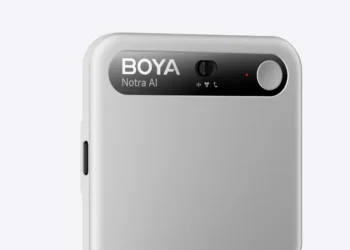
The channel’s content style balances technical depth with accessibility, making complex AI concepts understandable for both beginners and experienced practitioners. Popular videos include in-depth reviews of AI hardware like the Boya Notra AI Voice Recorder, comprehensive guides comparing top AI video generators, and forward-looking discussions on “The Future of AI Video Content.”
The channel is complemented by a cohesive website at kingy.ai, which offers code snippets, ready-to-deploy templates, datasets for hands-on practice, and blog articles reinforcing video lessons. This dual-platform approach creates a comprehensive learning environment where viewers can watch tutorials on YouTube and then access supporting materials on the website for implementation.
Kingy AI represents the quintessential modern AI creator: part educator, part reviewer, and part distribution partner. But what makes Kingy AI a perfect emblem of this new ecosystem is its explicit B2B service model, encapsulated in its powerful tagline: “You Do AI. We Do Distribution.”
Beyond serving its 1.56 million subscribers, Kingy AI operates as a service provider to the very companies it covers. It offers AI YouTube video production, creating high-quality tutorials and product showcases tailored to demonstrate a tool’s features and benefits. It develops custom marketing strategies to help AI products stand out in competitive markets and, most importantly, leverages its proven reach and engagement to ensure maximum visibility.
This dual model—serving viewers with education while serving companies with promotion—is the engine of the new AI creator economy. A feature on a channel like Kingy AI can be a launchpad for a new AI tool, providing instant credibility and access to a massive, engaged, and relevant audience. It is a powerful demonstration of how individual creators have become indispensable nodes in the distribution network for the entire AI industry. The channel doesn’t just report on the AI revolution; it actively participates in shaping which tools succeed and which fade into obscurity.
The types of AI tools and companies covered by channels like Kingy AI span the full spectrum of the industry. In the AI video generation category alone, this includes platforms like Synthesia, HeyGen, Steve AI, Pictory, Runway ML Gen-2 and Gen-4, OpenAI Sora, Hailuo AI/MiniMax (known for its cinematic quality and Director Mode), Pixverse, Seedverse/Seedance for multi-shot narratives, and Google Veo 3 for 4K video with synchronized audio.
Beyond video, these channels cover hardware and tech products like the Boya Notra AI Voice Recorder, Peloton Cross Training Bike+ with Peloton IQ, and reMarkable Paper Pro tablets. They explore emerging categories including large language models, generative AI tools, AI voice synthesis, real-time emotion and sentiment analysis, AR/VR/MR integration, shoppable video technology, and AI-powered live streaming. This comprehensive coverage creates a one-stop resource for viewers trying to navigate the rapidly evolving AI landscape, while providing AI companies with a trusted channel through which to reach potential users.
The Rise of AI Influencers
Beyond human creators, a new frontier in marketing has emerged: virtual influencers. AI-generated personas are landing major brand deals and commanding significant fees. The AI influencer market was valued at over $6 billion in 2026, representing a new vector for brand partnerships in the AI space.
Lil Miquela, a virtual fashion model, has reportedly generated over $10 million from partnerships with brands like Dior and Prada, earning around $7,500 per post. Lu do Magalu, another top AI influencer, can command $21,000 per post. These virtual personas offer brands complete control over messaging, availability around the clock, and freedom from the unpredictability of human behavior. However, they also raise questions about authenticity and disclosure that brands must navigate carefully.
For AI companies specifically, virtual influencers represent an interesting opportunity to demonstrate their technology while simultaneously marketing it. An AI company could theoretically create and deploy its own virtual influencer powered by its technology—the ultimate form of product-led marketing. While this frontier is still being explored, it represents another dimension of how YouTube’s creator ecosystem is being reshaped by artificial intelligence.
Part Four: Understanding the Audience — Who Is Watching AI Content?
Effective marketing requires moving beyond broad demographics to understand the psychographics of the AI content audience. While the overall YouTube audience is vast, with over 2.7 billion monthly active users, the viewers of AI content have specific characteristics that inform content strategy.
General YouTube Demographics
The largest global user segment is 25-34 years old, accounting for 23% of the audience, followed by 18-24 (11%) and 35-44 (16%). The global audience skews slightly male (54%) versus female (46%). The top three countries by user count are India (467-500 million users), the USA (246-247 million users), and Brazil (142 million users). Crucially, mobile devices dominate, accounting for 70% of watch time. This has significant implications for content formatting, favoring readable text, fast pacing, and mobile-optimized visuals.
The Psychographics of the AI Viewer
For marketers targeting the AI niche, psychographic data is more actionable than general demographics. This involves understanding viewer motivations, values, and preferences. The audience for AI content is diverse. Some prefer long-form, in-depth tutorials with screen recordings—often consumed on desktop. Others seek quick tips and news updates in shorter formats, consumed primarily on mobile.
Viewers may respond better to an authoritative, academic tone for deep learning topics, a casual and experimental tone for tool reviews, or an inspirational style for content about AI’s future impact. The audience is typically driven by a desire to learn a new skill for career advancement, solve a specific business problem, stay ahead of technological trends, or satisfy intellectual curiosity. Analysis suggests tutorial audiences may engage well with videos in the 8-12 minute range, while those seeking deep-dive entertainment or analysis may prefer 15-25 minutes.
A Diverse Creator Ecosystem
The AI content ecosystem is populated by a diverse range of creators, each fulfilling a specific role:
Educators and Tutorial Providers focus on breaking down complex AI concepts into digestible formats. Examples include Krish Naik (1.4M subscribers), who explains ML/AI concepts with real-world problems, and Two Minute Papers (1.72M+ subscribers), which simplifies complex academic research papers into short, engaging videos.
News and Analysis Commentators serve as the pulse of the AI industry. AI Explained is known for its rapid growth and in-depth analysis of new AI models, while Wes Roth provides fast-paced commentary on advances from major AI labs.
Tool Reviewers and Workflow Specialists focus on practical demonstrations. Matt Wolfe reviews a wide array of new AI tools and explores their real-world applications, while The AI Advantage focuses on creating practical AI workflows and automation tutorials.
Influencers and Thought Leaders like Tina Huang (1M+ subscribers), an ex-Meta data scientist, blend technical tutorials with career advice and self-learning strategies, building strong personal brands and cultivating communities.
Creative and Application-Focused Creators explore the artistic and entertainment potential of AI. They showcase generative art, AI-powered animation, music generation, and other creative applications, pushing the boundaries of what AI can produce. Channels like AI and Games explore the use of AI in video game design, while others focus on creating anime-style content or experimental visual art using the latest generative models.
The Importance of Psychographic Targeting
For marketers, understanding why audiences watch AI content is as important as knowing who they are. The motivations driving viewership typically fall into several categories: career advancement (learning new skills to remain competitive in the job market), problem-solving (finding AI tools to address specific business challenges), trend awareness (staying ahead of technological developments that could impact their industry), and intellectual curiosity (genuine fascination with the capabilities and implications of artificial intelligence).
These motivations inform content strategy. A viewer seeking career advancement will respond to content that demonstrates practical, marketable skills. A viewer focused on problem-solving wants clear demonstrations of how a tool addresses their specific pain point. Understanding these psychographic segments allows AI companies to craft content that resonates on a deeper level than demographic targeting alone could achieve.
Tools like YouTube’s native Analytics provide demographic data for a creator’s own channel, but third-party tools like OutlierKit can offer psychographic and competitive insights for any public channel, enabling marketers to better understand competitor audiences and identify underserved niches in the AI content landscape.
Part Five: The Future Is Generative (Engine Optimization)
As we look to the future, the role of YouTube in the AI landscape is set to become even more critical, evolving from a marketing channel into a strategic asset for a new kind of search optimization. The rise of AI answer engines like Google AI Overviews, ChatGPT Search, and Perplexity is fundamentally changing how information is discovered. Traditional SEO is giving way to Generative Engine Optimization (GEO) and “Search Everywhere Optimization.”
YouTube’s Dominance in AI Search
Research from BrightEdge reveals a startling fact: YouTube is cited in nearly 30% of Google AI Overviews, giving it a 200x advantage over the next closest video competitor. This means a company’s content on YouTube directly influences how its brand and products are represented and recommended by the AI systems that are rapidly becoming the new front door to the internet.
Users are increasingly getting answers directly from AI interfaces. Content must therefore be optimized to be surfaced within these AI-generated summaries. Backlinks are diminishing in importance, while AI systems are establishing a brand’s authority by analyzing mentions across a wide range of trusted sources, including forums, reviews, podcasts, and news articles. Public relations and earned media are becoming more critical than ever for AI discoverability.
Optimizing for Machine Readability
For an emergent AI company, the strategy must be twofold: appeal to human viewers and optimize for machine readability. Since LLMs primarily “ingest” video transcripts, creating information-dense videos with well-structured, keyword-rich transcripts is now crucial. Detailed metadata, including descriptive titles and tags, further enhances discoverability by AI crawlers. The content should aim to answer specific user questions and address pain points, as LLMs are more likely to cite videos that provide clear, authoritative answers. This transforms a company’s YouTube channel into a strategic asset for codifying its expertise and influencing how AI models understand its domain.
Platform-Level AI Integration
YouTube itself is integrating AI at its core to enhance the creator and viewer experience. The platform is rolling out tools that can generate videos from text prompts, automatically edit footage, and even create music from speech, lowering the barrier to entry for video production. Connected TV (CTV) is one of YouTube’s fastest-growing surfaces, leading to a greater emphasis on cinematic production values and TV-first storytelling formats. Advanced AI-powered dubbing and translation tools will enable brands to consolidate multiple regional channels into single, global “hero channels,” streamlining content management and brand messaging.
The Dominance of Short-Form Video
The growth of AI content is inextricably linked to the dominance of YouTube Shorts. By late 2025, Shorts surpassed 200 billion daily views, up from 70 billion in early 2024. This format provides instantaneous reach for creators and serves as a powerful discovery tool. For AI companies, Shorts offer an opportunity to create quick, viral demonstrations of their technology, teasers for longer content, or digestible educational snippets that can capture new audiences who may then migrate to longer-form content.
Conclusion: The Human-AI Hybrid
The story of AI companies on YouTube is a microcosm of the broader technological shift we are all experiencing. It is a story of immense opportunity, rapid innovation, and strategic evolution. The playbooks are becoming clear:
First, educate to empower. The most successful companies are not just selling tools; they are teaching skills. High-quality, educational content that provides tangible value is the surest path to building a loyal user base. OpenAI’s Build Hours, Replit’s 100 Days of Python, and Anthropic’s internal case studies all demonstrate this principle.
Second, embrace the ecosystem. No company can succeed in a vacuum. Cultivating a vibrant community of developers—as Midjourney has done on Discord—and partnering with trusted creators like Kingy AI are essential for distribution and building authentic connections. The creator economy is no longer an afterthought; it is a core pillar of go-to-market strategy.
Third, product as platform. The lines between product and marketing have blurred. Using a tool to create its own marketing, as Anthropic and Synthesia do, is the ultimate demonstration of value. When your marketing team’s productivity gains become your marketing message, you have achieved a powerful form of product-led growth.
Fourth, optimize for a new reality. The future of discovery is AI-driven. A strategic YouTube presence is now a prerequisite for influencing the generative engines that are reshaping search. Content must be structured not just for human viewers, but for the LLMs that will increasingly mediate how users find information.
As AI makes content creation easier and more accessible, the platform will inevitably see more noise—more “AI slop,” more automated channels, more competition for attention. In this new reality, the ultimate competitive advantage will not be the sophistication of one’s AI, but the quality of one’s humanity. The winning strategy will be a hybrid one: using AI as a powerful assistant to handle the mechanics of production, research, and analysis, while freeing up human teams to focus on what machines cannot replicate—creativity, strategic insight, and the building of genuine community connections.
The AI companies that understand this balance are the ones that will not only grow their user base but will also define the future of the digital landscape. They will be the ones who use the algorithm not as a master to be gamed, but as a tool to connect their innovations with the people who need them most.
The Metrics That Will Define Success
Looking forward, the key performance indicators for AI companies on YouTube will evolve beyond simple subscriber counts and view totals. Share of Voice (SOV) will become a crucial competitive metric, measuring a channel’s or brand’s awareness relative to its competitors within the AI niche. Tracking SOV will help gauge the effectiveness of content strategy in capturing audience attention and mindshare.
AI Citation Rate will emerge as a new metric—measuring how often a company’s YouTube content is referenced by AI search engines and large language models. As Generative Engine Optimization becomes standard practice, companies will need to track whether their videos are being surfaced in AI-generated summaries and recommendations, making YouTube analytics just one piece of a broader measurement puzzle.
Community health metrics will gain importance as well. Beyond comments and likes, companies will measure the depth of community engagement: how often viewers return, how they interact with supplementary materials, whether they become advocates who share content organically. The most successful AI companies on YouTube will be those that build not just audiences, but communities—groups of engaged users who actively participate in the company’s ecosystem.
A New Era of Digital Marketing
The strategies outlined in this analysis represent more than just marketing tactics—they represent a fundamental shift in how technology companies will build and maintain user bases in the age of AI. YouTube has evolved from an entertainment platform into a critical infrastructure for technology adoption, education, and community building.
For startups entering the AI space, the playbook is clear: invest early in educational content, build relationships with trusted creators like Kingy AI, and optimize not just for human viewers but for the AI systems that increasingly mediate discovery. For established players, the imperative is to evolve—moving from traditional advertising models to authentic, value-driven content strategies that build lasting relationships with users.
The AI revolution is being televised—on YouTube. And in the vast, vibrant arena of this platform, the connection between cutting-edge technology and the people who need it is being forged every single day, one view at a time. The companies that master this medium will not only grow their user bases; they will shape the future of how humanity learns about, adopts, and integrates artificial intelligence into every aspect of life and work.