On April 8, 2026, Anthropic quietly dropped what might be the most consequential product launch in the agentic AI space this year. Claude Managed Agents is a fully managed, composable API suite for building and deploying cloud-hosted AI agents at scale — and it has the potential to compress months of engineering work into days.
If you’ve been following the trajectory of AI agents over the past year, you know the painful reality: getting an agent from a working demo to a production deployment is a brutal slog. Sandboxed code execution, state management, credential handling, scoped permissions, end-to-end tracing — the list of infrastructure concerns is long, and every single one has to be solved before you ship anything a real user can touch. Managed Agents is Anthropic’s answer to all of it.
Let’s break down exactly what it is, how it works under the hood, who’s already using it, and why it matters.

What Exactly Is Claude Managed Agents?
At its core, Claude Managed Agents is a pre-built, configurable agent harness that runs on Anthropic’s managed infrastructure. Instead of building your own agent loop, orchestrating tool calls, managing container lifecycles, and wiring up authentication — you define your agent’s tasks, tools, and guardrails, and Anthropic handles the rest.
According to the official documentation, the platform provides “the harness and infrastructure for running Claude as an autonomous agent.” Claude can read files, run shell commands, browse the web, execute code, and connect to external systems via MCP (Model Context Protocol) servers — all within a secure, sandboxed cloud container.
The key differentiator from the standard Messages API is the scope of autonomy. The Messages API gives you direct model prompting access with fine-grained control. Managed Agents gives you a fully autonomous runtime — an agent that can operate for hours, make decisions, recover from errors, and produce outputs that persist even if your client disconnects.
The product launched in public beta on the Claude Platform on April 8, 2026, alongside a new command-line tool called the ant CLI for faster interaction with the Claude API.
The Architecture: Four Core Concepts
Managed Agents is built around four fundamental abstractions, as outlined in Anthropic’s developer documentation:
1. Agent — This is the configuration layer. You define the model (e.g., Claude Opus 4.6 or Sonnet 4.6), a system prompt, the tools available, any MCP server connections, and skills. You create the agent once, get an ID, and reference it across sessions.
2. Environment — A configured cloud container template. You specify pre-installed packages (Python, Node.js, Go, etc.), network access rules, and mounted files. Think of it as a Docker-like sandbox that Anthropic provisions and manages for you.
3. Session — A running instance of an agent within an environment, performing a specific task. Sessions are stateful — they persist file systems and conversation history across multiple interactions. This is what enables agents to work on long-running tasks spanning minutes or hours.
4. Events — The communication protocol between your application and the running agent. You send user messages as events, and Claude streams back results via server-sent events (SSE). The entire event history is persisted server-side and can be retrieved in full.
The workflow is straightforward: create an agent, configure an environment, launch a session, send events, and stream responses. You can steer or interrupt the agent mid-execution by sending additional events — giving you the ability to course-correct without restarting the entire task.
What’s Under the Hood: The Orchestration Harness
The real magic of Managed Agents isn’t any single feature — it’s the orchestration layer that ties everything together.
Anthropic describes a built-in orchestration harness that decides when to call tools, how to manage context, and how to recover from errors. The harness includes automatic prompt caching, compaction (server-side context summarization to manage long conversations), and other performance optimizations. These aren’t bolt-on features; they’re baked into the runtime.
In internal testing around structured file generation, Managed Agents improved task success rates by up to 10 points over a standard prompting loop — with the largest gains coming on the hardest problems. This suggests the orchestration harness is doing substantive work beyond simple tool routing: it’s managing retries, context windowing, and self-evaluation in ways that meaningfully improve outcomes.
The self-evaluation capability is particularly notable. According to Anthropic, you can “define outcomes and success criteria, and Claude self-evaluates and iterates until it gets there.” This outcome-driven mode is currently available as a research preview, alongside multi-agent coordination — where agents can spin up and direct other agents to parallelize complex work. You can request access to these research preview features.
Built-in tools available to agents include:
- Bash — Run shell commands inside the container
- File operations — Read, write, edit, glob, and grep
- Web search and fetch — Search the web and retrieve content from URLs
- MCP servers — Connect to any external tool provider via the Model Context Protocol
Session tracing, integration analytics, and troubleshooting guidance are all built directly into the Claude Console, so developers can inspect every tool call, decision branch, and failure mode.
Pricing: Consumption-Based, No Surprises
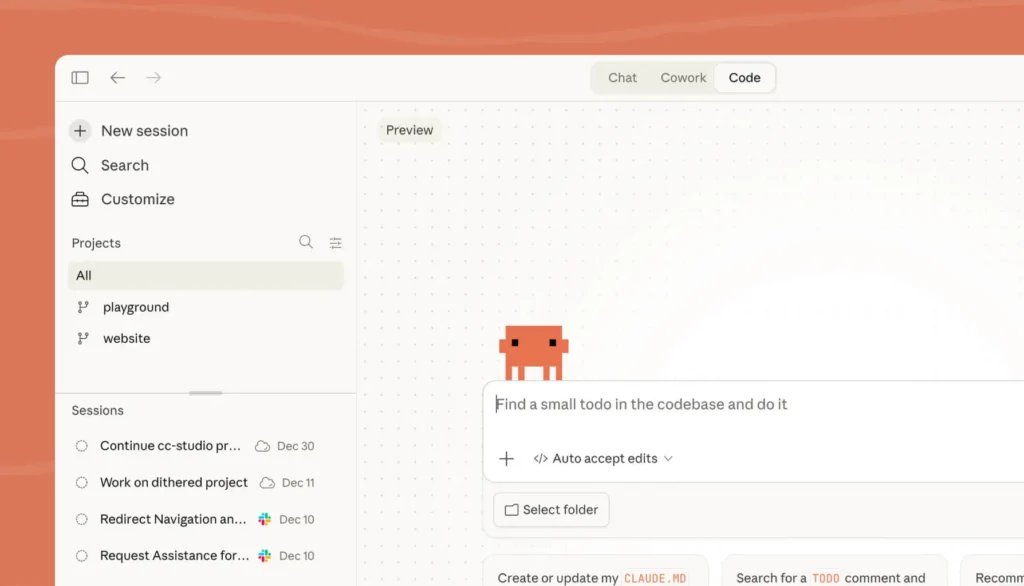
Managed Agents follows a consumption-based pricing model. Standard Claude Platform token rates apply — for context, Claude Opus 4.6 runs at $5/$25 per million input/output tokens, and Sonnet 4.6 at $3/$15 per million tokens. On top of token costs, there’s a $0.08 per session-hour charge for active runtime.
This is notably straightforward compared to the infrastructure costs teams would otherwise incur building and maintaining their own agent runtimes. No separate compute billing, no container management fees, no per-tool surcharges. You pay for the model’s thinking and the time your session is active.
All API endpoints require the managed-agents-2026-04-01 beta header, which the SDK sets automatically. Rate limits are set at 60 requests per minute for creation endpoints and 600 requests per minute for read endpoints, per organization.
Who’s Already Building With It
Anthropic didn’t launch Managed Agents in a vacuum. Several high-profile companies have been building with the platform and shipped production features dramatically faster than they expected. The launch blog post features testimonials from an impressive roster:
Notion — Teams can now delegate work to Claude directly inside their workspace through Notion Custom Agents (currently in private alpha). Engineers use it to ship code; knowledge workers use it to produce websites and presentations. Dozens of tasks can run in parallel while the whole team collaborates on the output. Eric Liu, Product Manager at Notion, said: “Our users can now delegate open-ended, complex tasks — everything from coding to generating slides and spreadsheets — without ever leaving Notion.”
Rakuten — The Japanese tech giant shipped enterprise agents across product, sales, marketing, finance, and HR departments that plug into Slack and Microsoft Teams. Employees assign tasks and get back deliverables like spreadsheets, slides, and apps. According to Rakuten’s case study, each specialist agent was deployed within a single week. Yusuke Kaji, General Manager of AI for Business, described how “power users become like Galileo, contributing across domains far beyond a single specialty.”
Asana — The project management company built AI Teammates — collaborative AI agents that work alongside humans inside Asana projects, taking on tasks and drafting deliverables. CTO Amritansh Raghav stated that Managed Agents “dramatically accelerated” their development, helping them “ship advanced capabilities faster” and freeing the team to focus on enterprise-grade user experience.
Vibecode — This platform uses Managed Agents as its default integration for helping customers go from prompt to deployed app. Co-founder Ansh Nanda noted that users can now “spin up that same infrastructure at least 10x quicker than before,” and predicted “a surge of AI-native applications on web and mobile.”
Sentry — The error monitoring company paired their debugging agent Seer with a Claude-powered agent that writes patches and opens pull requests. Developers go from a flagged bug to a reviewable fix in a single flow. Senior Director of Engineering Indragie Karunaratne explained that the integration shipped “in weeks instead of months” and “eliminated the ongoing operational overhead of maintaining bespoke agent infrastructure.”
Atlassian — SVP Sanchan Saxena described building agents for developers directly into Jira workflows, letting customers “assign tasks right from Jira.” Managed Agents handles sandboxing, sessions, and scoped permissions, freeing Atlassian’s engineers to focus on features.
There are also testimonials from companies building meeting prep agents, document intelligence systems, and other specialized tools — all reporting development time reductions on the order of 3x to 10x.
Use Cases: Where Managed Agents Shines
Based on the launch partners and documentation, the primary use cases cluster around several categories:
Coding agents — Agents that read a codebase, plan a fix, write the code, and open a pull request. This is the Sentry use case and represents a natural evolution of Claude Code’s capabilities into a fully managed runtime.
Productivity and project management agents — Agents that join a project, pick up tasks, and deliver work alongside human teammates. The Asana and Notion integrations exemplify this — AI agents that operate within existing workflow tools rather than requiring users to context-switch to a separate AI interface.
Enterprise specialist agents — Agents deployed across departments (engineering, sales, marketing, finance, HR) that handle domain-specific tasks like generating proposals, building spreadsheets, creating presentations, and writing reports. Rakuten’s deployment across multiple business functions shows this at scale.
Document processing and intelligence — Finance and legal agents that process documents, extract key information, and surface insights. One CTO quoted in the launch described building “a system that can pull information from our users’ documents and correspondence to answer any query they ask, even when we haven’t built a specific tool to retrieve the data.”
App generation — Platforms like Vibecode use Managed Agents to power the full cycle from user prompt to deployed application, leveraging the sandboxed container environment to build, test, and ship code in a single agent session.
How It Compares to Existing Approaches
Before Managed Agents, developers building production agent systems on Claude had two main paths: use the Messages API with the Agent SDK and build your own orchestration, or use third-party frameworks like LangChain, LangGraph, or CrewAI.
Both paths require solving the same infrastructure problems: container management, tool execution sandboxing, state persistence, authentication scoping, error recovery, and observability. Teams routinely spend months on this plumbing before writing a single line of agent logic.
Managed Agents collapses that entire infrastructure layer. The trade-off is control — if you need a highly customized agent loop with non-standard orchestration patterns, the Messages API with the Agent SDK still gives you that flexibility. But for the vast majority of agent use cases, the managed harness provides better outcomes with less effort.
The 10-point improvement in task success rates on hard problems is a compelling data point. It suggests that Anthropic’s internally tuned orchestration — with its built-in caching, compaction, self-evaluation, and error recovery — outperforms what most teams build on their own. This makes intuitive sense: Anthropic has more insight into how Claude behaves under different orchestration strategies than any external team could.
The Multi-Agent Future
Perhaps the most forward-looking feature in the launch is multi-agent coordination, currently in research preview. This allows agents to spin up and direct other agents to parallelize complex work — essentially enabling agent teams that divide labor, work concurrently, and synthesize results.
This builds on the foundation Anthropic laid with Claude Opus 4.6’s “agent teams” capability announced in February 2026, and the Claude Cowork product that brought agent-powered productivity to non-technical knowledge workers.
Multi-agent coordination in a managed environment solves one of the hardest problems in agent systems: how to safely allow agents to spawn sub-agents without losing control over resources, permissions, and costs. With Managed Agents handling the infrastructure, the coordination patterns become much more tractable.
Governance and Security: The Enterprise Angle
One area where Managed Agents distinguishes itself is trusted governance. The platform provides scoped permissions, identity management, and execution tracing as built-in capabilities, not afterthoughts.
For enterprise teams — especially those in regulated industries like finance, healthcare, and government — this is critical. An agent that can run shell commands, access the web, and modify files needs to operate within carefully defined boundaries. Managed Agents bakes those boundaries into the platform architecture, with every tool call, decision, and failure mode traceable through the Claude Console.
The branding guidelines in the documentation are also telling. Anthropic explicitly prohibits partners from using “Claude Code” or “Claude Cowork” branding, requiring clear separation between Managed Agents integrations and Anthropic’s own consumer and developer products. This signals that Anthropic sees Managed Agents as a platform layer — infrastructure that powers other products, not a product itself.
Getting Started
For developers ready to dive in, the entry points are:
- Read the managed agents documentation
- Head to the Claude Console to create your first agent
- Use the new
antCLI for command-line access - In Claude Code, use the built-in
claude-apiSkill — just type “start onboarding for managed agents in Claude API” to get started
Managed Agents is enabled by default for all API accounts. You’ll need a Claude API key and the managed-agents-2026-04-01 beta header on all requests (the SDK handles this automatically).
The Bigger Picture
Claude Managed Agents arrives at a pivotal moment in the AI industry. The conversation has shifted decisively from “can AI models do useful things?” to “how do we get AI agents into production safely and at scale?” Every major AI lab is racing to solve this problem — but Anthropic’s approach is distinctive.
Rather than building yet another agent framework or SDK that developers wire together themselves, Anthropic is offering a fully managed runtime — the agent equivalent of going from self-hosted databases to a managed database service. You define what the agent should do; Anthropic handles how it runs.
Combined with Claude Cowork for end-users, Claude Code for developers, and now Managed Agents for platform builders, Anthropic is assembling a comprehensive stack that covers the full spectrum from consumer to enterprise to infrastructure.
The early results speak for themselves: partners reporting 3x to 10x faster development, agents shipping in weeks instead of months, and task success rates that beat custom-built orchestration. If the public beta delivers on the promise of the private previews, Claude Managed Agents could quickly become the default way production agents get built.
The age of bespoke agent infrastructure may be ending. The age of managed agent platforms has just begun.