
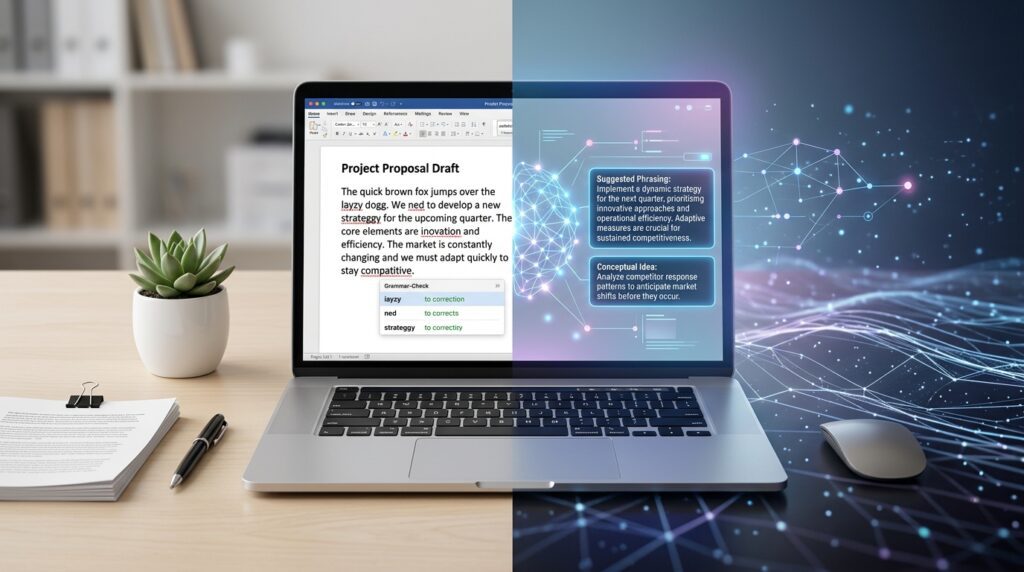
Grammarly built its name on a simple promise. It would catch your typos, clean up your grammar, and save you from sending an email that accidentally made you sound careless, confused, or both. For years, that promise worked. The brand became shorthand for writing help. Students used it. Professionals leaned on it. Entire workplaces quietly depended on it.
Now the company wants to be something bigger. Much bigger.
In recent coverage from The Verge, TechBuzz, and Spazio iTech, Grammarly’s latest transformation comes into focus as more than a product update. It looks like an identity shift. The company appears eager to move beyond grammar correction and step into the crowded, noisy, high-stakes world of AI productivity. That means assistants, automation, smart workflows, and a new kind of user expectation.
It also means risk.
Because when a company known for polishing sentences starts presenting itself as a broader AI platform, people naturally ask a few uncomfortable questions. Is this the future of the brand? Is it a clever evolution? Or is it one of those classic tech moments where a company races toward the hottest label in the market and leaves part of its original identity behind?
That tension sits at the center of Grammarly’s current AI saga. And honestly, it is fascinating.
From Grammar Fixer to AI Powerhouse
The old Grammarly pitch was easy to understand. You wrote something. Grammarly improved it. Maybe it corrected a comma splice. Maybe it softened your tone before you sent a sharp email to your manager at 11:48 p.m. Either way, the value was immediate and obvious.
The newer pitch feels broader and more ambitious. According to the reporting and commentary in the source articles, Grammarly is not content with being seen as a writing assistant anymore. It wants a larger role in how people work, think, and communicate with AI.
That kind of repositioning is becoming common across tech. Companies that once sold focused tools now want to become platforms. Platforms want to become ecosystems. Ecosystems want to become intelligent companions. And every one of them seems to be chasing the same dream: become essential before users even realize they need help.
For Grammarly, the move makes strategic sense. AI has changed what users expect from software. Fixing grammar is useful, but generating ideas, rewriting full sections, summarizing notes, drafting responses, and adapting tone across contexts feel far more expansive. If Grammarly stayed in its original lane forever, it might start to look narrow in a market now obsessed with AI systems that can do ten things at once.
So the company is trying to widen the lane.
The problem is that brand evolution sounds elegant in a pitch deck, but in the real world it can feel disorienting. People knew what Grammarly was. The moment that clarity starts to blur, the company has to work much harder to explain itself.
The “Superhuman” Signal and the Identity Problem
One of the sharpest themes running through the source coverage is the idea that Grammarly’s AI repositioning signals a desire to feel more powerful, more futuristic, and frankly more premium. The language surrounding this shift matters. The suggestion of becoming something “superhuman” is not subtle. It is loaded. It implies speed, intelligence, amplification, and maybe even a little inevitability.
That sounds exciting. It also sounds dangerous.
As TechBuzz points out, a rebrand or reframing of this kind can trigger an identity crisis. That phrase lands because it captures the awkward middle stage of many tech transformations. The old company still exists in people’s minds, but the new company wants to occupy more space. Users are left trying to reconcile the two.
This is where the fun part of AI branding collides with the practical part.
If you tell users that your tool is no longer just helping them write, but helping them think, decide, and work at a higher level, they will expect more than flashy language. They will expect reliability, They will expect trust. They will expect the product to be both smarter and clearer. And if the company cannot explain what changed in plain language, the result is not awe. It is confusion.
That confusion becomes even sharper in the AI era because everyone is making similar claims. Every app wants to be your assistant. Every platform wants to streamline your workflow Every company says its AI helps you move faster, think better, and do more. In that environment, differentiation is hard. A bold rebrand can help you stand out, but it can also make users wonder whether you are improving the product or just dressing it in trendier clothes.
That is the tightrope Grammarly now appears to be walking.
Why This Move Makes Sense Right Now
Still, let’s be fair. This is not some random pivot pulled from thin air.
The AI market rewards expansion. A company with Grammarly’s reach would almost be expected to broaden its role. Writing sits at the center of modern work. Emails, presentations, proposals, reports, documentation, support chats, sales outreach, internal memos, and social posts all begin with language. If you already live at that layer, moving into adjacent AI tasks is a logical step.
That may be why the shift described across the articles feels less like a sudden jump and more like an aggressive acceleration. Grammarly already occupied a trusted position in everyday communication. AI gives it a chance to build upward from there.
The Verge frames this broader evolution as part of a bigger industry narrative, one where software companies are racing to redefine themselves before someone else does it for them. That pressure is real. In AI, waiting too long can look like irrelevance. Moving too fast can look like panic. Tech companies must choose anyway.
Grammarly seems to have chosen momentum.
And from a business perspective, momentum has appeal. If the company can transform from a correction tool into an AI layer embedded across communication workflows, it increases its relevance. It becomes harder to replace. It moves from “nice to have” toward “core productivity infrastructure.” That is the kind of move investors, executives, and growth teams love.
Users might love it too. But only if the experience delivers on the promise.
The Human Side of the Shift

Here is where the story gets more interesting.
People do not just use Grammarly because it fixes writing. They use it because it gives them confidence. That emotional layer matters more than many product leaders admit. When someone installs Grammarly, they are often not chasing brilliance. They are trying to avoid embarrassment. They want to sound competent. Clear. Professional. Maybe even a little polished.
That trust took years to build.
So when the company starts talking in grander AI terms, it cannot afford to lose the emotional simplicity that made the original product sticky. Users may enjoy new features, but they still want the same reassurance: help me say what I mean, and don’t make me feel dumb while doing it.
This is why the identity conversation matters. A grammar assistant solves a very human problem. A “superhuman” AI platform risks sounding abstract by comparison. If the messaging gets too lofty, it may weaken the thing that made the brand relatable in the first place.
The article from Spazio iTech presents the shift with a sense of excitement, leaning into the idea that this is a major AI turning point for 2026. That framing fits the broader mood of the tech industry, where AI transformation is often described in dramatic, almost cinematic terms. But users do not live inside press narratives. They live inside tabs, deadlines, inboxes, and half-finished drafts.
For them, the question is simpler.
Does this make my life easier?
If the answer is yes, the rebrand will feel visionary. If the answer is “I’m not sure what this thing is anymore,” the company will have a messaging problem no amount of futuristic branding can hide.
The Broader Trend: Every Software Company Wants a Bigger Story
Grammarly is not alone here. In fact, this whole saga reflects a wider AI-era pattern.
A lot of software companies are trying to escape narrow definitions. Note-taking apps do not want to be note-taking apps. Search companies do not want to be search companies. Design tools do not want to be design tools. Everyone wants to become an intelligent workspace, a thought partner, a productivity engine, or some other phrase that sounds both useful and slightly sci-fi.
Why? Because AI has changed the perceived ceiling of what software can be.
Once users see one tool summarize meetings, draft proposals, brainstorm campaign ideas, and organize knowledge, they start asking why the rest of their software cannot do the same. Suddenly, every focused product looks vulnerable unless it expands its role. This pressure pushes companies into larger narratives, sometimes before their audiences are ready.
That seems to be part of what makes Grammarly’s case so compelling. It is not just about one company changing its messaging. It is about an entire industry trying to reinvent itself in public, in real time, with users watching closely and skepticism never far behind.
And let’s be honest, tech companies are often much better at announcing a new identity than explaining what it means in daily use. They love vision. Users love clarity. Those are not always the same thing.
The Opportunity Is Real, but So Is the Risk
There is a real upside if Grammarly gets this right.
It could become one of the few AI brands that bridges utility and familiarity It already has recognition. It already sits inside workflows people use every day It already has a practical use case grounded in communication, which remains one of the richest areas for AI assistance. That is a strong foundation.
If the company layers on AI features that genuinely reduce effort without increasing friction, it could strengthen its position dramatically. Users might welcome a tool that not only improves sentences but also helps generate them, organize them, tailor them, and deploy them across contexts.
But the risk is equally clear.
The more expansive the promise becomes, the more likely users are to notice gaps. If the product feels inconsistent, over-branded, or too eager to sound revolutionary, the backlash can be swift. AI users have become surprisingly good at sniffing out inflated claims. They know the difference between helpful automation and marketing theater.
That is why the “identity crisis” angle resonates. It is not just criticism. It is a warning. A company can evolve. It should evolve. But if it abandons its clearest value proposition before it establishes a compelling new one, it invites skepticism.
In branding terms, ambiguity can be expensive.
In product terms, it can be fatal.
What Users Will Decide Next
Ultimately, this story will not be settled by headlines, launch language, or excited commentary. Users will decide. They always do.
If Grammarly’s AI transformation gives people more control, faster output, better communication, and less mental friction, then this chapter will look smart in hindsight. The brand will appear to have anticipated the future. The leap from grammar assistant to broader AI companion will feel natural, maybe even overdue.
If not, the company may find itself stuck in a weird middle state. Too expansive to feel simple Too familiar to feel revolutionary. Too ambitious to be dismissed, but not clear enough to be fully embraced.
That is the real drama here. Not whether Grammarly can join the AI race. It already has. The bigger question is whether it can do so without losing the practical trust that made it matter in the first place.
And that is a much harder challenge than slapping new language on an old product.
Final Thoughts: A Rebrand, a Bet, and a Very 2026 Vibe
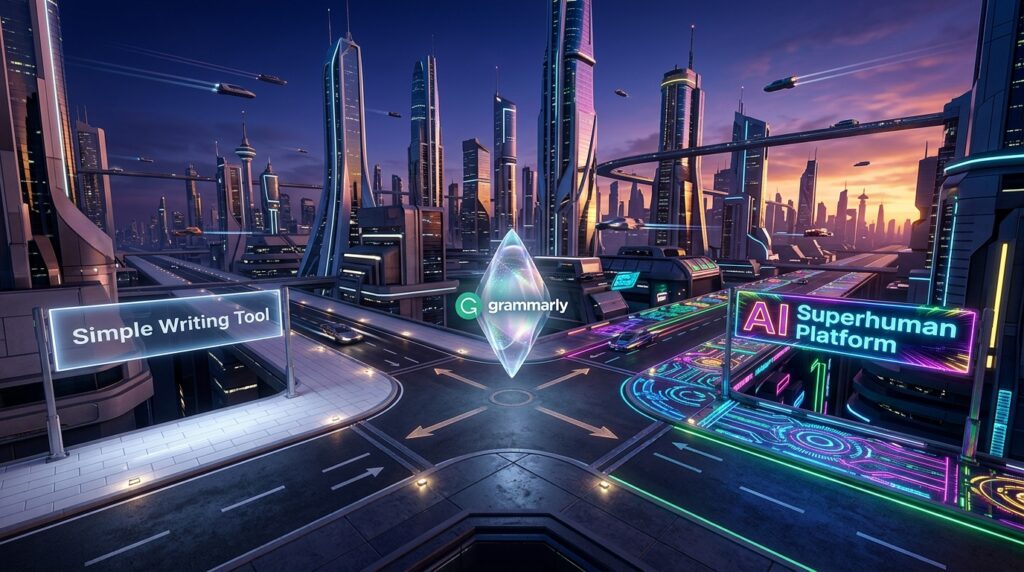
Grammarly’s AI saga feels like a perfect 2026 tech story. It has ambition It has branding tension, It has a company trying to outgrow the category that made it successful, It has critics asking whether the new story is coherent. It has supporters arguing that the shift is necessary. And hanging over all of it is the same AI-era question every software company now faces: are you truly evolving, or are you just trying to look like you are?
Based on the source coverage from The Verge, TechBuzz, and Spazio iTech, Grammarly’s move appears both understandable and risky. It makes strategic sense in an AI-saturated market. It also creates brand confusion that the company will need to address with more than buzzwords.
The funny part is that Grammarly built its reputation by helping people say exactly what they mean. Now it faces the challenge of doing that for itself.
That may be the most poetic twist in the whole story.
Sources
- The Verge — Grammarly expert review AI saga
- TechBuzz — Grammarly’s AI rebrand to Superhuman sparks identity crisis
- Spazio iTech — Grammarly diventa Superhuman: la svolta AI del 2026
Continue Reading
Latest News
- Apple iOS 27 AI features and writing tools
- ChatGPT trusted contact AI safety feature
- OpenAI executive shakeup and AI agent race
Related Companies
Compare
The Kingy Brief
Get The Kingy Brief.
AI changes, original tests and one practical thing to try. Fridays at 09:00 Vancouver time.
Free · Double opt-in · Unsubscribe anytime
Signup help and newsletter schedule
Signup form provided by Beehiiv. After submitting, check your inbox for "Confirm your subscription to The Kingy Brief" and open its confirmation link. Check Spam or Promotions if you cannot find it.
Fridays at 09:00 Vancouver time: source-checked AI changes, original tests and one practical thing to try. The weekly restart begins October 9, 2026. We skip a week when there is not enough verified material. Free. Unsubscribe anytime.