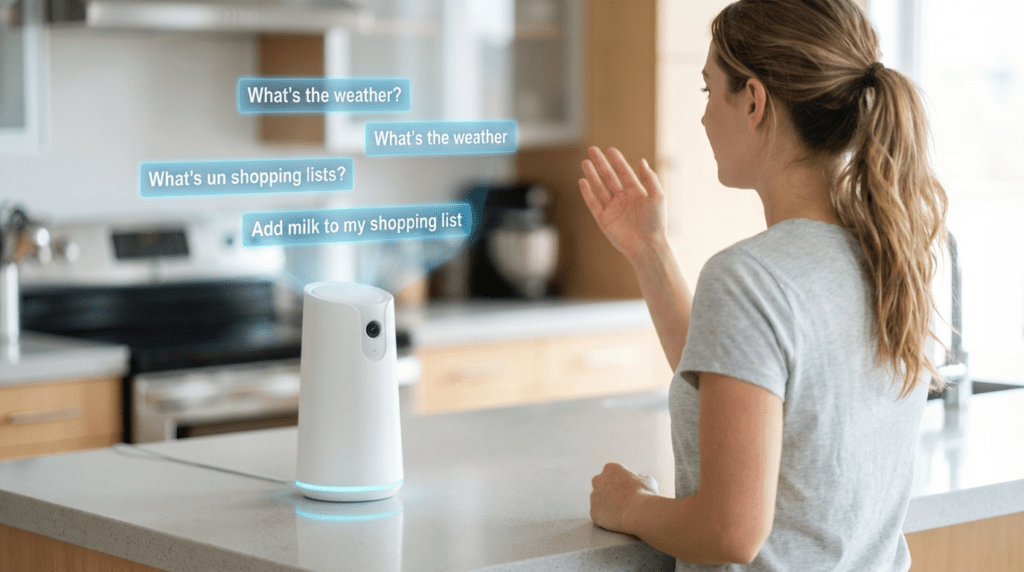
The AI Giant’s First Hardware Play Is Closer Than You Think

OpenAI has spent years living inside your browser. It powered your essays, answered your questions, and helped you write emails you were too tired to write yourself. But now, it wants to move in. Literally.
According to a report by The Information, OpenAI is developing its first consumer hardware device a smart speaker equipped with a camera. The device is expected to cost somewhere between $200 and $300. It won’t arrive on store shelves until at least February 2027. But the implications of what it could do are already turning heads across the tech world.
This isn’t just another Bluetooth speaker with a voice assistant bolted on. OpenAI is swinging for something much bigger. The company wants to build a device that sees, listens, understands, and responds all from a spot on your kitchen counter or living room shelf. And they’ve brought in one of the most celebrated designers in tech history to help make it happen.
Jony Ive Is Back And He’s Building the Future of ChatGPT
You know Jony Ive. He’s the man behind the original iMac, the iPod, the iPhone, and nearly every iconic Apple product from the past three decades. He left Apple in 2019 and launched his own design firm, LoveFrom. Then, in a move that shocked the industry, OpenAI acquired his hardware startup, io Products, in a deal worth nearly $6.5 billion.
That acquisition brought Ive and several other former Apple executives directly into OpenAI’s orbit. The people who built the iPhone are now building the future of ChatGPT. That’s not a small thing. That’s a statement.
iPhone in Canada reports that Ive is working through LoveFrom on the design of these new devices. OpenAI CEO Sam Altman has been effusive in his praise. He said: “AI is an incredible technology, but great tools require work at the intersection of technology, design, and understanding people and the world. No one can do this like Jony and his team; the amount of care they put into every aspect of the process is extraordinary.”
That’s a bold endorsement. And it signals that OpenAI isn’t treating this hardware push as a side project. They’re treating it as the next chapter.
What the Smart Speaker Actually Does
So what exactly is this thing? Let’s break it down.
The device looks like a smart speaker. It sits in your home. But it does far more than play music or set timers. According to The Verge, the speaker features a built-in camera and sensors that allow it to recognize objects on a nearby table and follow conversations happening in the room.
That’s already a step beyond what Amazon’s Echo or Google’s Nest Hub can do. But here’s where it gets really interesting.
The device reportedly includes a facial recognition system similar to Apple’s Face ID. This feature would let users authorize purchases just by looking at the device. No phone. No PIN. Just your face.
The Decoder adds another layer to this picture. The speaker uses video to actively scan its surroundings and serve up proactive suggestions. One example cited? It might tell you to go to bed early the night before a big meeting. The device doesn’t just respond to commands. It watches, learns, and nudges.
That’s a fundamentally different kind of smart speaker. It’s not reactive. It’s proactive. And that distinction matters enormously.
A Hardware Team 200 People Strong
OpenAI isn’t dabbling here. They’re going all in.
The Decoder reports that OpenAI’s hardware team now numbers more than 200 people. That’s a serious operation. And they’re not just building one device. They’re building an entire product lineup.
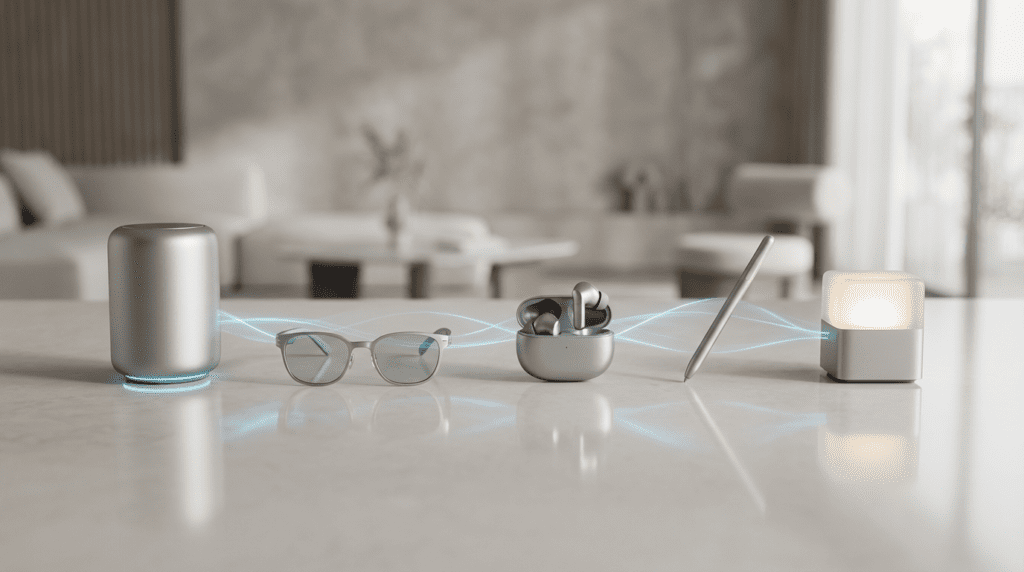
The smart speaker is the first piece. But the roadmap goes much further. Here’s what’s reportedly in the pipeline:
- Smart glasses — OpenAI is developing AI-powered glasses, though mass production isn’t expected until 2028 or later.
- A smart lamp — Prototypes exist, but it’s unclear whether this product will ever reach consumers.
- “Sweetpea” — An audio wearable that reportedly takes direct aim at Apple’s AirPods.
- “Gumdrop” — A stylus that could send handwritten notes directly to ChatGPT.
Foxconn, the manufacturing giant behind the iPhone, is reportedly handling production for the hardware lineup. That’s a significant detail. Foxconn doesn’t partner with small players. Their involvement signals that OpenAI is serious about scale.
CEO Sam Altman has already teased at least one device reveal for 2026. The clock is ticking.
The Vision: A New Kind of Computer

Why is OpenAI doing this? The answer goes deeper than product strategy.
Sam Altman has spoken openly about the need for entirely new types of computers. The smartphone has dominated personal computing for nearly two decades. But AI, Altman argues, demands something different. Something that doesn’t require you to stare at a screen. Something that lives in your environment and understands your context.
iPhone in Canada frames it clearly: OpenAI wants to create a whole new category of devices that don’t require a phone screen at all. By controlling both the AI software and the physical hardware, they aim to deliver a more seamless experience than anything currently possible on a smartphone.
That’s the pitch. And it’s a compelling one. The friction between AI and the devices we use today is real. Typing into a chat window is fine. But it’s not natural. It’s not ambient. It doesn’t fit into the flow of daily life the way OpenAI envisions.
Jony Ive called the upcoming ChatGPT hardware the beginning of a “new design movement.” Sam Altman reportedly called it the “coolest piece of technology that the world will have ever seen.” Those are big words. The smart speaker, if it’s truly the first product, will need to live up to them.
The Competition Is Already Moving
OpenAI isn’t alone in this race. Not even close.
The Verge notes that Apple is reportedly developing its own smart glasses, an AI-powered pendant, and AirPods with cameras. Meta is already selling Ray-Ban smart glasses and pushing hard into AI hardware. Google has Gemini baked into its Nest Hub lineup. Amazon is upgrading Alexa with more powerful AI capabilities.
The battlefield is crowded. Every major tech company sees AI hardware as the next frontier. The question isn’t whether this category will explode it’s who will own it.
OpenAI enters this fight with a few distinct advantages. ChatGPT is the most recognized AI brand in the world. The company has Jony Ive’s design credibility. And it has a direct relationship with hundreds of millions of users who already trust the product.
But it also faces real challenges. Privacy concerns around a camera-equipped, always-on home device are significant. 4sysops specifically flags the privacy and security implications of deploying camera-enabled AI hardware in corporate environments. Those concerns extend to homes, too. A device that watches your table, listens to your conversations, and recognizes your face is powerful. It’s also deeply personal.
Is a Smart Speaker Really Revolutionary?
Here’s the honest question: is a smart speaker actually the groundbreaking device people expected?
When news first broke that Jony Ive was joining forces with OpenAI, imaginations ran wild. Early rumors pointed to a pocket-sized, screen-free AI companion a “pebble” that would be contextually aware of its surroundings. Something genuinely new. Something that had never existed before.
PCWorld captures the skepticism well. Senior writer Ben Patterson points out that a ChatGPT-powered smart speaker might feel like a letdown compared to those early visions. He already has a Google Nest Hub Max with Gemini in his kitchen. It mostly displays family photos. The Alexa-enabled Echo Dot in his office stays mostly silent. AI in a smart speaker, he argues, hasn’t yet found its killer use case.
That’s a fair critique. The smart speaker format is familiar. It’s comfortable. But it’s not exactly revolutionary. And if OpenAI’s first product feels like a more expensive Echo, the tech world will notice.
Still, there’s a counterargument. The camera changes things. The proactive suggestions change things. A device that tells you to go to bed before a big meeting isn’t just a voice assistant it’s a personal AI that understands your schedule, your habits, and your environment. That’s different. That’s genuinely new.
The execution will determine everything.
What Comes Next
The smart speaker is just the beginning. OpenAI’s hardware ambitions stretch well beyond a single device.
The smart glasses, if they arrive by 2028, could be the product that truly shifts the paradigm. Glasses sit on your face. They see what you see, hear what you hear and can deliver information directly into your field of vision. That’s the kind of ambient, always-on AI experience that Altman and Ive have been hinting at.
The “Sweetpea” audio wearable takes direct aim at Apple’s most profitable accessory category. The “Gumdrop” stylus bridges the physical and digital worlds in a way that feels distinctly OpenAI. And the smart lamp if it ever ships represents a genuinely novel form factor for AI in the home.
OpenAI is building an ecosystem. Not just a product. And that ecosystem is designed to surround you in your home, on your face, in your ears, and in your hands.
The first device arrives in 2027. The full vision may take years to unfold. But the direction is clear. OpenAI wants to be the operating system of your life. And it’s starting with a speaker on your shelf.
The Bottom Line
OpenAI is making its move into hardware. The first product is a $200–$300 smart speaker with a camera, facial recognition, and proactive AI suggestions. Jony Ive is designing it. Foxconn is building it. And a 200-person team is working to make it real.
It may not be the revolutionary “pebble” that early rumors promised. But it’s a serious first step from a company that has already changed how the world interacts with AI. The smart speaker is the opening move. The real game is just getting started.
Sources
- The Verge — OpenAI’s first ChatGPT gadget could be a smart speaker with a camera
- iPhone in Canada — Jony Ive, OpenAI Developing ChatGPT Smart Speaker
- The Decoder — OpenAI is building a $200 to $300 smart speaker that tells you when to go to bed
- PCWorld — ChatGPT’s first hardware may look familiar
- 4sysops — OpenAI’s first ChatGPT gadget could be a smart speaker with a camera
OpenAI Hardware
- OpenAI Jony Ive io acquisition
- OpenAI smartphone-style AI device
- OpenAI AI-device strategy
- OpenAI Jony Ive trademark dispute
AI Wearables
AI Speakers
The Kingy Brief
Get The Kingy Brief.
AI changes, original tests and one practical thing to try. Fridays at 09:00 Vancouver time.
Free · Double opt-in · Unsubscribe anytime
Signup help and newsletter schedule
Signup form provided by Beehiiv. After submitting, check your inbox for "Confirm your subscription to The Kingy Brief" and open its confirmation link. Check Spam or Promotions if you cannot find it.
Fridays at 09:00 Vancouver time: source-checked AI changes, original tests and one practical thing to try. The weekly restart begins October 9, 2026. We skip a week when there is not enough verified material. Free. Unsubscribe anytime.