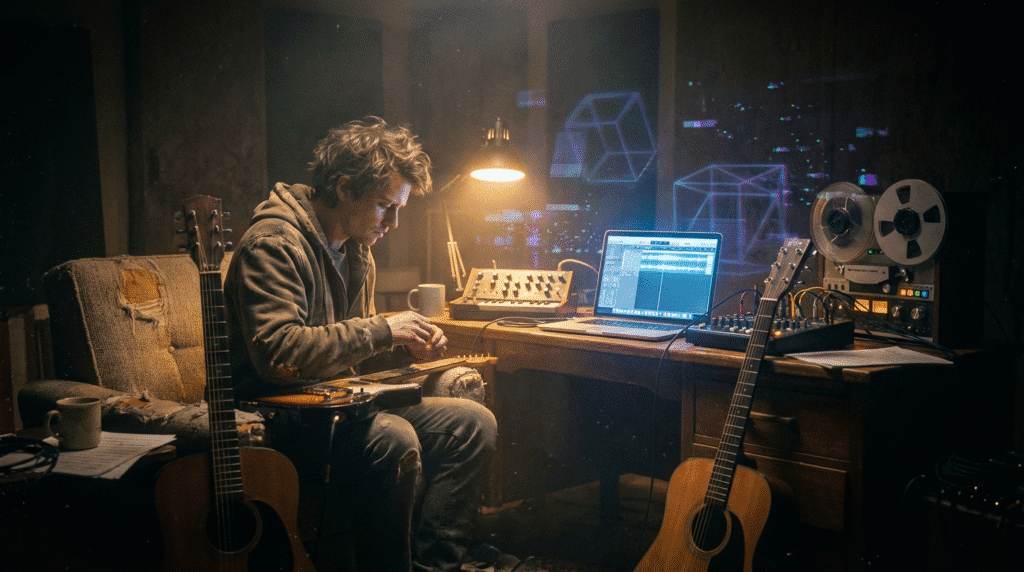
In a groundbreaking move that sets it apart from every other major music platform, Bandcamp has announced a comprehensive ban on AI-generated music. The decision, revealed on January 13, 2026, marks a watershed moment in the ongoing debate about artificial intelligence’s role in creative industries and positions the indie-focused marketplace as a champion of human artistry.
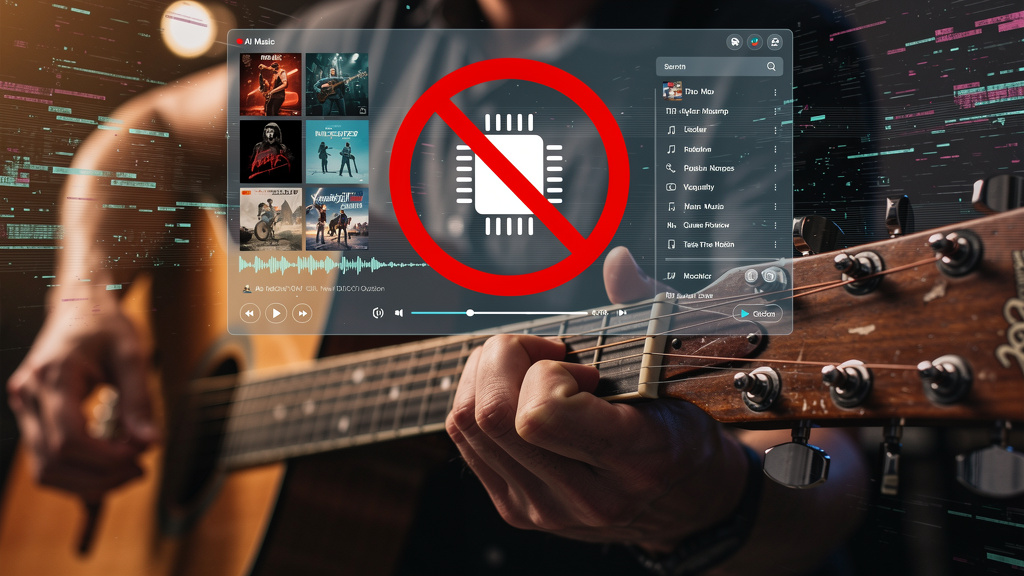
A Clear Line in the Sand
Bandcamp’s announcement came through a Reddit post on r/Bandcamp, where the platform’s support team laid out explicit guidelines that leave little room for interpretation. “Music and audio that is generated wholly or in substantial part by AI is not permitted on Bandcamp,” the statement declared, establishing what may be the music industry’s most unambiguous stance against generative AI to date.
The policy goes beyond simply banning AI-created tracks. It also prohibits using AI tools to impersonate other artists or musical styles, reinforcing existing rules around intellectual property and artist misrepresentation. This dual approach addresses both the proliferation of AI-generated “slop” and the more insidious practice of using AI to create deepfakes or unauthorized imitations of established musicians.
“Something that always strikes us as we put together a roundup like this is the sheer quantity of human creativity and passion that artists express on Bandcamp every single day,” the company wrote in its announcement. “The fact that Bandcamp is home to such a vibrant community of real people making incredible music is something we want to protect and maintain.”
The timing of the announcement, coming just after the New Year and following Bandcamp’s 2025 Holiday Guide and user recaps, suggests the company wanted to start 2026 with a clear statement of values. It’s a bold opening salvo in what promises to be a defining year for the relationship between AI and creative industries.
Philosophy Meets Practice
At the heart of Bandcamp’s decision lies a fundamental belief about what music represents. In their official blog post titled “Keeping Bandcamp Human,” the company articulated a philosophy that resonates deeply with many artists and music lovers. They emphasized that their mission is “to help spread the healing power of music by building a community where artists thrive through the direct support of their fans.”
The statement continued: “We believe that the human connection found through music is a vital part of our society and culture, and that music is much more than a product to be consumed. It’s the result of a human cultural dialog stretching back before the written word.”
This isn’t just corporate rhetoric. Bandcamp has built its entire brand around serving artists directly, offering them a platform where they retain control over their work and receive a significantly larger share of revenue than they would on traditional streaming services. The anti-AI stance is a natural extension of this artist-first philosophy.
The practical implementation of the policy relies heavily on community involvement. Bandcamp is encouraging users to report any music or audio “that appears to be made entirely or with heavy reliance on generative AI” through the platform’s reporting tools. Importantly, the company has reserved the right to remove content on suspicion of being AI-generated, even without definitive proof.
This community-driven approach aligns with Bandcamp’s broader ethos of empowering users. Rather than relying solely on algorithmic detection systems, the platform is trusting its community of artists and fans to help maintain the integrity of the space they’ve built together.
Standing Alone Among Giants
What makes Bandcamp’s move particularly significant is how it contrasts with the approaches taken by other major music platforms. While Bandcamp draws a hard line against AI content, competitors have adopted far more permissive stances.
Spotify, the market leader in music streaming, acknowledged in a September 2025 statement that “AI is unlocking incredible new ways for artists to create music and for listeners to discover it.” Rather than banning AI music, Spotify has focused on addressing specific problems like spam, deepfakes, and undisclosed AI usage. The platform has even made deals with major labels to create “artist-first AI music products,” including AI-powered mashups.
Deezer disclosed that a staggering 18% of daily uploads to its platform consist of AI-generated content, which it plans to tag publicly rather than remove. Apple Music is reportedly planning AI-powered playlists while banning only AI-generated content that lacks clear authorship or disclosure. Qobuz has taken perhaps the softest approach, simply prioritizing human-made music in its editorial choices without making a public policy statement.
The only other platform to take a similarly strong stance is iHeartRadio, which pledged in late November 2025 never to play AI-generated music or use AI DJs. However, Bandcamp remains the first major music marketplace as opposed to a radio or streaming service to implement an outright ban.
This divergence in approaches reflects deeper philosophical differences about the purpose of music platforms. Streaming giants like Spotify view themselves primarily as technology companies delivering content to consumers. Bandcamp, by contrast, positions itself as a community platform connecting artists directly with fans who value authentic human creativity.
The AI Music Problem
The urgency behind Bandcamp’s decision becomes clearer when examining the scale of AI music proliferation across the industry. In recent months, AI-generated acts have gained significant traction on streaming platforms. The Velvet Sundown, fake R&B singer Xania Monet, and AI metal band Broken Avenue have all accumulated substantial streams, while AI-generated music designed to mimic or “dupe” existing artists like King Gizzard & The Lizard Wizard has begun appearing with alarming frequency.
This flood of AI content raises fundamental questions about authenticity, creativity, and the value of human artistry. Many of these AI-generated tracks are created using large datasets that include copyrighted music, often without the consent of the original artists. The result is what critics have dubbed “AI slop” low-effort content that clogs platforms and competes with human-created work for listeners’ attention and streaming revenue.
Peter Kirn, writing for CDM (Create Digital Media), noted that “there is a sizable population of people who are just generating music from text prompts. The sounds they produce are based on the use of big data sets, which in turn on many of these platforms are built without consent.” He emphasized that this is “fundamentally different from sampling,” as sampling involved significant human input and manipulation.
The economic implications are significant. When AI-generated tracks compete for the same streaming revenue as human-created music, they effectively dilute the earnings of working musicians. This is particularly concerning for independent artists who rely on platforms like Bandcamp as a primary source of income.
Questions of Implementation
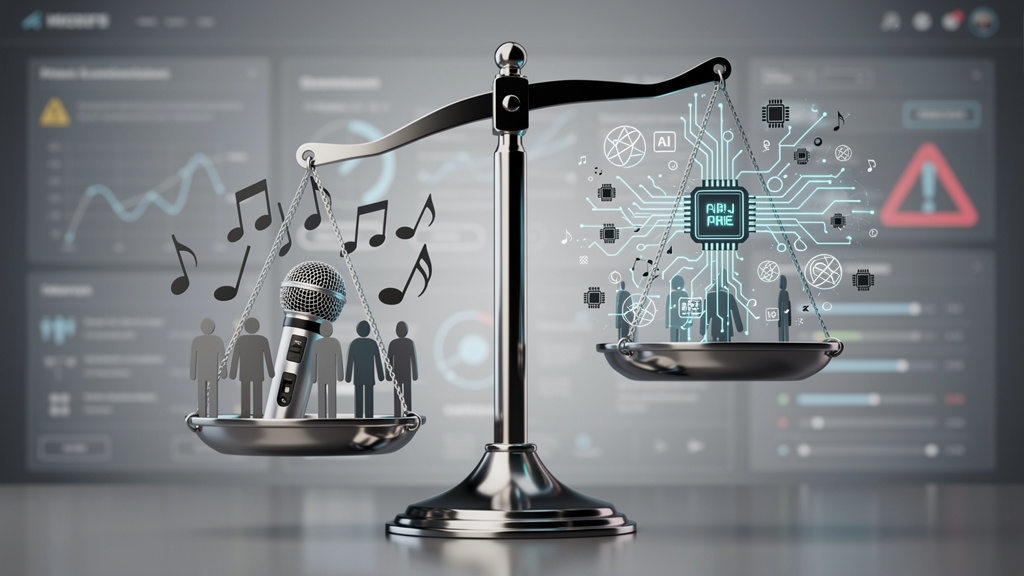
While Bandcamp’s principles are clear, the practical challenges of enforcement have sparked discussion among industry observers. The policy’s reliance on user reporting and the company’s right to remove content based on “suspicion” raises questions about consistency and potential abuse.
Kirn pointed out several ambiguities: “Generative AI” is not defined as a term in the policy. Where exactly does one draw the line between prohibited AI generation and permitted use of AI-assisted tools? Modern music production increasingly incorporates machine learning elements, from vocal synthesis to mastering plugins. Even Yamaha’s Vocaloid, the software behind virtual pop star Hatsune Miku, uses machine learning in its latest version.
The policy’s use of the phrase “substantial part” appears designed to address these gray areas, but questions remain about how Bandcamp will distinguish between different types and degrees of AI involvement. Will a track that uses AI for mastering be banned? What about one that incorporates AI-generated sound effects alongside human performances?
These concerns are not merely academic. Some content platforms are now using automated systems to detect AI-generated material, but these systems can produce both false positives and false negatives. Bandcamp’s approach of combining user reporting with human review may prove more accurate, but it also requires significant resources a potential challenge given that the company slashed half its workforce in 2023 after being sold by Epic Games.
The reliance on “suspicion” as grounds for removal could also prove controversial. While it gives Bandcamp flexibility to act quickly against obvious violations, it could also lead to disputes when artists feel their human-created work has been unfairly flagged. The company will need to develop clear appeal processes and transparent decision-making criteria to maintain trust.
A Broader Movement
Bandcamp isn’t entirely alone in taking a stand against AI music. Several smaller, independent platforms have implemented similar policies, often with even more detailed guidelines.
Mirlo, a collectively-owned alternative to Bandcamp, already had an anti-AI policy in place. Their content policy states: “Mirlo’s priority is preventing human artists from being forced to appear alongside or compete with low-effort AI-generated works. For that reason we do not allow the addition of music that is entirely created by AI.”
Ampwall, another independent music platform, has perhaps the most detailed AI policy, stating: “Music created with limited use of AI, such as a human band with human-written songs and some amount of AI-contributed instrumentation or AI ‘performing’ alongside humans, is generally prohibited. Some exceptions might be made when the AI contribution is minimal.”
These platforms represent a growing movement within the music industry to preserve space for human creativity in an increasingly AI-saturated digital landscape. What unites them is a commitment to independent artists and a belief that music’s value lies in its human origins.
The emergence of this movement suggests that the music industry may be splitting into two distinct camps: corporate platforms that embrace AI as a tool for content generation and monetization, and independent platforms that position themselves as sanctuaries for human creativity.
The Bigger Picture
Bandcamp’s decision arrives at a pivotal moment in the relationship between AI and creative industries. Major record labels Sony, Universal, and Warner have made deals with generative AI services like Udio and Suno, allowing their catalog artists to be used in training AI models. This has created a stark divide between corporate interests seeking to monetize AI technology and independent artists and platforms fighting to preserve human creativity.
The policy also reflects broader concerns about AI’s environmental impact and ethical implications. As Mirlo’s policy notes, many are “very conscious of many large language model’s absolutely catastrophic energy costs.” The training and operation of AI music generation systems require enormous computational resources, raising questions about sustainability alongside artistic authenticity.
For artists, Bandcamp’s stance offers reassurance that at least one major platform prioritizes their interests over technological novelty. The platform has long been a haven for independent musicians, offering better revenue splits and more direct fan connections than streaming giants. This latest move reinforces that commitment.
The decision also has implications beyond music. As AI-generated content proliferates across all creative fields from visual art to writing to film Bandcamp’s policy could serve as a model for other platforms grappling with similar questions. The company has demonstrated that it’s possible to take a principled stand against AI content while still operating a successful commercial platform.
Artist and Fan Reactions
The response from Bandcamp’s community has been overwhelmingly positive. Artists and fans alike have praised the platform for taking a stand that many feel is long overdue. The Reddit announcement received widespread support, with users expressing relief that at least one major platform is prioritizing human creativity.
For many independent musicians, Bandcamp represents more than just a sales platform it’s a community that values their work and respects their craft. The anti-AI policy reinforces this relationship and distinguishes Bandcamp from competitors who seem more interested in technological innovation than artistic integrity.
However, some observers have noted that the policy’s success will depend heavily on enforcement. Without adequate resources for moderation and clear guidelines for edge cases, even the best-intentioned policy could falter in practice. The music community will be watching closely to see how Bandcamp handles the inevitable gray areas and disputes that arise.
What Comes Next
As Bandcamp implements its new policy, the music industry will be watching closely. Will other platforms follow suit, or will Bandcamp remain an outlier? How will the company handle edge cases and appeals? And perhaps most importantly, will the policy effectively stem the tide of AI-generated content without inadvertently catching legitimate human-created music in its net?
The company has promised to “communicate any updates to the policy as the rapidly changing generative AI space develops,” acknowledging that this is an evolving situation requiring ongoing attention and adjustment.
For now, Bandcamp has drawn a line that many artists and fans have been hoping to see. In an era when AI-generated content threatens to flood every corner of the internet, the platform has made a clear statement: music is fundamentally human, and it should stay that way.
As the Bandcamp support team concluded in their announcement: “We want musicians to keep making music, and for fans to have confidence that the music they find on Bandcamp was created by humans.”
In a digital landscape increasingly dominated by algorithms and artificial intelligence, that’s a promise worth making and keeping. Whether other platforms will follow Bandcamp’s lead remains to be seen, but for now, the company stands as a beacon for those who believe that music’s greatest value lies in its human touch.
The coming months will reveal whether Bandcamp’s policy proves practical and sustainable, or whether the complexities of modern music production force the company to refine its approach. Either way, the platform has made its values clear: in the battle between human creativity and artificial generation, Bandcamp is firmly on the side of the artists.
Sources
- The Verge: “Bandcamp becomes the first major music platform to ban AI content”
- Lambgoat: “Bandcamp to ban AI generated music on its platform”
- CDM: “Bandcamp is taking a stand against generative AI; will it work?”
- Music-News: “Bandcamp bans AI-generated music in new policy aimed at protecting human artists”
- Nialler9: “Bandcamp has banned AI music from its platform”
AI Music Labeling
AI Music Detection
AI Music Debate
AI Music Rights
AI Music Tools
AI Music Guides
The Kingy Brief
Get future Kingy Brief editions.
Source-checked AI changes, original tests and one practical thing to try.
Free · Choose your subjects · Double opt-in · Unsubscribe anytime
Regular sending is paused; no restart date is set.