The AI Pioneer Scrambles to Maintain Its Lead While Competitors Surge Forward

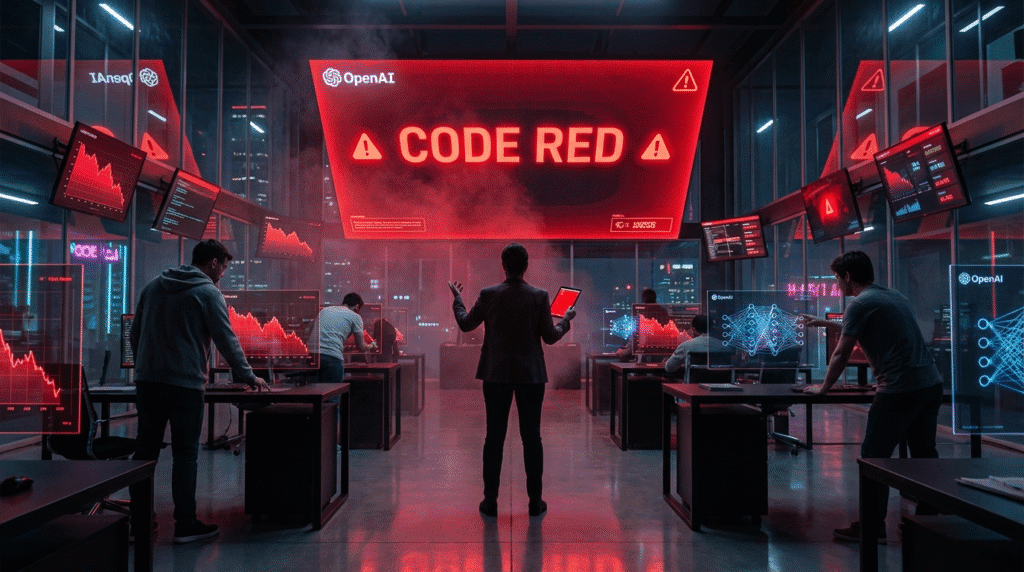
The artificial intelligence landscape is shifting. Fast. And OpenAI, the company that sparked the generative AI revolution with ChatGPT, is feeling the heat. In a move that signals both urgency and vulnerability, CEO Sam Altman issued an internal “code red” memo on Monday, calling on staff to refocus efforts on improving the company’s flagship chatbot. The message is clear: the once-unassailable lead that OpenAI enjoyed is eroding, and competitors like Google and Anthropic are closing in with alarming speed.
According to reports from The Wall Street Journal and The Information, Altman’s memo outlined a dramatic strategic pivot. OpenAI is hitting pause on several ambitious initiatives, including advertising features, shopping tools, health agents, and a personal assistant called Pulse. Instead, the company will channel all available resources into making ChatGPT faster, more reliable, and better at answering user questions. It’s a back-to-basics approach that reveals just how competitive the AI race has become.
The Full-Circle Moment
There’s a certain irony to this development. When ChatGPT launched on November 30, 2022, it sent shockwaves through the tech industry. Google, which had long been considered the leader in AI research, suddenly found itself playing catch-up. The search giant declared its own “code red” in response, scrambling to integrate AI features into its products and accelerate development of its competing models.
Now, nearly three years later, the tables have turned. Google’s relentless push to close the gap is paying off. The company’s latest AI model, Gemini 3, has blown past competitors on numerous industry benchmarks and popular metrics. Google’s AI user base is growing rapidly, helped by the success of tools like the Nano Banana image model. What was once a comfortable lead for OpenAI has become a nail-biting race.
What’s Driving the Urgency?
Altman’s memo wasn’t just a routine update. It was a call to arms. The CEO outlined specific areas where ChatGPT needs immediate improvement: greater speed and reliability, better personalization, and the ability to handle more complex questions. To accelerate progress, OpenAI will hold daily calls for teams tasked with improving the chatbot. Altman even encouraged temporary team transfers to speed up development.
This level of urgency reflects the pressure OpenAI faces on multiple fronts. The company has grown explosively, with millions of users relying on ChatGPT daily for everything from writing assistance to coding help. But with that growth comes sky-high expectations. Users demand perfection, and any stumble could send them running to competitors.
There’s also the financial pressure. OpenAI is spending hundreds of billions of dollars to fund its growth and development. The company needs to figure out a clear path to profitability, and that means keeping users engaged and satisfied. Losing market share to Google or other rivals could jeopardize the company’s long-term viability.
Google’s Resurgence
Google’s comeback story is remarkable. After the initial shock of ChatGPT’s launch, the company mobilized its vast resources and deep AI expertise. The results are now visible. Gemini 3 represents a significant leap forward, demonstrating capabilities in reasoning and multimodal understanding that rival or exceed what OpenAI offers.
But it’s not just about raw performance. Google has been smart about integration. The company has woven AI features throughout its product ecosystem, from search to Gmail to Google Docs. This gives Google a distribution advantage that OpenAI can’t easily match. While ChatGPT is a standalone product, Google’s AI is embedded in tools that billions of people use every day.
The Nano Banana image model is another example of Google’s strategic thinking. By offering specialized tools that excel at specific tasks, Google is building a portfolio of AI capabilities that appeal to different user segments. It’s a diversification strategy that reduces reliance on any single product.
The Competitive Landscape
OpenAI isn’t just worried about Google. The AI field has become crowded with capable competitors. Anthropic, founded by former OpenAI researchers, has gained traction with its Claude models, which emphasize safety and reliability. Meta has open-sourced its Llama models, democratizing access to powerful AI and fostering a vibrant ecosystem of developers and applications.
Meanwhile, startups are emerging with specialized AI tools that target specific industries or use cases. This fragmentation means OpenAI can’t just compete on general-purpose chatbot capabilities. The company needs to excel across multiple dimensions: speed, accuracy, personalization, safety, and cost-effectiveness.
What OpenAI Is Sacrificing
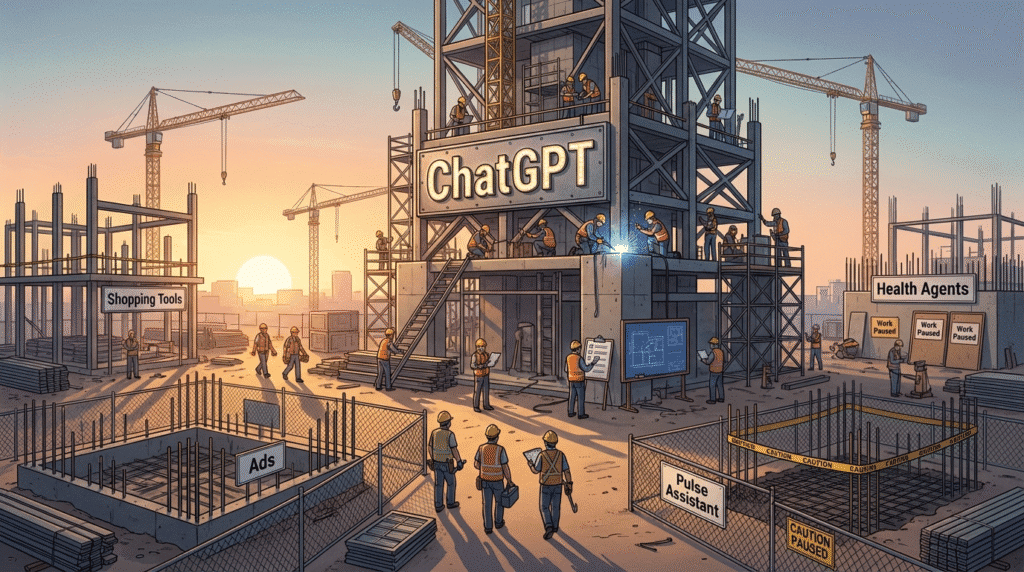
The decision to delay projects like ads, shopping, and health agents isn’t trivial. These initiatives represented potential revenue streams and opportunities to expand ChatGPT’s utility. Advertising, in particular, could have been a significant monetization avenue, similar to how Google built its empire on search ads.
Shopping features would have positioned ChatGPT as a commerce platform, potentially competing with Amazon and other e-commerce giants. Health agents could have opened up the lucrative healthcare market, where AI-powered diagnostics and patient support are increasingly in demand. And Pulse, the personal assistant, might have challenged Apple’s Siri and Amazon’s Alexa.
By shelving these projects, OpenAI is making a calculated bet. The company believes that strengthening ChatGPT’s core functionality is more important than expanding into new areas. It’s a defensive move, designed to protect the foundation before building additional floors on the skyscraper.
The Technical Challenges
Improving ChatGPT isn’t as simple as flipping a switch. The technical challenges are substantial. Speed improvements require optimizing the underlying models and infrastructure. This might involve developing more efficient architectures, improving hardware utilization, or implementing better caching strategies.
Reliability is another complex issue. AI models can produce incorrect or nonsensical answers, a phenomenon known as hallucination. Reducing these errors requires better training data, improved model architectures, and more sophisticated validation mechanisms. It’s a problem that the entire AI industry is grappling with, and there’s no easy solution.
Personalization adds another layer of complexity. To truly understand and adapt to individual users, ChatGPT needs to remember context across conversations, learn from user feedback, and adjust its responses accordingly. This requires sophisticated memory systems and careful attention to privacy concerns. Users want personalization, but they don’t want to feel like their data is being exploited.
The Human Element
Behind the technical challenges are human ones. Altman’s memo calling for daily meetings and temporary team transfers suggests that OpenAI is asking a lot from its employees. The company is known for its intense work culture, and this code red will likely ratchet up the pressure even more.
There’s a risk of burnout. AI development is already demanding work, requiring deep technical expertise and long hours. Adding urgency to the mix could strain the workforce. OpenAI will need to balance the need for speed with the need to maintain employee morale and well-being.
On the flip side, a clear mission can be energizing. When employees understand the stakes and feel like they’re part of something important, they often rise to the challenge. Altman’s memo might galvanize the team, creating a sense of shared purpose and determination.
What This Means for Users
For the millions of people who use ChatGPT daily, OpenAI’s code red could bring tangible benefits. Faster response times mean less waiting around for answers. Better reliability means fewer frustrating moments when the chatbot produces gibberish. Improved personalization means ChatGPT becomes more useful over time, adapting to individual needs and preferences.
But there’s also a downside. The delay of features like shopping and health agents means users will have to wait longer for ChatGPT to expand into new domains. Those who were excited about the prospect of AI-powered shopping assistance or health advice will need to be patient.
There’s also the question of whether OpenAI can actually deliver on its promises. Improving core functionality is harder than launching flashy new features. It requires sustained effort and technical breakthroughs. If OpenAI falls short, users might start looking elsewhere.
The Broader Implications
OpenAI’s code red is a microcosm of the broader AI race. The field is moving at breakneck speed, with companies pouring billions of dollars into research and development. The stakes are enormous. AI is poised to transform industries from healthcare to education to entertainment. The companies that lead in AI will wield enormous influence and capture massive economic value.
But the race is also fraught with risks. The pressure to move fast can lead to corners being cut, safety concerns being overlooked, and ethical considerations being sidelined. OpenAI has positioned itself as a responsible AI developer, but the code red raises questions about whether the company can maintain that commitment while also competing aggressively.
There’s also the question of sustainability. The AI industry’s appetite for computing resources is staggering. Training and running large language models requires massive amounts of electricity, raising environmental concerns. As companies like OpenAI and Google push to make their models faster and more capable, the energy costs will only increase.
Looking Ahead
The AI race is far from over. OpenAI’s code red is a sign that the company recognizes the threat it faces, but it’s also a sign of resilience. Rather than resting on its laurels, OpenAI is adapting to the changing landscape.
Google, meanwhile, will continue to press its advantage. The company has the resources, talent, and distribution channels to be a formidable competitor. And other players like Anthropic, Meta, and countless startups will keep pushing the boundaries of what’s possible.
For users, this competition is ultimately a good thing. It drives innovation, improves products, and keeps prices in check. But it also creates uncertainty. The AI landscape is shifting so rapidly that what’s cutting-edge today might be obsolete tomorrow.
The Bottom Line
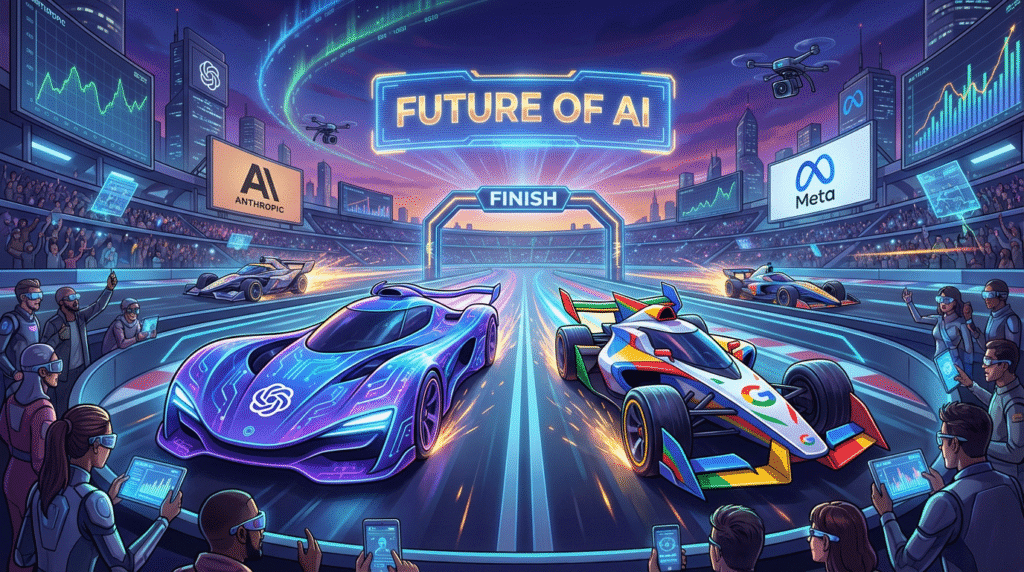
OpenAI’s code red is a pivotal moment in the AI race. It’s a recognition that the company’s early lead is no longer guaranteed, and that staying ahead requires focus, discipline, and relentless execution. By delaying ambitious new projects to concentrate on core improvements, OpenAI is making a strategic bet that quality trumps quantity.
Whether that bet pays off remains to be seen. Google is surging, competitors are multiplying, and user expectations are higher than ever. The next few months will be critical. If OpenAI can deliver meaningful improvements to ChatGPT, it might solidify its position as the AI leader. If it stumbles, the door will be wide open for rivals to seize the crown.
One thing is certain: the AI revolution that ChatGPT sparked three years ago is entering a new phase. The pioneers are being challenged, the competition is intensifying, and the stakes have never been higher. For anyone watching the tech industry, it’s a fascinating time. The code red at OpenAI is just the latest chapter in a story that’s still being written.
Sources
- OpenAI declares ‘code red’ as Google catches up in AI race – The Verge
- OpenAI Hits Code Red While Google Closes the Gap Fast – Medium
- OpenAI’s Altman Declares ‘Code Red’ to Improve ChatGPT as Google Threatens AI Lead – The Wall Street Journal
- OpenAI CEO Declares ‘Code Red,’ Combat Threats, ChatGPT Delays Ads Effort – The Information
The Kingy Brief
Get the next Kingy Brief.
Source-checked AI changes, original tests and one practical thing to try.
Free · Choose your subjects · Double opt-in · Unsubscribe anytime